Xebex Air Cardio for Professional Gyms and Boxes
Xebex conçoit du cardio fonctionnel destiné à l'usage intensif : rameurs à air, air bikes, ski trainers et tapis incurvés. Ces machines fonctionnent sans moteur, ce qui réduit la maintenance et supprime le raccordement électrique. Light In Fitness les distribue et les maintient en France.
Air-driven cardio has become the backbone of conditioning zones in commercial gyms, cross-training boxes, hotel fitness rooms, military facilities and rehabilitation centres. Xebex builds functional cardio machines engineered for intensive, back-to-back use: air rowers, air bikes, ski ergometers and curved treadmills. These machines run without a motor, which lowers maintenance and removes the need for a mains connection. Light In Fitness distributes the range and supports it after installation.
Why air resistance works in high-traffic facilities
An air-braked machine has no motor, no drive belt under load and no electronic speed controller. Resistance comes from a fan wheel: the harder the user pulls or pedals, the more air the fan has to move, and the heavier the machine feels. The load scales itself, so a first-time member and a competitive athlete can share the same unit with nothing to set up incorrectly.
For an operator, the practical consequences matter more than the physics. There is no power socket to plan for, so the layout of a conditioning area is dictated by circulation and floor loading rather than by cable runs. There is no motor to fail during a busy class block. Servicing comes down to chain or belt tension, bearing checks and console batteries, all of which an in-house technician can handle.
The Xebex range for professional buyers
Air rowers
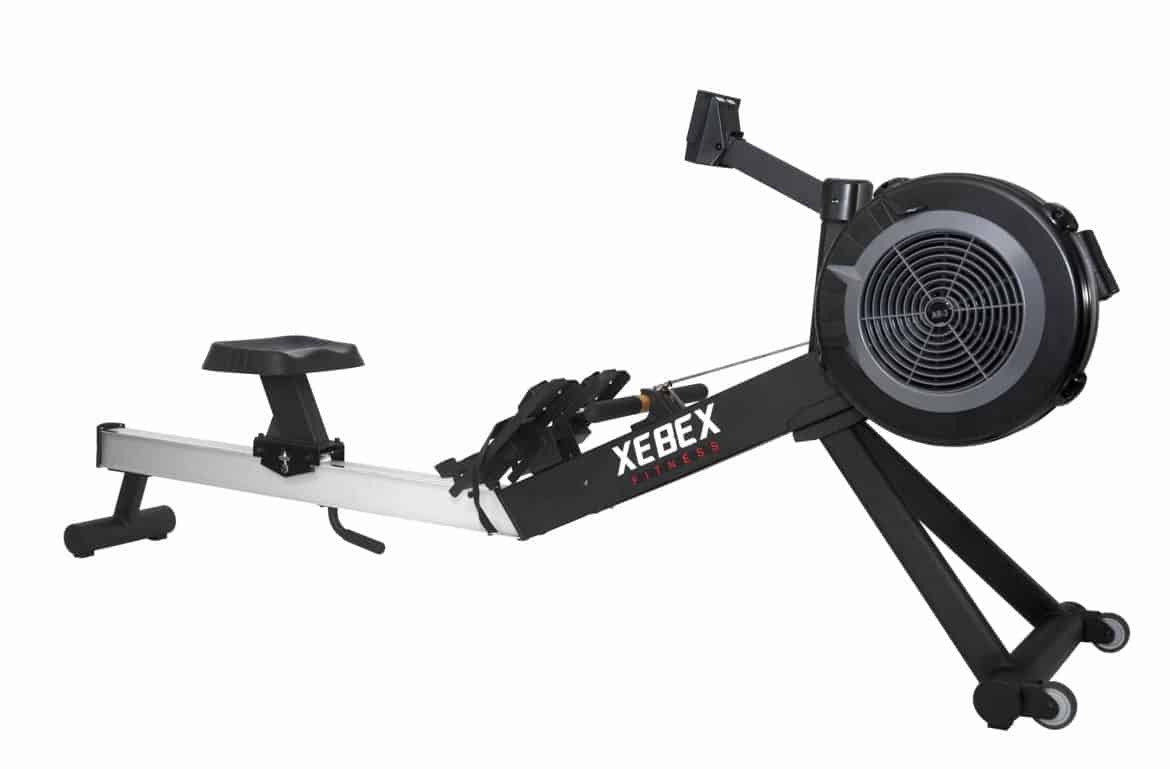
The Xebex Air Rower 2.0 is the workhorse of the range. The frame and rail are built for continuous group use, and the performance monitor reports time, distance, calories and pace in real time so a coach can run a class from a single screen. Multiple resistance settings let a facility match the feel of the machine to its member profile.
Air bikes
The Xebex Air Bike Power drives the same fan wheel through the pedals and the moving handlebars, so the upper body contributes to the effort and the machine becomes a full-body conditioning tool rather than a leg workout. The LCD console displays speed, distance, calories and session duration. Because the resistance is generated by the rider, an air bike is one of the few machines that a 55 kg and a 110 kg user can use side by side at identical settings.
Curved treadmills
The Xebex Runner is a curved, self-powered treadmill: the belt is moved by the runner, not by a motor. Speed is controlled entirely by where the user places their feet on the curve, which makes the machine well suited to sprint work and to sled-style pushing drills. With no motor and no electronics driving the belt, the failure modes that usually take a motorised treadmill out of service simply do not exist.
Ski ergometers
The ski ergometer completes the range and covers the vertical pulling pattern that a rower and a bike leave untouched. It is the machine most often specified for Hyrox-style stations and for upper-body conditioning in rehabilitation settings, where the user can sit or stand.
Planning the installation
Air cardio changes the brief you give your fit-out team. The machines need no electrical supply, so you are free to place them along a wall, in an island, or in a rack line facing a coaching position. What they do need is floor protection: rowers and bikes transmit vibration and repeated point loads into the slab, and a suitable rubber floor is part of the specification, not an afterthought. Allow clearance behind a rower for the full slide of the seat and in front of a curved treadmill for the user stepping off.
Which facilities specify Xebex
Cross-training boxes were the first market, because a rower, a bike and a ski ergometer cover most of the machine work in a programmed session. Hotels and campsites follow, for a different reason: a compact air cardio corner gives guests a credible workout without the electrical work, the ventilation and the service contract that a bank of motorised treadmills implies. Local authorities, schools, clubs and armed forces sites specify air machines where equipment has to survive heavy, largely unsupervised use.
The full selection sits in our Xebex air cardio category, and the wider professional cardio equipment range covers motorised treadmills, cross-trainers and upright bikes for facilities that need both.
Frequently asked questions
Do Xebex machines need a power supply?
No. Resistance and belt movement are generated by the user. The console runs on batteries, so the only planning constraint is floor and space, not electrical distribution.
Are these machines suitable for continuous commercial use?
Yes. The range is built for professional facilities with sustained daily traffic, not for occasional use. Specify it for staffed gyms, boxes, clubs and public facilities.
What maintenance should we budget for?
Routine checks on chain or belt tension, fasteners, bearings and console batteries. There is no motor, controller or drive electronics to replace, which is where most of the lifetime cost of a motorised treadmill sits.
Can a rehabilitation centre use air resistance?
It is a common application, because the load is set by the patient rather than by a dial. A therapist can hold a session at a very low intensity and increase it progressively without touching the machine.
Request a quote
Tell us the type of facility, the number of stations and the floor area available, and we will put together a specification and a priced proposal. Request a quote and our team will come back to you with a configuration built around how your site actually operates.