Why Work with a Personal Trainer for Your Fitness Goals
When it comes to health and fitness, motivation and individual guidance decide the outcome far more often than willpower does. That is where a qualified personal trainer earns their fee. Working with one means having an expert partner who builds the route to a fitter version of you, adjusts it when life gets in the way and keeps you on it long enough for the results to appear. Here is why that support is a sound investment, whether you are training for yourself or thinking about the coaching offer inside a facility you run.
Professional skills applied to your situation
Choosing a personal trainer means buying guidance built around you rather than a generic plan. A qualified coach takes account of your age, your current condition, your medical history and your personal preferences before writing a single session. Whether the goal is losing weight, building strength, improving endurance or simply feeling healthier day to day, the programme is designed for that goal and revised as you progress.
That last point matters more than most people expect. A plan that never changes stops working, because the body adapts to what it is given. A coach who sees you train knows when to add load, when to change the movement and when to back off.
Technical expertise and consistent motivation
A good trainer combines technical competence with the ability to keep people coming back. Certified and usually experienced across several disciplines, a personal trainer can advise on nutrition, teach recovery and relaxation techniques and adapt training methods to whatever situation you present. The relationship of trust that develops is a powerful driver, and consistency is what any successful fitness programme ultimately rests on.
There is also the question of technique. Most injuries in strength training come from repeated poor form rather than from a single dramatic incident. Having someone correct your position from the first session is the cheapest injury prevention available.
Local knowledge and varied sessions
A trainer who knows the area brings something no online plan can offer: the right place to train for each session. Coastal paths, hills, parks, forest trails and open water all support different kinds of work, and a local coach knows which ones are usable at which time of year. That knowledge is what allows a programme to alternate trail running, cycling, swimming and outdoor strength work instead of repeating the same circuit indefinitely.
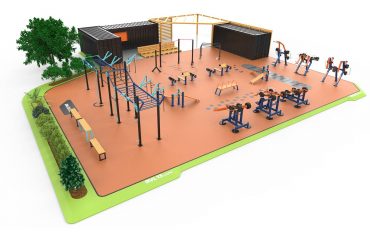
Where a municipality or a site operator has installed an outdoor fitness trail, trainers use it heavily: it gives structured stations for strength work in the open air, at no cost to the user and with no booking required.
Training outdoors
The benefits of exercising outdoors are well established: lower stress, better mood and increased exposure to daylight. Where the climate allows, a local coach can run sessions in the open air for most of the year, which turns a training session into time spent outside rather than time spent in a room. For people who struggle with the atmosphere of a busy facility, this alone can be what makes the programme sustainable.
Formats and budgets
Unlike the fixed offer of a large chain, an independent trainer can shape the format around your budget. One-to-one sessions give maximum attention; small-group training splits the cost between participants and adds a social element that many people find motivating. Between the two there is usually a package or a session block that makes regular coaching affordable for anyone genuinely committed to it.
Hybrid and online coaching
Alongside sessions in person, many trainers now use online tools to deliver remote programmes, video check-ins and progress tracking between appointments. The hybrid model suits irregular schedules and frequent travel, and it keeps the programme running during the weeks when meeting in person is not possible.
Frequently asked questions
How often should I see a personal trainer?
It depends on your goal and your experience. Beginners usually benefit from frequent sessions at the start, when technique is being built, then move to a lower frequency with independent training in between. There is no single correct answer, which is exactly why the first conversation with a coach matters.
Is a personal trainer only for people who are already fit?
No. The opposite is closer to the truth: the less experience you have, the more value there is in having someone build the programme and correct the movement from the beginning.
Do I still need a gym if I work with a trainer?
Not necessarily. Many programmes combine outdoor work, bodyweight training and equipment sessions. Access to professional cardio equipment and a proper strength floor becomes more important as you progress and the loads increase.
I run a facility. Is adding coaching worth it?
Personal training is one of the most reliable additional revenue streams for a gym, a hotel or a club, and it also improves retention: members who work with a coach tend to stay longer. It requires qualified staff, a suitable space and the right professional training accessories, but the equipment investment is modest compared with the return.
Equipping a space for coaching
Light In Fitness has supplied professional fitness equipment to gyms, clubs, hotels, local authorities and sports facilities since 2013, including the functional areas and outdoor installations that personal trainers use daily. If you are creating or upgrading a coaching space, tell us how it will be used and we will propose a configuration to match. Request a quote to start the conversation.