Choosing the Right Group Exercise Classes for Your Gym
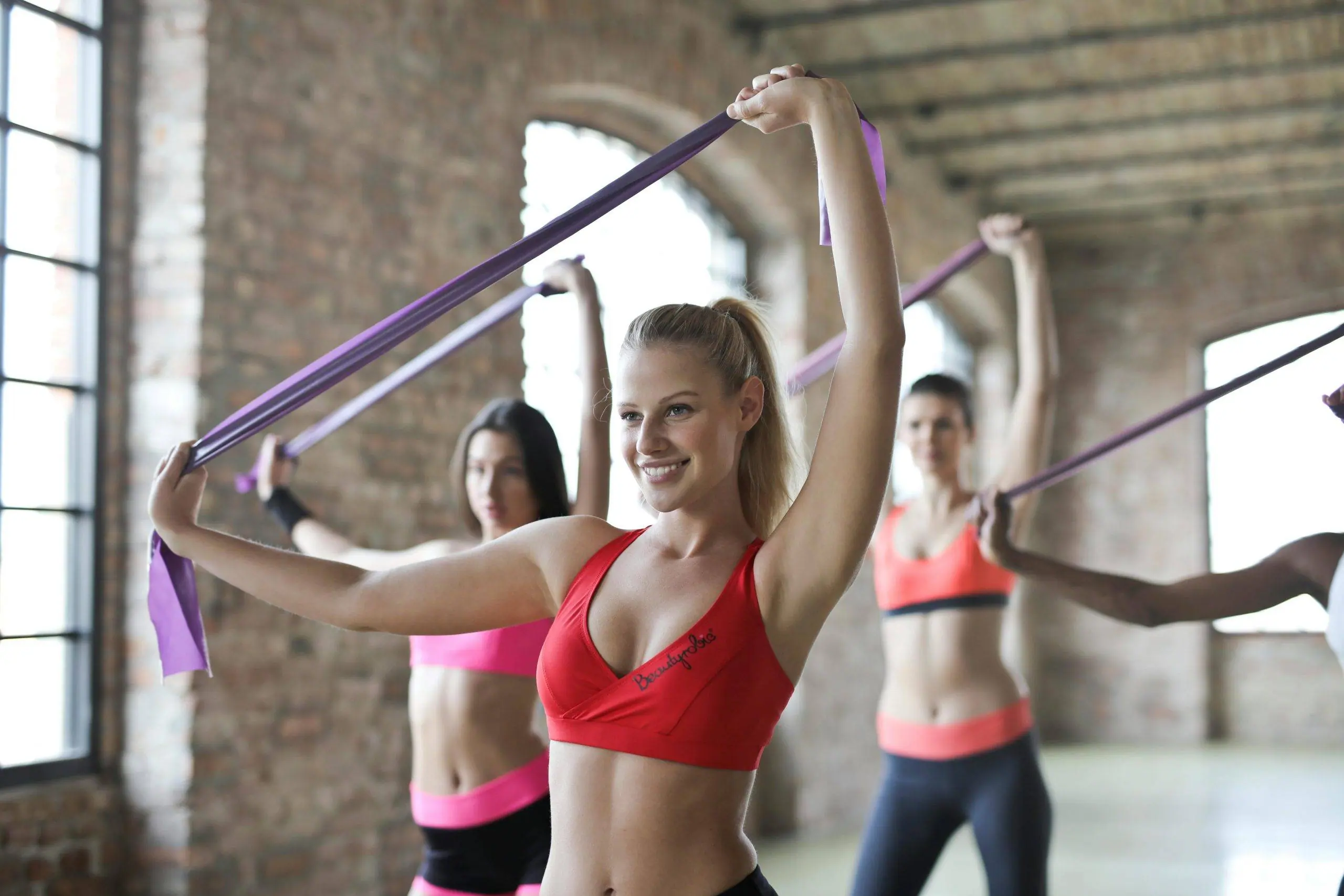
A group exercise timetable is one of the few things in a gym that members talk about outside the building. It is also one of the hardest parts of the offer to get right: every format needs its own floor area, its own equipment, its own storage and its own instructor cost, and a class that half fills the studio still occupies the room. This guide runs through the main families of group classes, what each one genuinely requires from the site, and how to decide which of them belong on your timetable.
Why group classes earn their floor space
The appeal of a group class is social before it is physical. Training alongside other people supplies the motivational push that a solo session on the floor rarely does, and the shared effort in the room, including everyone visibly struggling with the same movement, is what brings members back on the same day next week. For an operator that translates into two measurable things: attendance predictability and retention. A studio timetable gives members a reason to book a fixed slot in their week, and members with a fixed slot cancel their membership far less often.
The cost side is equally concrete. A studio is dead floor area between classes unless it is programmed, so the question is never simply which classes are popular but which classes fill a room that would otherwise sit empty at that hour.
Dance formats: the easiest room to fill
Dance-based classes remain the broadest entry point into group exercise, because they ask for coordination rather than strength and members arrive without feeling assessed.
Aerobics and Zumba are the established formats. They fuse music and choreography into a cardiovascular session that most participants do not experience as training at all, which is precisely why they recruit people who would never book a strength class. They also scale: the same room, the same instructor and the same sound system serve twelve people or thirty-five.
Hip-hop and contemporary dance sit at the other end. Instead of synchronised choreography they lean on improvisation and personal style, which attracts a younger and more committed group but caps the class size, because the instructor has to correct individuals rather than lead a block.
Site requirements for both are modest and specific: a clear span with no columns, mirrors on one wall, a sound system audible at the back without deafening the front row, and above all a sprung or resilient floor. Dance formats are the highest-impact activity most studios host, and a hard floor over concrete generates injury complaints within months.
Strength conditioning classes: sculpting with equipment
Music alone does not build a body, and the strength conditioning block of the timetable is what converts casual attendees into members who eventually use the main floor.
Legs, abs and glutes classes target the muscle groups most participants ask about by name. They are cheap to run, need almost no equipment beyond mats and light resistance, and fill reliably at the end of the working day.
Barbell pump formats are the serious end of the same idea: a light barbell, a set of plates and a step per participant, worked through presses, squats and curls in time with the music. They are the most equipment-hungry classes on any timetable. Twenty participants means twenty bars, twenty steps and a full plate set each, which is a substantial capital line and a genuine storage problem. Racking and a storage wall have to be designed in from the start, not improvised afterwards.
Yoga, mobility and meditation
Few gyms now operate without a yoga slot. From sun salutation to warrior pose, the practice delivers physical and mental benefit at once, and controlled breathing with sustained postures is an effective way of unloading accumulated stress. Meditation sessions extend the same logic further, trading movement for attention.
The operational catch is acoustic. A meditation or restorative yoga class does not survive treadmills running and plates being dropped on the other side of a plasterboard wall. If quiet formats are going to be on the timetable, acoustic separation is a design decision, not a fix. Where a dedicated quiet studio is not possible, scheduling these classes into the quietest hours of the day is the workable compromise.
Equipment needs are minimal, which makes the format unusually profitable: mats, blocks, straps, and floor that is warm and clean enough to lie on.
Cardio formats: cycling and HIIT
Indoor cycling covers long distances without anyone leaving the room. Participants ride hard in a controlled climate, following a coached profile and a playlist, with none of the wind, traffic or weather of an outdoor ride. It remains one of the highest revenue-per-square-metre formats in the industry, because a cycling studio packs more paying participants into a given floor area than any other class. That density is also its constraint: bikes are a permanent installation, the room is dedicated, and ventilation has to be sized for a room full of people working at threshold. Choosing the right indoor cycling bikes matters more here than in any other class, since each bike is used many hours a day, every day, and drivetrain and bearing quality determine the maintenance cost for years.
HIIT works the opposite way. High-intensity interval training compresses the session into a short, brutal block of work and rest, which suits time-poor members and produces a strong training stimulus in a fraction of the time. It needs almost no fixed equipment, but it does need floor: space per participant for jumping, landing and floor work, and a surface that will take repeated impact and dropped kit. This is where rubber gym flooring specification earns its keep, both for impact absorption and for the noise transmitted to whatever sits below the studio.
Aquatic formats: the underrated revenue line
Sites with water have a class category the competition down the road cannot copy.
Aqua fitness is the quiet performer. Water resistance loads the movement in every direction while the buoyancy removes the impact, so participants train hard without joint loading, and the massage effect of moving water leaves people noticeably less sore than after an equivalent land class. It is also the format that reaches the members other classes lose: older participants, those returning from injury, and anyone carrying weight who is not going to book a HIIT session.
Swimming is the full-body option alongside it, training the whole body and the respiratory system while sparing the joints entirely, which is exactly what a member with sensitive knees needs. Hotels, campsites and rehabilitation centres in particular tend to under-programme their pool, running open swim when a coached timetable using proper aquatic fitness equipment would generate revenue from the same water.
Building the timetable around the building
The practical sequence is to work from constraints to programme, not the other way round. Measure the clear floor area and the ceiling height. Establish what the floor structure will take, since barbell pump and HIIT both put load and noise into it. Check what the ventilation can handle at full occupancy. Then decide how many formats the storage will actually support: three formats run properly beat six run badly out of an overflowing cupboard.
Instructor availability is the last filter, and often the binding one. A format that depends on a single instructor is a format that disappears when that person leaves.
Frequently asked questions
How many class formats should a mid-sized gym run?
Enough to cover the main families, typically one dance format, one strength conditioning format, one mind-body format and one cardio format, before adding depth. Breadth without depth spreads instructors and equipment too thin.
Which format needs the most equipment budget?
Barbell pump, by a wide margin, because every participant needs a full personal set. Indoor cycling costs more in total but the spend is a fixed installation rather than a per-participant kit set.
What flooring does a multi-purpose studio need?
A resilient surface that handles impact from jumping, protects the structure below from dropped weight, and is comfortable enough for floor and mat work. Compromising here shows up as complaints and as damage to whatever is underneath.
Are aquatic classes worth the operating cost?
Where a pool already exists, coached aquatic classes usually improve its economics substantially, because they monetise water that is otherwise open for casual use, and they reach a demographic the rest of the timetable does not.
Specifying the space
A timetable is only as good as the room it runs in. Whether you are fitting out a new studio, converting an under-used area or upgrading an ageing cycling room, the equipment, the flooring and the storage should be specified together, against the classes you actually intend to run. Request a quote with your floor plan and your draft timetable, and our team will work through the layout, the equipment list and the budget with you.