Funding and Installing an Outdoor Fitness Trail: A Guide for Local Authorities
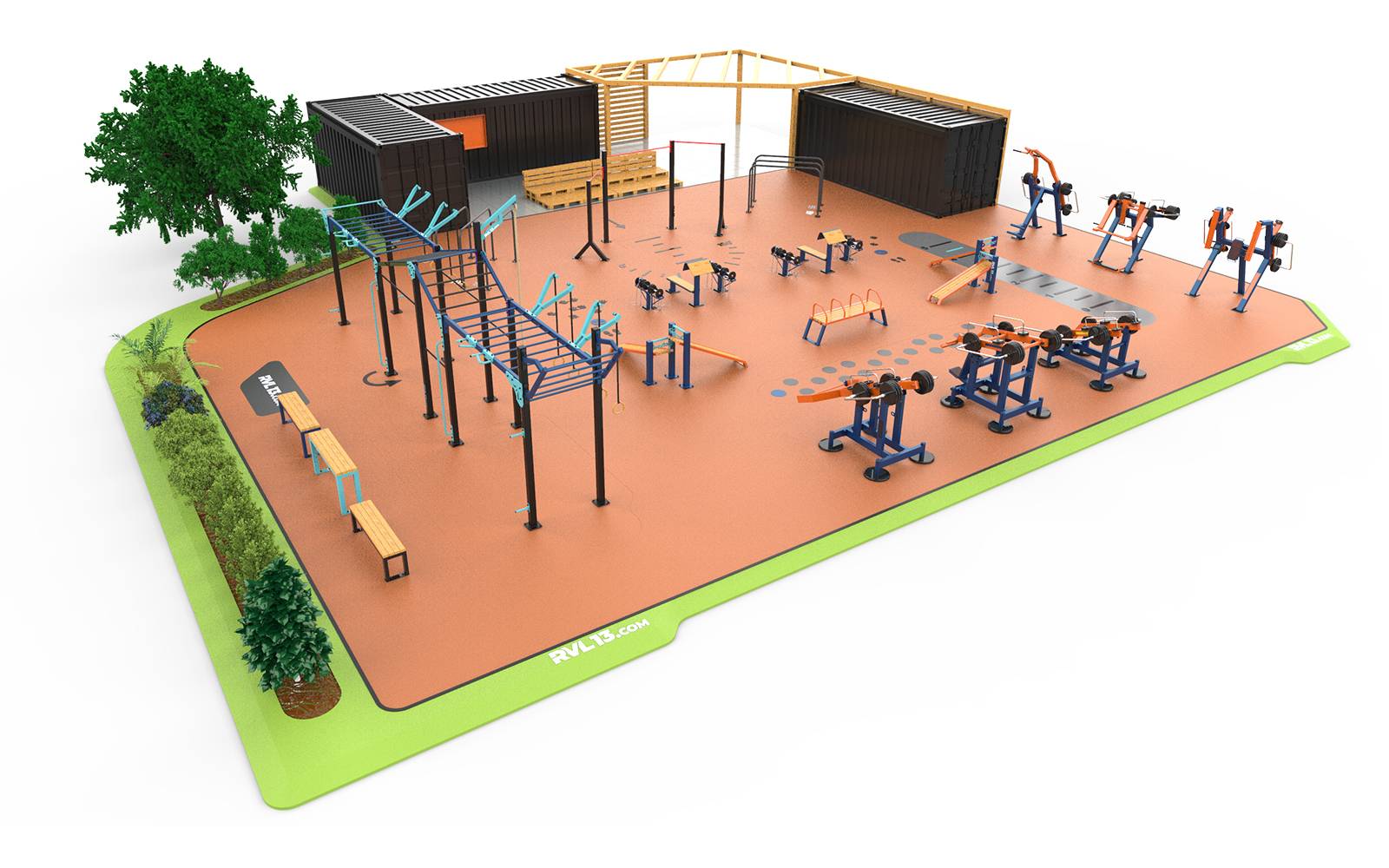
An outdoor fitness trail is one of the few pieces of municipal sports infrastructure that serves every age group, needs no staff on site, opens at dawn and costs nothing to the resident who uses it. For a local authority it is also a capital project like any other: it has to be funded, specified, installed to a standard and maintained for the next fifteen years.
This guide covers the four questions that decide whether such a project succeeds: how to fund it, how to choose the installer, how the installation is actually planned, and what maintenance the authority is committing to on the day it signs.
Funding an outdoor fitness trail
Public grant programmes
Most outdoor fitness trails are funded from a combination of sources rather than a single line. Grant programmes for sport, public health, active mobility and urban regeneration exist at local, regional and national level in most European countries, and European funds are frequently used for projects in this category.
Grant rules differ from country to country and change from one funding round to the next, so the practical step is always the same: confirm with the awarding body which programme currently applies to permanently installed outdoor sports equipment, and what the eligible cost base is, before the specification is finalised. Whether groundworks, surfacing and signage are eligible alongside the equipment itself is often the difference between a viable and an unviable budget.
The municipal budget
Grants rarely cover the whole project. A realistic budget lines up equipment, groundworks, impact surfacing, signage, delivery, installation and the first years of inspection, and treats them as one figure rather than discovering the last four after the award.
Private partnership and sponsorship
Local businesses will often co-fund a trail in exchange for named signage at the site. It is a workable model, but it needs to be set up properly: advertising on public land is regulated, the signage has to be agreed before installation rather than added afterwards, and the authority should keep control of what appears next to equipment used by children.
Build the case on evidence, not enthusiasm
A funding application stands or falls on whether the numbers can be defended. State what the trail will cost, who is expected to use it, how usage will be measured and what happens to the equipment at end of life. Claims about population health outcomes or savings to the health system should only appear if you can cite the source they come from. An overstated case is the fastest way to lose credibility with the awarding body, and it is the first thing an audit will look at.
Choosing the supplier and installer
Three questions separate suppliers quickly. Does the equipment comply with the applicable standard, in writing, with the class stated? Does the supplier install and commission, or only deliver? And what does the after-sales arrangement cover once the warranty period starts?
Ask for reference sites in comparable settings and visit one that has been in service for several years. A trail looks excellent on the day it opens; the useful information is how it looks after four winters. Light In Fitness has been equipping professional and public facilities since 2013, and manufactures the outdoor fitness trail range supplied for these projects.
How the installation is planned
Site assessment
Everything starts on site. Ground conditions decide the foundation type, drainage decides where equipment can stand, and existing footpaths decide how people will reach the stations. Sun exposure, shade, sightlines from surrounding buildings and proximity to lighting all affect how much the trail is actually used, and how safe it feels after dusk.
Layout and the mix of users
A trail is a sequence, not a pile of equipment. Stations are ordered so that the circuit makes sense, spaced so that each has its own safety zone, and sited with the neighbours in mind. Equipment that generates noise or attracts groups belongs away from a nursery, a care home or a bedroom window, and that decision is far cheaper to make on a plan than after installation.
Plan for the full range of residents. Wheelchair-accessible outdoor stations extend the trail to users a conventional circuit excludes, and they are usually the stations that get quoted back in the funding report.
Standards and safety
Permanently installed outdoor fitness equipment for adults is covered by EN 16630, which sets the safety requirements and test methods, including free space around each station and fall protection where it applies.
If the project also includes children’s play equipment, that is a different regime: EN 1176-1 for the equipment and EN 1177 for the impact-attenuating surfacing. The two families of standards are not interchangeable, and EN 16630 must never be applied to equipment intended for children. Choose the fitness trail stations and the surfacing together, because the surfacing requirement follows from the equipment.
Maintaining the trail
Maintenance is the part of the project that is agreed last and matters longest. A neglected trail is not merely unattractive, it becomes a liability, and the authority remains responsible for the condition of equipment on its land.
- Routine cleaning. Keep the equipment and the surrounding surfaces clean. Use pressure washing with care on painted and coated surfaces, and never on bearings or labels.
- Weekly visual inspection. Look for loose fixings, movement in a post, damaged coatings, worn grips and vandalism. Record each inspection, because the record is what demonstrates diligence.
- Report faults immediately. An unstable bar or a broken mechanism means the station is taken out of use until the supplier has repaired it.
- Professional inspection two to four times a year. A qualified inspection covers what a visual check cannot: structural condition, foundations, wear in moving parts and the state of the surfacing.
Getting residents to use it
A trail that nobody knows about produces no benefit and no usage data. Signpost it, put clear pictograms on every station, announce the opening, and give local clubs and schools a reason to build sessions around it. Community events, from a clean-up day to a simple relay, do more for take-up than any single piece of equipment.
Frequently asked questions
Do we need planning permission?
It depends on the site and the national and local rules that apply to it. Check with your own planning authority before the funding application, not after.
How long does installation take?
It depends on the number of stations, the foundation type and the ground conditions. We give a firm programme with the quotation, once the site has been assessed.
Can the trail be extended later?
Yes, and it is a sensible way to spread capital cost across budget years. Specify the full circuit at the start and install it in phases, so that the layout still works when the last station arrives.
Plan your outdoor fitness trail
Send us the site plan, the intended user profile and your budget envelope, and we will return a station-by-station layout with safety zones, foundation types and surfacing requirements. Request a quote.
Réalisations documentées
- Parcours ninja sur mesure, Rennes – îlot des Hautes-Ourmes
- Double mur ninja extérieur, Sallanches – Haute-Savoie
À lire aussi sur le même thème
- Professional Upright Bike: Buying Guide for Gyms and Hotels
- Professional Recumbent Bikes: How to Choose for Your Gym
- Sport Matériel chez Light in Fitness : Équipez-vous pour la Performance et le Bien-être
- Outdoor Playground Manufacturer for Local Authorities: The Complete Guide
- Zinc: Which Supplement Form Should You Choose?