What Is a Diverging Machine and When Should a Gym Use One?
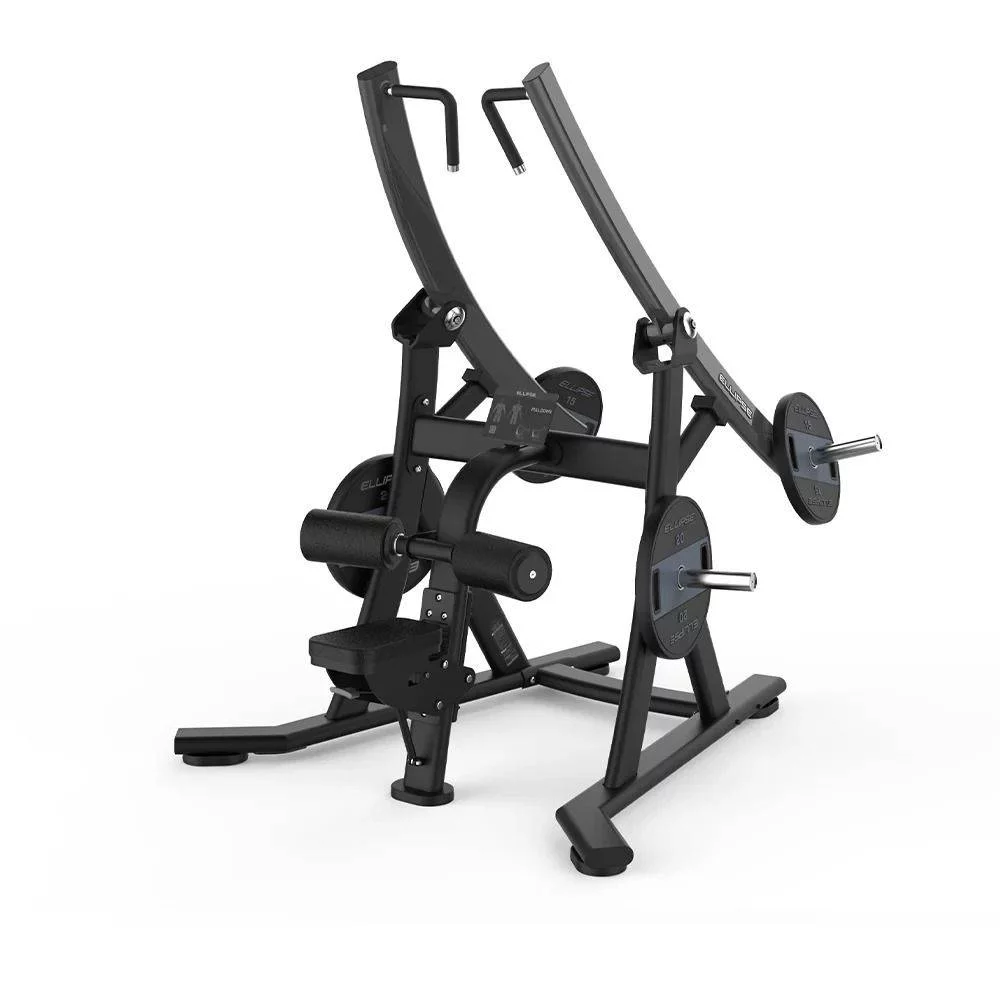
In short: a diverging machine is a strength machine whose handles travel apart from each other at the end of the movement. That divergence follows the natural path the back muscles take during a pull, which makes seated rows and pulldowns recruit the latissimus dorsi and the rhomboids over a fuller range than a fixed straight bar.
What a diverging machine actually is
The word describes a trajectory, not a brand or a family of equipment. On a diverging machine the two arms are mounted on independent pivots, and as the user pulls, those arms separate. The hands finish wider apart than they started. It is the mirror image of a converging machine, where the arms close in towards the centre line as the movement ends.
That single design decision changes what the machine is good for. Pulling movements — rowing, pulldowns — end with the shoulder blades retracted and the elbows travelling backwards and outwards. A diverging path lets the equipment follow the body instead of forcing the body onto a fixed rail, which is why the format has become standard on back stations in commercial gyms.
Diverging or converging: two opposite jobs
Buyers regularly mix the two terms up, and the distinction is worth getting right before a floor plan is signed off.
| Trajectory | What the arms do | Typical station | Primary muscles |
|---|---|---|---|
| Converging | Come together towards the centre line | Chest press, incline press, shoulder press | Pectorals, deltoids, triceps |
| Diverging | Move apart from the centre line | Seated row, lat pulldown | Latissimus dorsi, rhomboids, mid-trapezius |
A pushing station wants convergence because the pectorals shorten towards the sternum. A pulling station wants divergence because the back opens out. Fitting a range of machines with the wrong trajectory does not injure anybody, but it does flatten the range of motion and it is immediately noticed by experienced members. Our converging plate-loaded range and our pulling stations are therefore specified separately.
The exercises a diverging machine is built for
Diverging seated row
The user sits chest against the pad, grips both handles and pulls towards the ribs. The arms separate at the end of the concentric phase, the shoulder blades retract fully, and the mid-back works through a longer contraction than on a cable row with a fixed bar. It is the single most useful diverging station in a general-purpose gym.
Diverging lat pulldown
Same principle, vertical plane. The handles start close and overhead, then spread as the elbows drive down and back. Because each arm is independent, a member with a shoulder restriction on one side is not forced into a symmetrical path, which matters in rehabilitation settings and in mixed-ability clubs.
Where the range stops
A diverging trajectory brings nothing to a leg press, a bench press or a shoulder press. If a supplier presents a diverging chest station, ask what the arms are actually doing at lockout — a press that opens the hands outwards is working against the pectorals rather than with them.
Muscles recruited
The latissimus dorsi does the bulk of the work, assisted by the rhomboids and the middle fibres of the trapezius as the shoulder blades come together. The biceps, the brachialis and the forearm flexors act as secondary movers, and the posterior deltoid contributes on horizontal pulls. A neutral or supinated grip shifts a little more load onto the biceps; a wide pronated grip pushes it back onto the lats.
For a club, the practical consequence is coverage: two well-chosen diverging stations cover the entire posterior chain of the upper body, which is the half of the body most often under-trained by members who arrive with a chest-and-arms habit.
Specifying one for a commercial floor
Three points decide whether a diverging station survives ten years of club traffic. First, the pivots: independent arms mean twice as many bearings, and sealed bearings are not optional at commercial frequency. Second, the seat and chest pad adjustment, because a diverging path only works if the user’s shoulder joint is aligned with the arm pivot. Third, the footprint — an independent-arm station needs clearance on both sides for the arms to open, and that clearance is often forgotten on a drawing.
Light In Fitness has been equipping professional sites since 2013, and back stations are among the most heavily used machines we install. Our selectorised and plate-loaded ranges are listed under professional strength training machines, and the two references most often specified as a pair are the Power Line lat pulldown and the Power Line seated row.
Using it well
A diverging machine is easy to learn, which is exactly why it gets loaded too fast. The value of the trajectory is in the last few centimetres of the pull, so a load that stops the user short of full scapular retraction wastes the machine. Coaches on the floor should be checking the end position before they check the weight stack.
A general joint and muscle warm-up before the first working set remains standard practice, particularly for the shoulder girdle and the elbows, which take the load on every pulling variation.
Frequently asked questions
Diverging or converging machine: what is the difference?
Converging: the arms come together, which suits chest work. Diverging: the arms move apart, which suits back work and pulling movements. Each trajectory follows the biomechanics of the target muscle.
Which exercises are done on a diverging machine?
Diverging horizontal pulls (seated row) and diverging vertical pulls (lat pulldown). Both target the latissimus dorsi, the rhomboids and the mid-trapezius.
Is a diverging machine worth having in a gym?
Yes. It offers a biomechanical alternative to conventional pulldowns and loads the back at a different angle, which makes it a strong complement rather than a duplicate.
Is it suitable for beginners?
Yes. The path is guided, the starting position is easy to set and the risk of a technical fault is low, which makes it a sensible first back station for a new member.
Equipping your site
Whether you are fitting out a club, a hotel gym, a municipal facility or a rehabilitation centre, the back stations deserve as much attention as the cardio line. Tell us the surface area available and the profile of your members, and we will come back with a specification and a costed proposal: request a quote.