Weightlifting Equipment Inventory: Bars, Plates, Dumbbells and Accessories
Equipping a lifting area is an inventory exercise before it is a shopping exercise. Bars, plates, dumbbells, collars and the floor beneath them have to work as one specification, and a gap anywhere in that list shows up as a safety problem or a queue at peak hours. This guide sets out the complete weightlifting inventory a commercial facility needs, with a focus on the Bodytone ranges, and the technical criteria to check before ordering.
Understanding the equipment
Barbells: types, uses and specifications
A professional Olympic barbell has to satisfy several technical criteria.
- Standard length: 2.20 m for the men bar, 2.01 m for the women bar.
- Olympic sleeve diameter: 50 mm, to take standard plates.
- Load rating: typically from 150 kg up to 750 kg on premium models.
- Rotation system: bearings or bushings, which is what makes dynamic lifts possible.
- Knurling: grip zones, with the marking pattern matching the discipline.
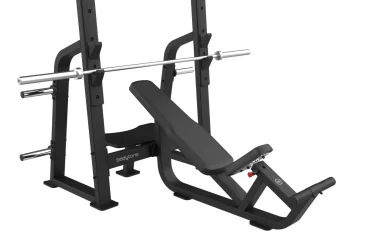
The bar types to stock: Olympic bar (20 kg), women bar (15 kg), training bar, technique bar for beginners, EZ curl bar, and short or rackable bars. Our range is in the Olympic barbells section, including coloured Olympic barbells where colour coding helps class management.
Plates: steel, bumper and urethane
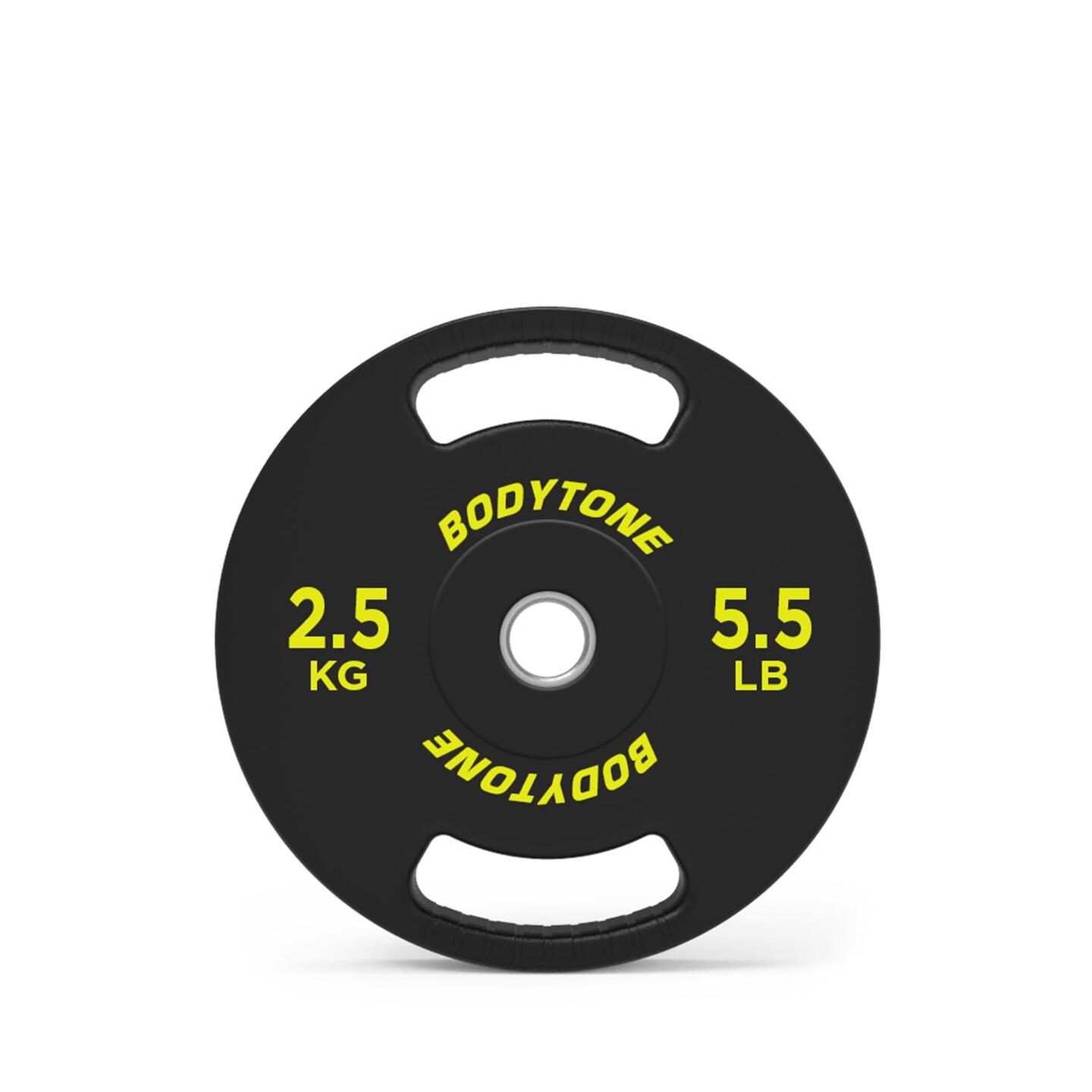
- Rubber bumper plates: the reference for Olympic lifting, protecting the floor and absorbing the impact of a dropped bar.
- Steel plates: more compact on the sleeve, which matters at maximal loads.
- Urethane plates: premium, durable and impact resistant, and the best long-term choice for a high-traffic commercial floor.
Selection criteria: weight tolerance as tight as plus or minus 10 g on calibrated discs, a stainless steel insert ring, abrasion resistance, and IWF certification or compliance with the EN ISO 20957 series. See our plates and bumper plates.
Dumbbells and weight sets
Hex dumbbells, premium urethane dumbbells, adjustable dumbbells and complete weight sets for circuit training. The professional dumbbell range covers the increments a mixed-ability membership needs.
Essential accessories
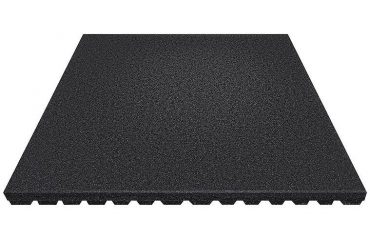
Lifting belts, non-slip gloves and grips, lifting straps, barbell collars, chalk, and the mats, rubber tiles and platforms that make the drop zone viable.
Why Bodytone
- Professional build quality already in service in clubs, hotels and sports centres.
- Strong price to performance ratio across the range.
- Robust materials: reinforced steels, high-density rubber, premium urethane.
- A complete offer covering the whole weightlifting inventory from one supplier, which simplifies spares and warranty.
- Products tested to EN ISO 20957-1, the safety standard for stationary training equipment.
The most frequently specified Bodytone items are Olympic bars rated at 150 kg, 200 kg and 750 kg, coloured bumper plates, urethane grip plates, professional hex dumbbells, and the accessory line of belts, grips and collars.
How to choose
Step 1: define the use case
Olympic weightlifting, pure strength and powerlifting, cross-training, or professional athletic preparation. Each loads the bar differently and each has a different drop frequency, which is the variable that determines both plate type and floor build-up.
Step 2: match the components
| Use case | Bar | Plates | Accessories |
|---|---|---|---|
| Beginner programmes | 150 kg rated bar | Steel plates | Flexible belt |
| Cross-training | 200 kg rated bar | Rubber bumper | Professional collars |
| Olympic weightlifting | Professional Olympic bar | Calibrated bumper | Straps and chalk |
| Powerlifting | Stiff bar | Thin steel plates | Rigid belt |
| Commercial gym floor | 200 to 750 kg rated | Urethane, bumper | Racks and storage |
Step 3: check the certifications
- EN ISO 20957-1: general safety requirements and test methods for stationary training equipment. Specify class S, the class for professional indoor use.
- EN ISO 20957-2: the additional specific requirements for strength training equipment.
- Coatings tested for abrasion and rebound.
- A verified load rating, stated by the manufacturer rather than inferred from the bar diameter.
Do not accept a reference to the withdrawn EN 957 series on its own as evidence of compliance; the current reference for professional indoor equipment is EN ISO 20957-1 class S.
Step 4: build the floor into the budget
A lifting inventory without the right surface underneath is an incomplete specification. Drop zones need a dedicated build-up: see our weightlifting rubber tiles and the platform options that go with them.
Frequently asked questions
What is the minimum inventory to open a lifting area?
A bar, a plate set, collars, and a secured floor area with impact-rated tiles. Everything else is an extension of that core.
Why bumper plates rather than steel?
They protect the floor, absorb the impact of a dropped bar and are the only sensible option where Olympic lifts are performed.
How do I know my plates fit my bars?
Check that the plates have a 50 mm bore, the Olympic standard used across the Bodytone and Light In Fitness ranges.
Is Bodytone suitable for commercial facilities?
Yes. The equipment meets the requirements of clubs, hotels and sports facilities, and is tested to EN ISO 20957-1.
Should users wear a lifting belt?
A belt improves trunk stability and supports the lumbar region under heavy loads. It is standard issue in a serious lifting area.
Are Bodytone bars calibrated?
They meet the balance requirements needed for weightlifting practice. For competition use, ask us for the certification documentation of the specific reference.
Do you supply complete packages?
Yes: bars, plates and accessories quoted together as one specification for the room.
Costing your lifting area
Tell us the number of platforms, the disciplines practised and the expected drop frequency, and we will return a costed inventory with the plate mix and floor build-up matched to it: request a quote.
Réalisations documentées
- Dalles et sols sportifs : livraisons documentées – plusieurs chantiers
- Sol sportif extérieur, square Georges-Vallerey – Taverny (95)
- Functional Rig inox – installations sur trois continents
- iGreenMill, tapis de course extérieur – installations sur trois continents
Sources et références
- NF EN ISO 20957-1 – équipement d’entraînement fixe, partie 1 : exigences générales de sécurité et méthodes d’essai (AFNOR)
- AFNOR Normalisation – dossier thématique sur les appareils d’entraînement fixes et leurs classes d’usage
À lire aussi sur le même thème
- Reducing noise and vibration in a deadlift area with rubber tiles
- Entraînement avec kettlebells – pourquoi s’entraîner avec des kettlebells est-il intéressant ?
- Strength Equipment: How to Choose Your Barbells and Dumbbells
- Which Leg Press Offers the Best Value for Heavy Use?
- Vélo elliptique ou rameur : comment choisir la meilleure machine pour vos objectifs