The Complete Guide to Professional Strength Training Machines
Selecting strength training machines for a commercial facility is a very different exercise from buying equipment for personal use. A gym, a hotel wellness area, a municipal sports hall or a rehabilitation centre puts its machines through dozens of users a day, every day, with no supervision on most of them. This guide reviews the operational benefits of professional strength training machines, the main families available, the practices that protect both your members and your investment, and the questions to settle before you lay out a strength area.
Why professional strength machines make sense for an operator
Guided strength machines do one thing extremely well: they let an untrained user load a specific muscle group correctly, without a spotter and without technical coaching. For a facility manager that translates into fewer incidents, shorter inductions and a floor that works even at peak hours when no instructor is available.
The second benefit is progression. Adjustable resistance means the same machine serves a first-time member and an experienced lifter, which matters when your membership base is mixed. A guided path of motion also reduces the joint stress associated with free weights performed with poor technique, which is a common source of complaints in a commercial gym.
Finally, guided machines are predictable. They occupy a known footprint, they can be arranged in circuits, and they make the floor readable for a newcomer. A well-sequenced strength area is one of the strongest retention tools an operator has.
The main families of professional strength machines
Most commercial strength floors are built from a handful of machine families. Understanding what each one contributes avoids the classic mistake of buying twenty stations that all train the same movement pattern.
| Family | Principle | Best suited to |
|---|---|---|
| Selectorised machines | Stacked weight plates with a selector pin | High-traffic floors, circuits, mixed membership |
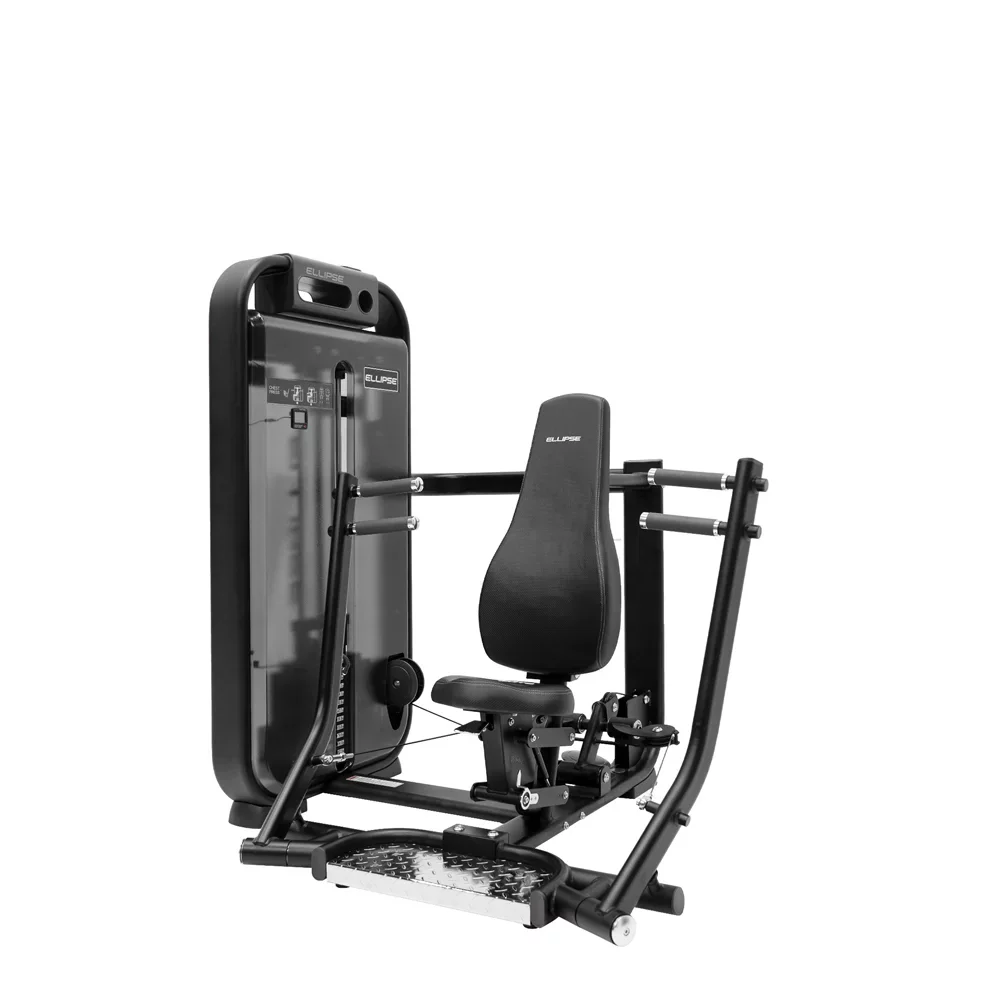
| Plate-loaded machines | Olympic plates loaded onto the machine | Strength-oriented clubs, heavier loading, low maintenance |
| Cable and functional stations | Adjustable pulleys, handles and attachments | Small footprints, personal training, rehabilitation |
| Smith machines | Barbell fixed on a guided vertical path | Squats and presses performed without a spotter |
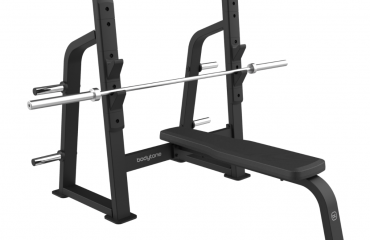
| Racks and cages | Open structure for barbell work | Free-weight zones, cross-training areas |
| Barbells and dumbbells | Free loading, unrestricted movement | Coached sessions, advanced users |
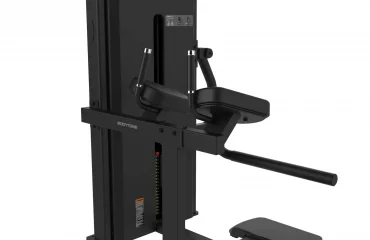
Professional strength training machines cover the guided side of that list, while the Gold Line converging plate-loaded range answers clubs that want heavier loading with a simpler mechanism. Selectorised stations such as the Power Line lat pulldown remain the backbone of a general-purpose floor.
What each family actually trains
Cable stations are the most versatile tool on the floor: triceps and biceps work, rotational movements, cable rows, and most of the assisted patterns used in rehabilitation. Selectorised machines are unbeatable for leg extension, leg curl, chest press and pulldown work, where a fast load change keeps a circuit moving.
Plate-loaded machines suit chest press and leg press stations where users load beyond a typical stack, and they tolerate hard use with very little servicing. Smith machines add a margin of safety on heavy pressing and squatting when nobody is available to spot. Racks and cages remain the right answer for deadlifts and back squats, and functional rigs let you run several users through varied patterns in the same square metres.
Operating rules that protect users and equipment
A few rules make the difference between a floor that ages well and one that generates incident reports.
- Display a warm-up recommendation at the entrance of the strength area. Cold users on a heavy station are the most common injury profile.
- Give load progression guidance on each machine. Users who select a load they cannot control lose their form and put stress on the frame.
- Prioritise technique over load in every induction you deliver. Poor form reduces the training effect and increases the risk of injury.
- Build recovery into the programmes you promote. Continuous training without rest days leads to overuse, fatigue and dropout.
- Log a routine inspection of cables, pins, upholstery and fixings. This is the cheapest maintenance you will ever pay for.
Planning a professional strength area
Once the machine list is settled, three questions decide whether the area works in practice.
Space. Each station needs its own working envelope plus circulation. A floor that looks efficient on paper becomes unusable when two users cannot pass behind a seated station. Plan access routes before machine positions, and keep a clear path to emergency exits.
Budget. The machines are only part of the cost. Protective flooring, mirrors, storage for accessories and installation belong in the same budget line. Phasing the purchase over two seasons is a legitimate strategy for a young club, provided the layout is designed for the final configuration from day one.
Safety. Machines must be assembled and anchored to the manufacturer instructions, kept away from sharp corners and glazing, and fitted with the safety devices they are designed for, such as spotter arms on racks. Any station that is out of service should be physically taken out of use, not simply signposted.
Frequently asked questions
Selectorised or plate-loaded machines for a new club?
Selectorised machines are usually the better first purchase because they suit a mixed membership and keep circuits moving. Plate-loaded stations are added later, when a strength-oriented segment of members appears.
How many strength stations does a general-purpose gym need?
It depends on your floor area and attendance profile rather than on a fixed ratio. The useful test is whether every major movement pattern, push, pull, hinge, squat and rotation, is covered at least once before you duplicate any station.
Can guided machines replace free weights entirely?
No. Guided machines handle isolation and safe loading; racks, barbells and dumbbells remain necessary for compound work and coached sessions. Most successful floors combine both.
What maintenance should be planned?
Cables, pulleys, selector pins, upholstery and structural fixings are the wear points. A short scheduled check, documented, is enough to catch nearly every issue before it becomes a breakdown.
Conclusion
Professional strength training machines are an operating decision as much as an equipment decision. The right mix of selectorised, plate-loaded, cable and free-weight stations, laid out with real circulation and backed by simple operating rules, gives you a floor that stays safe, stays busy and stays serviceable for years. If you are equipping or renewing a strength area, send us your floor plan and your attendance profile and we will build the equipment list around them: request a quote.
Sources et références
- NF EN ISO 20957-1 – équipement d’entraînement fixe, partie 1 : exigences générales de sécurité et méthodes d’essai (AFNOR)
- AFNOR Normalisation – dossier thématique sur les appareils d’entraînement fixes et leurs classes d’usage