Chest Press Machine: Setup, Technique and Common Faults
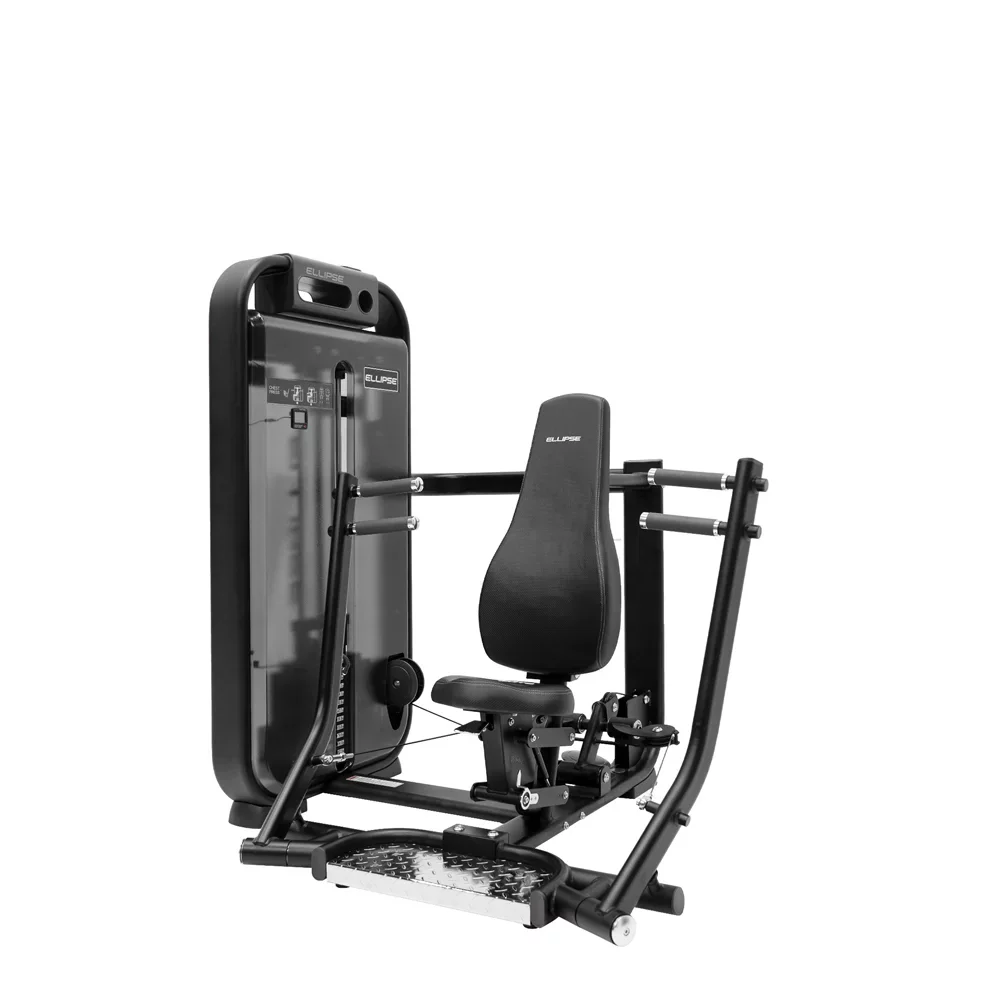
The chest press is one of the busiest stations on a commercial gym floor and one of the worst coached. For an operator that combination matters: a machine used badly produces shoulder complaints, wasted floor space and premature wear on cables and bushings. This guide covers what the station does, how to specify it for a professional room, and how to brief members and instructors so it is used correctly from the first session.
What a chest press machine does
A chest press reproduces a horizontal pushing pattern against a guided resistance. The user sits with the back supported, grips two handles level with the chest and presses forward until the arms are close to extended, then returns under control. Because the handle path is fixed by the frame, load travels along a predictable line and no spotter is required.
That is why the station earns its place in a professional room. A free-weight bench press needs supervision, a rack and a member who knows how to abandon a failed repetition safely. A chest press needs none of that. It lets an operator offer heavy horizontal pushing to beginners, to older members and to rehabilitation clients without staffing a spotter on every set.
The prime mover is the pectoralis major, assisted by the anterior deltoid and the triceps brachii. The scapular stabilisers work isometrically to hold the shoulder blades against the back pad. The machine does not change that anatomy; it changes how much of the work reaches the chest instead of leaking into the neck and shoulders, and that depends almost entirely on set-up.
Selectorised, plate-loaded or converging
Three build types dominate the professional market, and they answer different briefs.
Selectorised chest press. A weight stack with a selector pin. Load changes in seconds, which is what a busy circuit or a peak-hour room needs. This is the default choice for multi-purpose clubs, hotel gyms and corporate facilities where throughput matters more than maximal load.
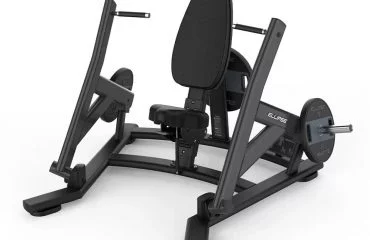
Plate-loaded chest press. Resistance comes from olympic discs loaded on horns. The feel is closer to free weights, the maximum load is limited only by the frame, and there is no stack to service. Strength-focused rooms and performance centres generally prefer this build.
Converging chest press. The handles travel inward as they travel forward, following the natural line of the pressing arc rather than a strict parallel path. Members feel a stronger contraction at the top and the shoulder is less exposed at the bottom. It costs more and it is worth it in rooms where member comfort drives retention.
Whichever build you choose, specify equipment certified to EN ISO 20957-1 class S. That is the class written for equipment in supervised and unsupervised facilities open to the public, and it is what an insurer or a public tender will expect to see on the technical file.
Setting the machine up for each user
Almost every problem instructors report on this station comes from a seat left where the previous member put it. Three adjustments decide whether the exercise works.
Seat height. The handles should sit level with the mid-chest, roughly at nipple height, when the user is seated with the back flat against the pad. Handles too high push the work into the anterior deltoid and load the front of the shoulder. Handles too low turn the movement into a decline press and shorten the range.
Back pad or seat depth. On machines with a movable back pad, the starting position should place the hands slightly behind the line of the torso, not far behind it. A deep start stretches the shoulder capsule under load, which is the single most common cause of front-of-shoulder pain on this station.
Load. Start below what the member expects to lift and add. A first working set that can be completed with clean form for ten to twelve repetitions is a better starting point than a heavy set performed badly, and it gives the instructor something to correct before fatigue hides the fault.
Correct technique, in the order you should coach it
Give members four cues and nothing else. More than four and none of them are remembered.
Anchor the body. Feet flat on the floor or on the footplate, hips fully back in the seat, shoulder blades pulled down and held against the pad. The lower back keeps its natural curve; it does not press flat and it does not arch away from the pad.
Set the hands. Wrists straight and stacked over the forearm, not bent back. Elbows stay under and slightly inside the line of the hands rather than flaring straight out to the sides. A neutral or slightly angled grip is easier on the shoulder than a wide pronated grip.
Breathe with the effort. Exhale through the press, inhale on the return. Holding the breath through repeated sets raises blood pressure unnecessarily, which matters in a room with older members.
Control the return. The lowering phase should take longer than the press. Letting the stack drop back removes most of the training effect and is the main source of noise complaints from rooms above the gym.
Set-up checkpoints at a glance
| Checkpoint | Correct | What goes wrong |
|---|---|---|
| Handle height | Level with mid-chest | Too high loads the front of the shoulder |
| Back contact | Shoulder blades held down and back | Shrugging transfers work to the traps |
| Start depth | Hands slightly behind the torso | Deep start stresses the shoulder capsule |
| Hips | Stay in contact with the seat | Lifting the hips turns it into a decline press |
| Wrists | Straight, stacked over the forearm | Bent wrists load the joint and reduce force |
| Tempo | Slower on the return than the press | Dropping the load wears the stack and the floor |
Common faults and how to correct them
Shrugging the shoulders. The most frequent fault, and the one that turns a chest exercise into a neck exercise. Reduce the load, cue the member to pull the shoulder blades down before the first repetition, and have them hold that position through the set.
Lifting the hips off the seat. A sign the load is too heavy. It changes the pressing angle, removes the back support that made the machine safe in the first place, and should be corrected immediately rather than tolerated.
Flaring the elbows. Elbows driven straight out to the sides put the shoulder in its least stable position at the bottom of the movement. Cue the elbows slightly inward and, on a converging machine, let the frame do that work.
Partial repetitions under a heavy load. Members who cut the range to add plates get less chest development and more joint stress. Full controlled range at a lower load is the better trade for almost every user profile in a commercial room.
Specifying the station for your facility
Allow a working footprint that lets a member enter and exit the seat without stepping into the next station, and leave service access behind the stack or the plate horns for cable inspection. Upholstery specification matters more than buyers expect: a chest press seat and back pad take more contact hours than almost any other station, so double-stitched covers and replaceable pads are worth the specification line.
For a mixed-ability room, many operators pair a selectorised unit for general members with a plate-loaded or converging unit for stronger users, rather than buying two identical machines. You can compare the full range on our chest press machines category, review stack-based options across the selectorised machines range, or look at a representative unit such as the Power Line seated chest press.
Frequently asked questions
Is a chest press machine a replacement for the bench press?
It is not a replacement, it is a different tool. The bench press trains stabilisation that the machine deliberately removes. In a commercial room the machine is the safer default for unsupervised members and the bench is the better choice for supervised strength work.
Should we buy a horizontal or an incline chest press?
If you can only fit one, take the horizontal press: it suits the widest range of users. An incline unit emphasises the upper chest and the front of the shoulder and works best as a second station once the horizontal press is in place.
What certification should we ask for?
Ask for EN ISO 20957-1 class S. Request the declaration of conformity with the quotation rather than after delivery, because it is the document a public tender or an insurer will ask to see.
How often does the station need servicing?
Inspect cables, pulleys and fixings on a routine schedule and check upholstery for splits at the same time. A cable that frays unnoticed on a high-traffic station is the one failure mode that takes a chest press out of service without warning.
Equipping your gym floor
The chest press is a station members will use whether or not you coach it, which is exactly why the set-up and the specification deserve attention before the machine reaches the floor. If you are planning a new room or replacing an ageing strength line, tell us the profile of your members and the space you have and we will put together a configuration that fits. Request a quote and our team will come back with options and pricing.