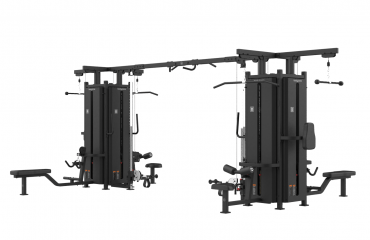
Selectorised Strength Machines: Everything You Need to Know
In short: a selectorised machine imposes the movement path, which makes it usable without supervision and suitable for beginners and for return-to-training after injury. The weight-stack pin allows an immediate load change, a decisive advantage in a high-turnover facility. The selection criteria are the adjustment range, the maximum load and the availability of cables and pulleys as spare parts.
Selectorised machines – guided-load stations built around a weight stack – are the backbone of most commercial strength floors. They are what makes a room usable by a member who has never trained before and by an experienced lifter on the same afternoon. This guide covers how they work, the main families, the criteria a professional buyer should apply, and the questions that come up most often when a facility is being equipped.
Definition and operating principle
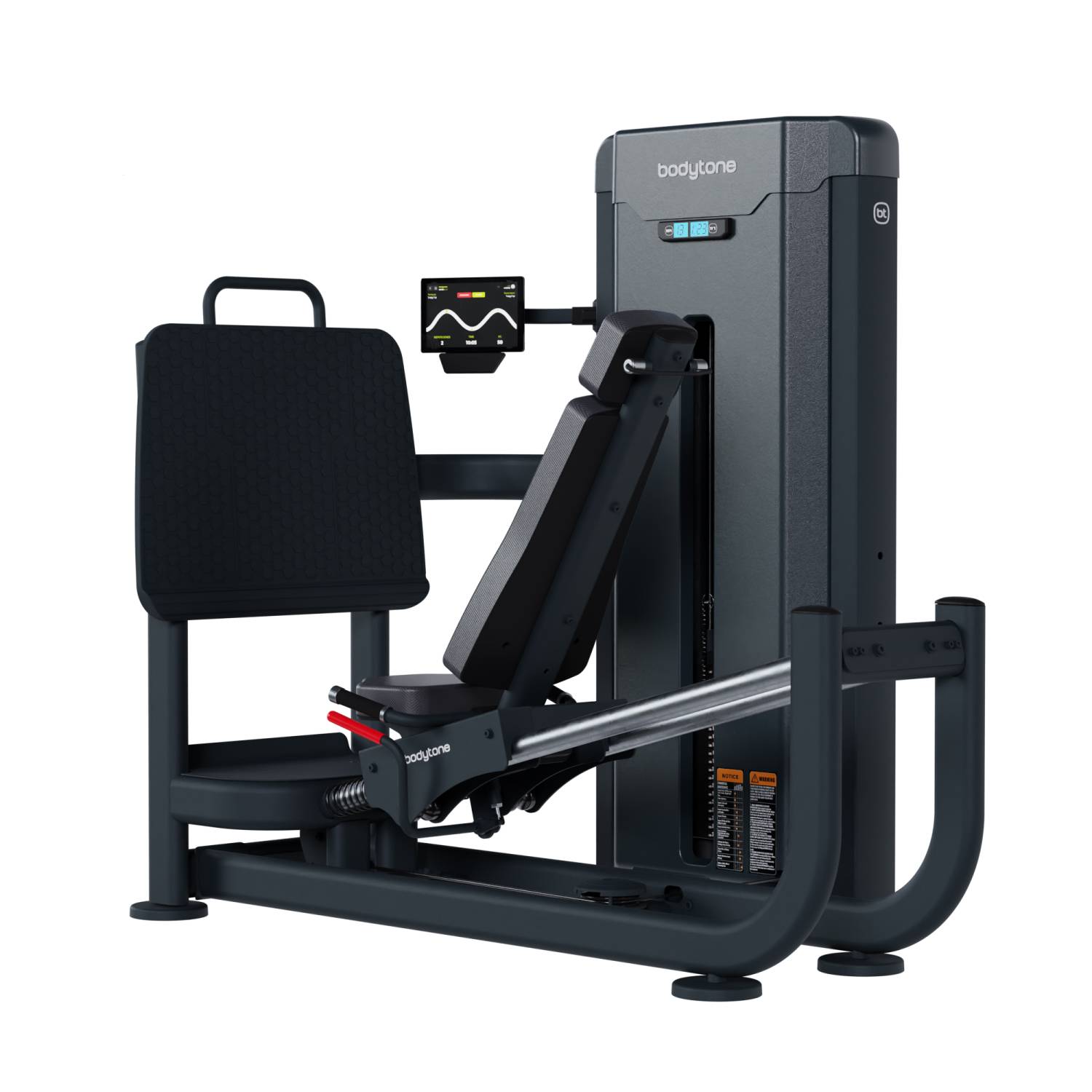
A selectorised strength machine provides controlled resistance from a stack of weight plates. Unlike free weights, the machine guides the user through a fixed movement path, which makes it safer and easier to use, particularly for newcomers. The structure is a rigid steel frame carrying adjustable seats and pads, with the resistance transmitted through a cable and pulley system to the stack.
Load is changed by moving a pin in the stack. That single detail explains a large part of why these machines dominate commercial floors: a member changes the resistance in a second, without handling plates, without a spotter and without leaving the seat. On a busy floor at peak hour, that turnover is worth more than any single mechanical refinement. Our selectorised machines are built for exactly that duty cycle.
Why facilities specify them
Safety. The guided path reduces the scope for poor execution and for a load being dropped, which matters wherever the floor is not permanently supervised.
Ease of use. Visual markers on seats and pads, plus locking devices on the adjustments, mean a member can set up correctly without being shown. That lowers the coaching load on your team.
Muscle isolation. Each machine targets a defined group, so a programme can work a specific area precisely rather than relying on compound movements alone.
Graduated progression. Fixed stack increments give a repeatable, measurable progression from one session to the next, which is what makes these machines useful in conditioning and rehabilitation settings.
Comfort. Ergonomic seats and padding keep long sessions tolerable and reduce the discomfort that pushes new members away in their first weeks.
The main machine families
Chest machines
Built to work the pectorals, with articulated arms or handles that travel inward and outward to reproduce a press or a fly movement under control.
Leg machines
Covering quadriceps, hamstrings and calves: leg extension, leg curl, leg press and calf raise. This is usually the heaviest group on the floor and the one where frame quality shows first.
Abdominal machines
Crunch, torso rotation and leg raise stations, used to work the trunk in a defined range rather than through unsupported floor work.
Back machines
Lat pulldown, seated row and back extension stations for the lats, trapezius and lower back, with the resistance held under control throughout the movement.
Shoulder machines
Lateral raise, shoulder press and upright row stations targeting the deltoids and trapezius in a guided path.
Arm machines
Biceps curl, triceps extension and assisted pull-up stations, giving controlled resistance for arm work at any level.
Ranges differ in stack increments, frame section and finish rather than in the movements themselves: compare the Gold Line selectorised machines against the rest of the offer on those points.
What to check before ordering
Three criteria separate a machine that survives commercial use from one that does not. First, the adjustment range: seat, pad and start-position adjustments have to accommodate the full spread of body sizes in your membership, not an average user. Second, the maximum load of the stack, which has to leave headroom above your strongest members rather than sitting exactly at their working weight. Third, and most often overlooked, the availability of cables and pulleys as spare parts: these are the wear items, and a machine whose consumables cannot be reordered quickly becomes floor space out of service.
Where a facility also wants a heavy free-weight feel with no stack to maintain, plate loaded machines sit alongside the selectorised range rather than replacing it.
Frequently asked questions
What are the advantages over free weights?
Controlled resistance, a fixed movement path and immediate load changes, which together make them safer and easier for beginners. They also isolate a target group more precisely than most free-weight equivalents.
Are they suitable for every fitness level?
Yes. The adjustable stack allows graduated progression, so the same station serves a first-week member and an experienced lifter.
Should they be combined with free weights?
Yes. A complete floor uses both: selectorised machines to isolate groups safely, free weights for freedom of movement and for the stabilising muscles a guided path does not recruit.
Can they be used in rehabilitation?
They are widely used for return-to-training work, because the resistance is controlled and the movement stays within a defined range. The programme itself remains a matter for the clinician in charge.
How do they differ from pneumatic or hydraulic machines?
A selectorised machine takes its resistance from steel plates. A pneumatic machine uses compressed air, and a hydraulic machine uses fluid forced through a cylinder. Stack-based resistance is constant and repeatable, which is why it remains the reference for progression tracking.
Do they help with weight loss?
They contribute as part of a complete programme combined with a balanced diet. Strength work builds muscle, which supports the wider result; no single machine does it on its own.
Equipping your floor
The right mix depends on your surface area, your membership and how the room is staffed. Send us the floor plan and the intended use, and we will come back with a station list, the circulation clearances and a costed proposal: request a quote.