The Selectorised Biceps Curl Machine: Getting More from Every Set
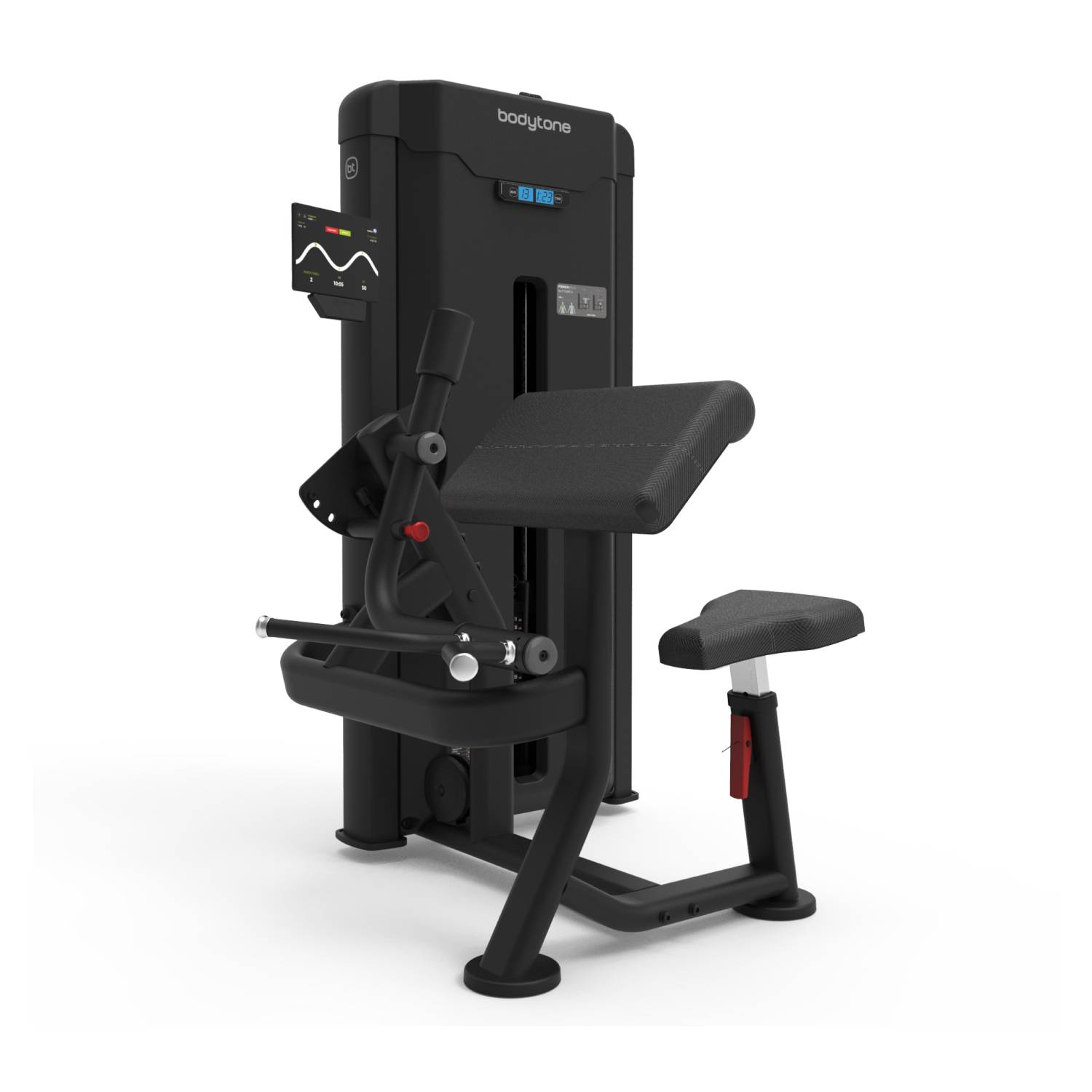
The selectorised biceps curl machine is a core station for any facility that wants members to build and strengthen the arms effectively and safely. It delivers constant, controlled resistance, which is what allows the arm flexors to be targeted precisely and a set to be finished with the load still under control. This article covers why guided resistance works, the machine formats available, how to coach the movement and what to check before you buy.
Why choose a selectorised biceps machine
A guided-load biceps machine offers several advantages over free dumbbells or unloaded arm work. These are the reasons an operator specifies one for the floor:
- Controlled resistance. A guided load keeps resistance constant through the movement, which targets the biceps more consistently and maintains the tension that drives muscular development.
- Safety. The user works within a fixed path. There is no risk of an accidental overload dropping onto a joint and far less scope for the abrupt or incorrect movements that cause injury in free-weight arm work.
- Muscular isolation. A machine isolates the arm flexors more precisely than dumbbells. Other muscle groups are not recruited to compensate, which supports balanced development.
- Ease of use. Weight selection and the guided path make the exercise simple to perform correctly, including for a member on their first induction. That is exactly why it belongs in an entry-level circuit.
For a commercial facility, one further point matters: indoor equipment used in an open-access gym should be certified to EN ISO 20957-1 class S. That is the professional class, and it is the specification to insist on for any station that will be used unsupervised, day after day, by members of very different sizes and strength levels.
The machine formats available
1. Cable-driven biceps machine
A pulley system provides constant resistance through the movement. It allows a wide variety of positions and grips, so the same station can be programmed several ways. Facilities that want that flexibility usually specify it alongside their cable stations.
2. Independent-arm biceps machine
Each arm works separately, which supports balanced development and exposes any side-to-side difference in strength. Resistance is adjustable to suit different strength levels, and the independent movement is particularly useful in a rehabilitation context.
3. Biceps machine with an EZ bar
The cambered bar reduces strain on the wrists and forearms, which is the deciding factor for members who find a straight bar uncomfortable. It still gives constant resistance and a good range of grip positions.
4. Dual-pulley biceps machine
Two pulleys deliver resistance independently to each arm. The result is a more natural movement path and better recruitment of the arm flexors than a single fixed handle allows.
Whichever format you choose, the underlying build matters more than the marketing name. The full range sits in our selectorised machines category, and the same movement is also available as a plate-loaded machine where the strength floor calls for it.
Coaching points that get results
- Warm up properly. A few minutes of joint mobility and light movement prepares the elbow and shoulder for load and reduces injury risk.
- Start at an appropriate weight. Begin moderate and add load progressively as strength and confidence build. On a selectorised stack this takes seconds, which is precisely the point.
- Hold good form. Back straight, shoulders back, elbows close to the body. No swinging the torso and no compensating with other muscles.
- Vary the exercise. Changing grip and position across sessions works the arm flexors through different angles and keeps the stimulus effective.
- Train consistently. Results come from a regular, planned programme rather than from occasional heavy sessions.
- Programme rest. Recovery days are part of the programme, not a gap in it. Muscle is rebuilt between sessions, not during them.
Frequently asked questions
Which muscles does a selectorised biceps machine work?
It targets the biceps first, and also recruits the forearm muscles and the stabilisers around the shoulder.
What is the difference between the machine and free dumbbells?
The main difference is the controlled resistance, which gives better muscular isolation and greater safety than free dumbbells.
How often should the machine be used?
Frequency depends on the goal and the training level. As a general guide, the biceps are trained two to three times a week with a rest day between sessions.
Is it suitable for beginners?
Yes. Guided-load biceps machines are well suited to beginners: they are easy to use and safe, which makes them an ideal starting point for someone new to resistance training.
What other exercises pair well with it?
It combines with other arm work such as dumbbell curls, pull-ups and dips for complete arm training.
Does biceps work help with weight loss?
Resistance training contributes to energy expenditure during the session and helps build muscle mass, which supports resting metabolism over time. It is one component of a weight-management plan, not a substitute for one, and a single isolation station will not deliver that on its own.
Specifying the right unit for your facility
Choose on the build and the fit to your members, not on the movement alone: frame construction, the weight increments on the stack, the adjustment range of the seat and pads, and the footprint including the user’s working space. Tell us how many members use the arm area at peak time and how much floor you have, and we will propose a configuration through our quote request page.