Professional Strength Training Equipment: How to Equip a Commercial Gym
Equipping a commercial gym, a hotel fitness room or a club training floor is a capital decision, not a shopping list. The equipment you install has to survive twelve to sixteen hours of use a day, tolerate hundreds of different users and still look presentable in five years. This guide walks through the categories of professional strength training equipment that genuinely earn their floor space, and what to check before you sign an order.
Dumbbells: the workhorse of every free weight zone
No strength floor is complete without a full dumbbell set. Dumbbells are versatile, immediately usable by beginners and advanced members alike, and they load every muscle group with almost no learning curve. For commercial use, choose rubber or urethane encased heads rather than bare cast iron: they protect the floor, they cut noise and they resist chipping. Plan a continuous range so users never have to skip a step, and budget for the rack at the same time as the weights. A dumbbell set without a rack becomes a trip hazard within a week.
Olympic barbells and weight plates: raw strength
When members want to build real power, the barbell is the reference tool. Paired with weight plates it allows heavy loading and progressive overload across squats, deadlifts, bench press and rows, the compound movements that drive most training programmes. In a professional setting, specify bars rated for commercial loads, with sleeves that spin freely and a knurl that stays legible after years of chalk. Bumper plates are worth the extra cost anywhere lifters may drop the bar. Browse the full range of Olympic barbells to match bar specification to your training offer.
Resistance bands and functional accessories
Do not underestimate resistance training bands. Compact, inexpensive and endlessly versatile, they deliver constant tension through the movement and are ideal for warm-ups, assisted pull-ups, rehabilitation work and small-group classes. For an operator they solve a very practical problem: they add exercise variety in studios where floor space is the binding constraint. Store them on a dedicated wall rail so they do not migrate around the room.
Adjustable benches: versatility and stability
An adjustable bench is the single accessory that multiplies what your free weight zone can offer. Flat, incline, decline and upright positions cover chest, shoulder and arm work with correct posture and proper support. For commercial duty, look at the frame gauge, the locking mechanism and the upholstery: a bench is adjusted dozens of times a day, and cheap pop-pin mechanisms are the first thing to fail. Our professional weight benches are built for continuous club use.
Pull-up bars and rigs: the ultimate upper-body movement
The pull-up bar remains one of the most efficient pieces of equipment per square metre. It loads the back, shoulders and arms, builds functional strength and costs a fraction of a machine. In a facility, a wall-mounted or rig-integrated bar is preferable to a free-standing unit: it is more rigid under load and it does not creep across the floor. Check the fixing substrate before you specify anything wall-mounted, and have the anchorage validated by the installer.
Cable stations: precision and variety
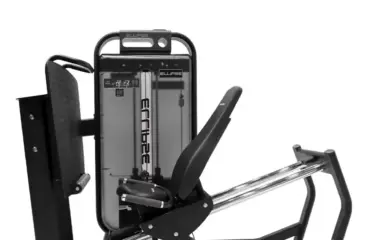
When you need to isolate a muscle group or offer smooth, joint-friendly resistance, cable machines are the answer. With adjustable weight stacks and interchangeable handles they cover everything from lat pulldowns to triceps pushdowns, delivering constant resistance through the whole range of motion. For mixed-ability memberships they are often the highest-use station on the floor. The wider professional strength training machine range covers selectorised, plate-loaded and cable configurations.
Foam rollers and massage balls: recovery matters
Post-workout recovery is part of the offer, not an afterthought. Foam rollers and massage balls release muscular tension, reduce soreness and improve mobility. A small dedicated stretching and recovery corner is cheap to create, keeps members on site longer and takes pressure off your busiest machines.
The one specification that separates professional from the rest
Whatever the category, indoor equipment installed in a facility open to third parties must be built and certified to EN ISO 20957-1 class S, the studio class. This is the specification that covers structural strength, stability, entrapment and the fatigue testing a machine sees in continuous use. It is also what your insurer and, in most jurisdictions, your operating licence will expect to see in the technical file. Ask the supplier for the declaration of conformity in writing before ordering, not after delivery.
Frequently asked questions
How much floor space should I allow per station?
It depends on the machine footprint plus the user envelope and circulation. Work from the manufacturer drawings for each reference rather than a rule of thumb, and lay the room out on plan before ordering. We produce a free layout study from your dimensioned floor plan.
Do I need different equipment for a hotel than for a club?
The certification requirement is the same, but the mix changes. Unstaffed hotel and residential rooms favour guided, self-explanatory stations and fewer free weights, because there is no instructor on site to correct technique or reset the floor.
What lifespan should I expect?
Correctly specified commercial frames last well beyond a decade. Light In Fitness offers up to twenty years of warranty on steel structures and a lifetime warranty on stainless steel, which is the honest measure of how these frames are engineered.
Build your equipment list with us
Light In Fitness has equipped more than five hundred facilities since 2013, from independent clubs and hotel gyms to municipal centres and rehabilitation units. Send us your floor plan, your membership profile and your budget envelope, and we will come back with a costed equipment schedule rather than a catalogue extract. Request a quote and we will build the specification with you.