What Professional Strength Machines Change for Performance and Safety in Your Gym
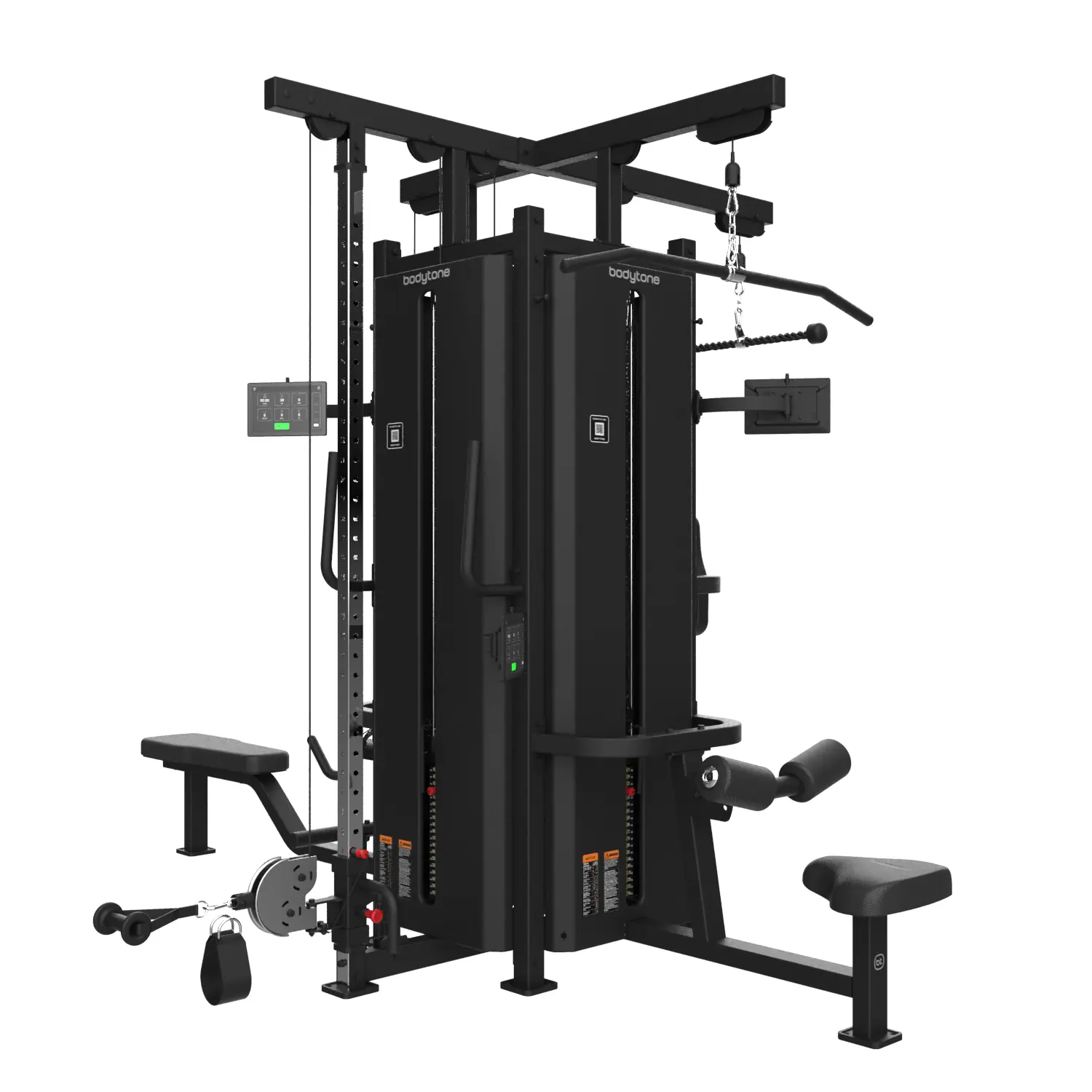
The equipment on your gym floor is not a neutral backdrop to what your members do. It shapes how safely they train, how quickly they progress and how long they stay. Professional strength machines change three things at once: the performance your members can reach, the risk they are exposed to, and the comfort that keeps them coming back. This article looks at each of those in turn, from the point of view of the operator who has to justify the investment.
Targeted work, with the technique risk designed out
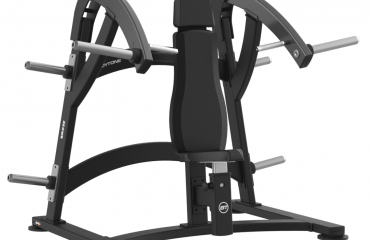
Strength machines are built to load a specific muscle group: chest, biceps, triceps, or the lower body through the quadriceps and glutes. The guided movement path is the point. It isolates the target muscle more reliably than a free-weight equivalent, and it removes a large part of the injury risk that comes from poor technique under load.
For a commercial operator, that matters most at the two ends of the membership. Beginners can start strength training safely without one-to-one supervision, which is exactly the population most likely to quit after a bad early experience. Experienced members can isolate a muscle group deliberately as part of a wider programme rather than as a compromise.
The distinction that decides whether a machine actually delivers this is its specification. Equipment for indoor commercial use is specified to EN ISO 20957-1 class S. That class exists because a machine on a staffed gym floor is used by hundreds of different bodies, at all hours, without anyone watching. Guided movement is only safe when the frame, the bearings and the adjustment mechanisms are built for that duty cycle.
Strength and cardio as one system
Members who combine strength work with cardio sessions on rowers, cross trainers or treadmills build cardiovascular endurance alongside muscle. Programming the two together is more effective than treating them as separate offers, and it is one of the clearest arguments for planning the strength and cardio zones of a facility as a single project rather than as two purchases a year apart.
In practice this means the two areas need to work together physically: circuits that move members between a selectorised strength machine and a cardio machine without crossing the whole floor, and enough of each for the peak hour.
What the coaching layer adds
Well-equipped facilities pair the hardware with supervised sessions. Coaches build strength programmes around each member’s needs, which supports continuous progression and muscle tone development, and their regular follow-up is the main mechanism preventing injury: appropriate warm-up before the session, appropriate stretching after it, better flexibility and better recovery.
Machines and coaching are complements, not substitutes. The machine makes unsupervised training safe. The coach makes supervised training progressive. A facility that invests in one and not the other gets a fraction of the return from either.
Group classes and the wider offer
Classes such as HIIT and cross-training let members vary their routine and motivate each other. They build the team spirit and mutual support that keep attendance up, which is a retention asset in its own right. Combined with cardio sessions such as indoor cycling or running, strength exercises help shape the body, including the abdominal region, while improving respiratory capacity and overall performance.
From a planning perspective, this means the class studio and the strength floor are competing for the same members’ time and, often, for the same square metres. Deciding the balance early is easier than retrofitting it.
Joints, posture and training that lasts
The controlled movements and correct posture that machines enforce reduce injury risk and support training that stays functional and sustainable over the long term. This matters for any member who wants to train seriously without compromising their health, and it matters commercially: an injured member does not renew.
What this means when you specify a floor
| Objective | What the equipment has to deliver |
|---|---|
| Safe onboarding of beginners | Guided movement paths, clear adjustment, legible instructions |
| Progression for experienced members | Sufficient load range and usable increments |
| Combined strength and cardio programming | Zones planned together, adequate station counts at peak |
| Long-term joint health | Correct biomechanics and adjustment ranges that fit real body sizes |
| Availability and uptime | Commercial-grade build specified for continuous use |
Frequently asked questions
Are strength machines safer than free weights?
For unsupervised members, generally yes. The guided path removes much of the risk associated with poor technique under load. Free weights remain valuable for experienced members and for compound lifts, which is why most commercial floors carry both.
Are machines suitable for complete beginners?
Yes, and this is one of their main advantages. A beginner can start strength training safely on machines and move towards free weights as technique develops.
Do machines limit what experienced members can do?
Not if the floor is planned properly. Machines isolate; free weights load compound patterns. A complete floor offers both, and members use each for what it is good at.
What does professional specification actually change?
Duty cycle. A commercial machine is built for continuous use by many different users. That affects frame, bearings, upholstery and adjustment mechanisms, and it is the difference between equipment that is available at peak hour and equipment that is out of service.
Planning your equipment
The impact of professional strength equipment on member performance and safety is not in doubt. What varies is whether the specific mix in a specific facility supports the members who actually use it. Send us your floor plan, your membership profile and your programming, and we will propose an equipment configuration and a costed quotation.