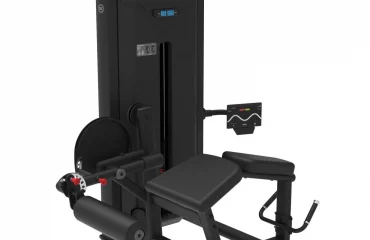
Where to Buy a Chest Press at the Best Price: Expert Answers

The chest press is one of the few stations that appears in almost every gym floor plan, from a twenty-station club to a hotel fitness room. It loads the pectorals, the triceps and the anterior deltoids through a guided path, which is exactly why it is the station beginners are put on first and the one that takes the most traffic per square metre. The question operators actually ask is not which chest press is best in the abstract, but where to buy the right one at the right price. Here is how our team answers it.
Why the station is worth investing in
A chest press delivers targeted upper-body training with controlled resistance on every repetition, which matters when a facility has to accommodate users of very different levels. Compared with free weights, the guided range of motion reduces the risk of a failed rep and of poor positioning, particularly for new members. That is a supervision argument as much as a training argument, and it is the reason the station belongs in almost every specification.
The three types, and who each one suits
- Plate-loaded chest press. Resistance is added with Olympic discs. There is no ceiling imposed by a stack, maintenance is simple, and it is generally preferred by experienced users and by strength-oriented facilities.
- Cable chest press. Resistance stays constant through the movement, giving a smoother and more controlled feel. It suits facilities that want a single station to serve a wide range of abilities.
- Selectorised chest press with an integrated stack. The weights are enclosed in the machine itself, which is the right answer for commercial gyms and for unsupervised rooms where space and safety are the priority.
The full chest press machines range covers all three formats, so the choice can be made against the room rather than against what a single supplier happens to stock.
How to choose: the criteria that matter
- Resistance range. Prefer a machine whose load range covers your weakest and your strongest members, with increments small enough to make progression possible.
- Comfort and ergonomics. Good padding, an adjustable start position and comfortable handles are what make long sessions viable and what stops members avoiding the station.
- Stability and build. Check the frame section, the welding and the floor contact. Stability is a safety requirement first and a durability argument second.
- Footprint. Where floor area is limited, choose a compact frame without dropping the specification. Take the footprint and the user clearance from the datasheet of the exact reference.
- Ease of use. A machine that is obvious to set up keeps members training instead of adjusting.
- Certification. Indoor equipment in a facility open to third parties must be certified to EN ISO 20957-1 class S. Ask for the certificate before ordering.
Why quality has to come before headline price
The cheapest option often costs more over the life of the equipment. Under-specified machines wear faster, need repairs or early replacement, and an unstable or badly designed frame is a safety problem rather than a saving. For a commercial operator the honest comparison is cost per year of service, including spare parts and downtime, not the invoice on day one.
Where to buy: choosing the supplier, not just the machine
When you are comparing prices, compare what surrounds the price: product quality, technical support, spare-parts availability and warranty terms. A supplier who can specify against your floor plan, document the certification and answer when a cable needs replacing three years later is worth more than a slightly lower quotation.
Light In Fitness has specialised in professional fitness equipment since 2013 and has equipped more than 2,500 customers. Our team works from your plan and your user profile to a documented equipment list, with competitive pricing across the range and support that continues after installation. Facilities building a full pressing area usually specify the chest press alongside the rest of the selectorised machines.
Installation and maintenance
Once the machine is delivered, correct installation is what determines whether it performs as specified.
- Prepare the space. Choose a stable, level position with the clearance the datasheet requires around the station.
- Assemble to the instructions. Follow the supplied documentation and use the specified tools and torque values.
- Check stability. Once assembled, verify that the frame does not rock and that every fixing is correctly tightened.
- Set the adjustments. Configure the seat height and the handle start position, and brief the staff who will set them for members.
Routine maintenance keeps the station in service: wipe the surfaces regularly to remove dust and perspiration, check moving parts and apply a suitable lubricant, inspect cables, fixings and welds for wear, and replace any worn or damaged component immediately rather than at the next service.
What members get out of it
The chest press develops the upper body, in particular the pectorals, the triceps and the anterior deltoids, and lets users work with heavy loads safely. Changing hand position on the handles shifts emphasis towards the triceps or the shoulders, which gives a single station real programming variety. And compared with free weights it offers a clear safety margin for beginners, guiding the movement and reducing the risk of imbalance or poor posture while still allowing significant loads.
Frequently asked questions
Which chest press suits a small facility or a hotel room?
A compact selectorised station with an enclosed stack. It is safe in an unsupervised room, needs no loose discs and fits a limited footprint without dropping to a non-commercial specification.
How much does a good chest press cost?
It varies with the format, the resistance system and the range. Prices are quoted per reference and per configuration, so ask for a quotation on the exact machine rather than working from a general figure.
Is a chest press difficult to assemble?
Most machines ship with clear instructions and the tools required. For commercial installations we recommend assembly by trained fitters, both for the warranty and because the stability check is part of the handover.
Plate-loaded or selectorised?
Plate-loaded for supervised, strength-oriented floors with unlimited loading. Selectorised for mixed-ability memberships and unsupervised rooms, where enclosed stacks are the safer answer.
Getting a price for your project
The best price is the one attached to the machine that actually fits your room, your members and your supervision model. Send us your floor plan and your user profile and our team will return a documented specification with certification data and a quotation. Request a quote for your chest press.