Professional Strength Training Equipment: A Buying Guide
Fitting out a strength floor is not a shopping exercise, it is an operating decision. The stations you install determine how many members can train at the same time, how much supervision the room needs, how often a technician has to come out and how the floor still looks after three winters of continuous use. Professional strength equipment exists precisely because that context is unforgiving.
From multi-station gyms to plate-loaded presses, adjustable benches and heavy-duty racks, this guide walks through what separates commercial-grade equipment from lighter ranges, which families do what, and how to match a specification to the facility you actually run: an independent gym, a club, a hotel fitness room, a municipal centre, a school or a rehabilitation unit.
What professional strength equipment really means
Professional equipment is built for a duty cycle no lighter range is designed to survive: continuous use, untrained users, minimal downtime, and a service life counted in years rather than seasons. Whether the room serves competitive athletes or members taking their first strength session, the specification question is the same, because the load on the frame comes from the number of users per day, not from their level.
That is why our whole professional strength equipment range is specified for commercial installation rather than adapted from lighter product lines.
Why commercial-grade equipment pays back
The first argument is material. Commercial stations are built from durable, high-resistance materials, and that construction is what delivers their service life and their reliability. Where a lighter frame develops play, a commercial frame keeps its geometry, and geometry is what keeps a movement safe.
The second is stability under load. A station that does not move while it is being used lowers the risk of injury, and on a floor where most people train without a coach beside them, that stability does more for safety than any poster on the wall.
The third is adjustability. Professional equipment usually offers adjustable resistance systems, incline settings and, on console-equipped equipment, preset training programmes. Those features let one station serve a very wide range of member profiles instead of only the strongest ones.
There is a fourth argument that operators consistently underrate: the psychological effect. Training on high-end equipment motivates members and builds their confidence, and confidence shows up in attendance, retention and performance. A well specified room sells itself every time someone walks through it.
Durability is also a commitment on our side: our steel structures carry a warranty of up to 20 years and our stainless steel a lifetime warranty.
The main families of professional strength equipment
Four families cover most of what a commercial floor needs.
Multi-station gyms are all-in-one units that train the whole body. Several pulleys and cable runs let different muscle groups be reached from one footprint, which is why they are the backbone of hotel rooms, corporate facilities and any site where floor area is the binding constraint. Our multi-station gyms cover this segment, and a unit such as the Bodytone FC4S V2 four-station multi-gym lets four members train simultaneously in a single footprint.
Adjustable benches provide a wide range of incline positions so a given muscle group can be targeted precisely. They are the cheapest way to multiply the number of exercises a floor can offer, and the weight bench range covers flat, incline and decline configurations.
Squat cages and power racks are built for squatting and heavy barbell work, with adjustable safety bars that catch the bar if a repetition fails. On a supervised or unsupervised floor alike, they are the station where the safety design matters most.
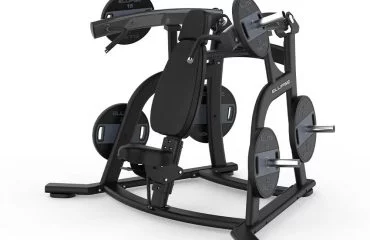
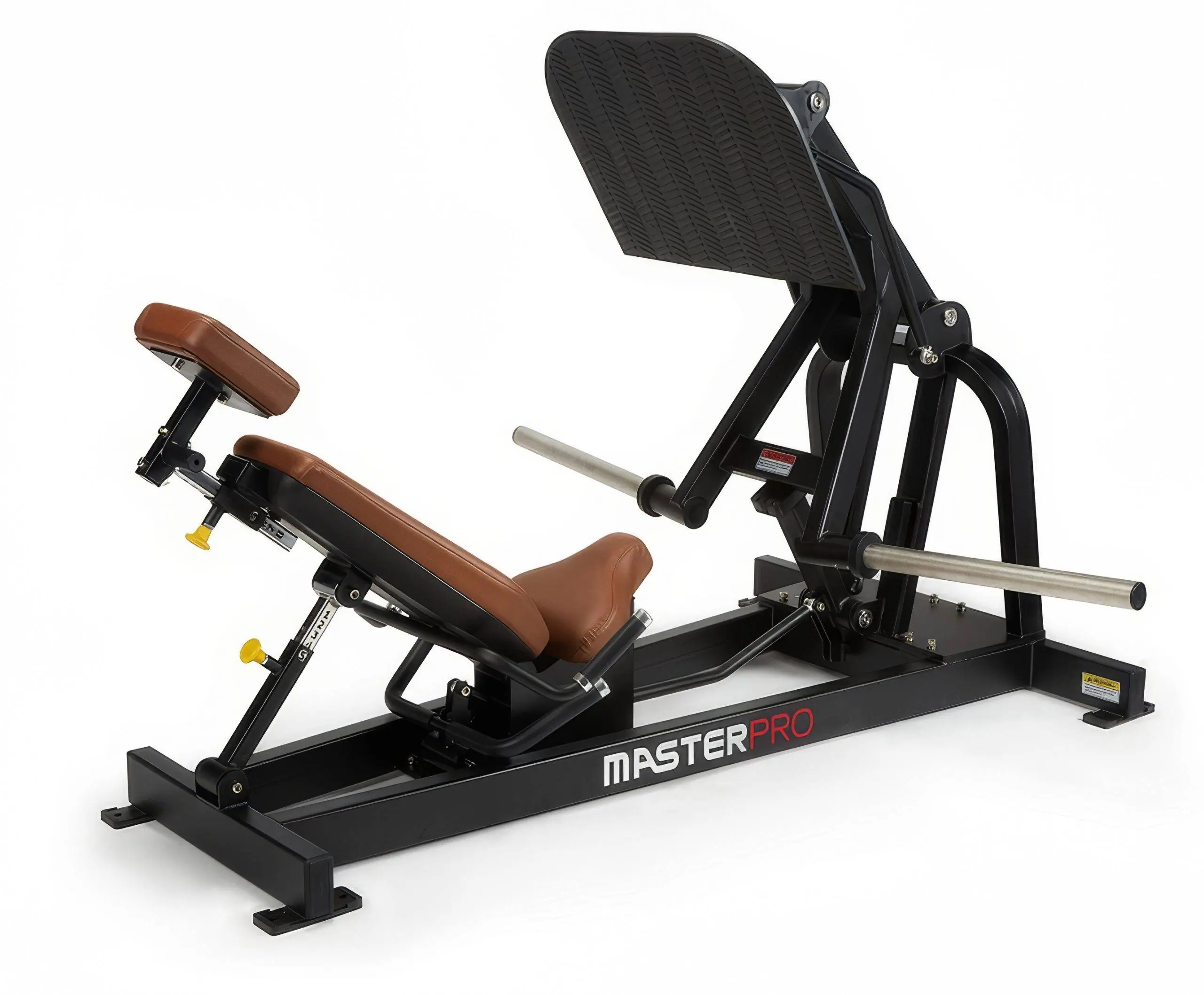
Free-weight and plate-loaded presses allow more functional training, because the movement reproduces the natural path of the body rather than a fixed rail. They suit strength and power work and populations that need to transfer their training to real tasks.
How to choose for your facility
Three questions settle most specifications.
What is the training objective? Strength, endurance or muscle mass do not lead to the same equipment mix. Define the outcome your members are buying before you compare frames, because that decision drives everything downstream.
How much space do you have? Some stations are bulky and need dedicated floor area and clearance around them. Check the dimensions and technical specifications of every reference against your floor plan before ordering, not after delivery. This is the single most common source of installation problems.
What is the budget, and over what period? Professional equipment varies considerably in price. Set a realistic budget and look for the best value over the service life of the equipment rather than the lowest figure on the order form. A frame replaced twice is not cheaper than a frame bought once.
Technique and programming on professional equipment
Equipment defines what is possible; coaching defines what is achieved. Members should be guided towards correct technique through instructional material, work with a personal trainer or a structured programme rather than being left to improvise on a station they have never used.
A few examples of what a properly specified floor makes possible:
- Squats in a squat cage
- Bench press on an adjustable bench
- Lat pulldown on a multi-station gym
- Lunges with free-weight, plate-loaded equipment
Getting the most out of the equipment
- Set a regular training programme and follow it consistently.
- Start with lighter loads and increase the intensity progressively.
- Focus on correct form and technique to avoid injury.
- Judge progress on performance rather than on the number on the scale.
- Allow enough rest between sessions for the body to recover.
Mistakes to avoid on a commercial floor
- Skipping the warm-up and the mobility work before training.
- Using a load so heavy that form breaks down and injury risk rises.
- Neglecting recovery by leaving too little time between sessions.
- Repeating the same exercises indefinitely without varying intensity or movement pattern.
Frequently asked questions
Is professional equipment worth it for a small facility?
Yes, and often more so. A small room has fewer stations, so each one carries a higher share of the daily load. Under-specifying is a false economy exactly where the equipment is used hardest.
Multi-station gym or separate stations?
It depends on your floor area and your peak attendance. A multi-station gym maximises exercises per square metre; separate stations maximise the number of people who can train at once. Sites with narrow peak hours usually need separate stations, and see also our racks and cages for heavy barbell work.
How do I check that a station fits my room?
Work from the manufacturer dimensions plus the clearance the movement requires, and place them on your floor plan before ordering. Send us the plan and we will do that check with you.
Specify your strength floor with us
Light In Fitness, based in Tours, France, has equipped more than 2,500 customers since 2013, from independent gyms to clubs, hotels, schools and public operators. Send us your floor plan, your member profile and your budget, and we will come back with a layout and a costed proposal built around them. Request a quote to get started.