The Professional Leg Press Machine: Everything You Need to Know
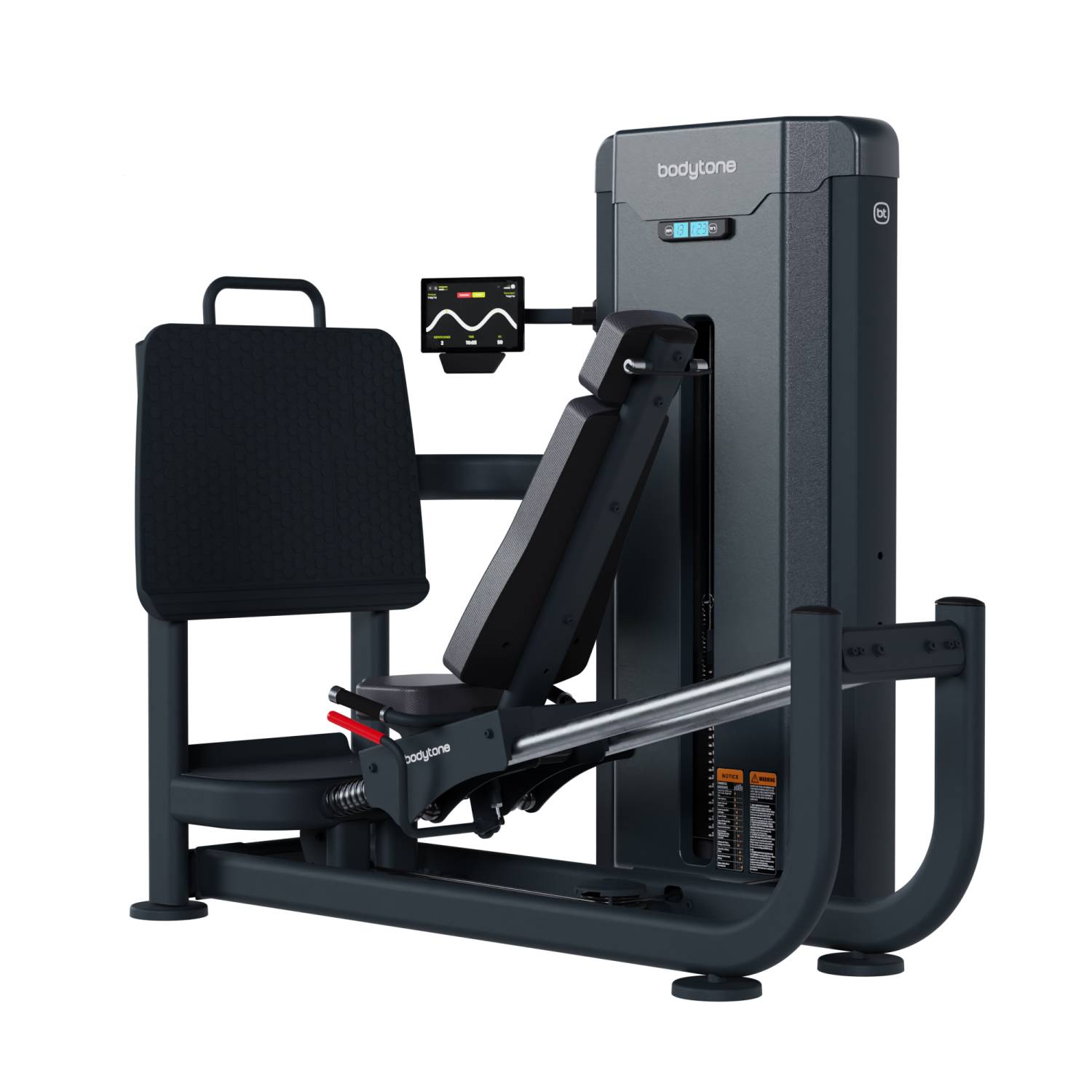
The leg press is the machine members head for when they want to train legs seriously, and it is the machine operators reach for when they need heavy lower-body work to be available without constant supervision. It consists of an inclined seat and a footplate, and it loads the quadriceps and the glutes through a guided path with the back supported. This guide covers what it trains, the foot positions that change the emphasis, the coaching and safety points that matter on a busy floor, and what to look at when you are specifying one for a commercial facility.
What a leg press does on a commercial floor
Two things make the leg press indispensable in a professional setting. First, it makes heavy lower-body loading accessible to members who cannot squat safely, whether because of mobility limits, a history of back problems, or simply inexperience. Second, it is largely self-explanatory: the movement path is fixed, the load changes quickly, and a member can use it correctly after one short induction. On a floor where staff cannot watch every station during peak hours, that combination is worth a great deal.
What the leg press trains
- Quadriceps. The primary target. Pressing the platform away extends the knee under load, which is exactly what the quadriceps do.
- Glutes. Heavily involved, particularly through the deeper part of the range and with a higher foot position.
- Hamstrings. Recruited as synergists, more so as the feet move up the platform.
- Adductors. Engaged when the stance is widened.
Because the trunk is supported, the leg press also lets a member load the legs hard without the spinal loading a barbell squat imposes. That is why it appears in rehabilitation settings and in facilities serving an older membership as often as in performance gyms.
Foot position: the six useful variations
Standard stance
Feet shoulder-width, mid-platform. The default, and the one to teach first. Emphasis on quadriceps and glutes.
Single leg
One leg at a time, with a correspondingly reduced load. Useful for correcting side-to-side imbalances and standard practice in return-to-sport work.
High foot position
Feet placed higher on the platform. Shifts emphasis towards the glutes and hamstrings.
Low foot position
Feet lower on the platform. Increases quadriceps involvement.
Wide stance
Feet set wider apart. Brings in the glutes and the adductors.
Narrow stance
Feet close together. Concentrates the work on the quadriceps.
Six positions on one machine is a lot of programming variety for a single footprint, which is part of why the leg press earns its floor space.
Coaching and safety points
- Warm up first. Joint mobility work and a light set before the working load, not straight onto a heavy stack.
- Set the machine to the user. Seat and backrest adjusted to the member’s build. A badly set seat produces a bad position and raises the injury risk more than the load does.
- Load appropriately. The load should allow a controlled, smooth movement through the full intended range. Overloading buys nothing and costs technique.
- Keep the back supported and the knees unlocked. Back flat against the pad, no locking out at the top, and drive through the heels rather than the toes.
- Do not overshoot the range. Pushing past the point where the hips start to lift off the seat loads the lower back and hyperextends the knee.
- Screen for existing conditions. Members with knee or back histories should be referred to a qualified health professional or coach before loading the machine heavily.
Most of this belongs in the induction script rather than on a wall poster. A five-minute induction on the leg press prevents more incidents than any amount of signage.
Specifying a leg press for your facility
Three formats cover most requirements. The 45-degree press is the classic, takes the heaviest loads and needs the most floor space. The vertical leg press stands the movement up and fits into a much smaller footprint, which suits facilities short on area. Selectorised leg press stations use a weight stack instead of discs, which speeds up load changes and suits circuit-style floors and mixed memberships; the Bodytone Forza FH range is one such family. Whichever format you choose, check the footplate size, the range of seat adjustment, the maximum load rating and the clearance the machine needs behind and beside it. All the equipment described here is built for supervised commercial use to EN ISO 20957-1 class S.
Frequently asked questions
Which muscles does the leg press work?
Primarily the quadriceps and the glutes, with the hamstrings and adductors recruited as support, and the balance between them shifting with foot placement.
How often should a member use it?
That depends on their goals and current condition. Two to three sessions a week is a reasonable starting point, adjusted from there. Programming is a coaching decision, not a machine setting.
Can members with knee problems use a leg press?
Anyone with an existing knee condition should be assessed by a qualified health professional before using it, and the load, range and foot position set accordingly. The supported position makes it a common choice in rehabilitation, but that is a clinical judgement rather than a default.
Does the leg press help with weight loss?
It contributes as part of a wider programme. Any resistance work expends energy and builds muscle, and combined with a balanced diet and other training that supports body composition change. The machine itself does not target where fat is lost.
What should be programmed alongside it?
Squats, lunges and free-weight lower-body work complement it well, as do hamstring-specific movements, since the leg press does not fully cover the posterior chain.
Equipping your strength floor
Tell us the floor area you have, the format you prefer and the membership you serve, and we will come back with a specified machine and an itemised price. Request a quote and we will work through the layout with you.