Bodytone Professional Leg Press: The Complete Buyer Guide
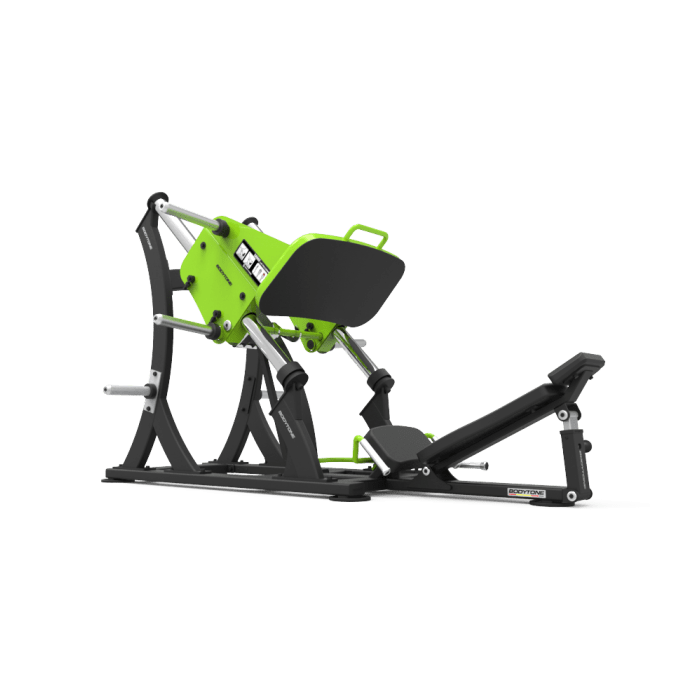
The leg press is one of the few machines that earns its floor space in almost every kind of facility. A commercial gym needs it because it is the entry point to lower-body training for members who will never load a barbell. A rehabilitation centre needs it because the movement is guided and the load is controlled. A hotel or residential gym needs it because one machine covers the whole lower body in a footprint the room can absorb.
This guide looks at the Bodytone professional leg press from a buyer’s point of view: what the machine is, how it is built, what it delivers on a working floor, how to have it used correctly, and how to choose between the models in the range. It is written for gym managers, club committees, hoteliers, municipalities and rehabilitation centres who are specifying a strength area rather than picking equipment for themselves.
What a professional leg press is
The Bodytone professional leg press is a strength machine designed to strengthen and tone the thigh muscles. It combines a stable platform on which the user places the feet with a resistance system that delivers progressive load. Working on it, a member performs a range of movements that target the muscles of the legs specifically: the quadriceps, the hamstrings and the glutes.
What separates a professional machine from anything lighter is not the movement, which is the same, but the duty cycle it is built for. A machine on a commercial floor is used by dozens of different bodies every day, at loads its owner does not control, and it has to hold its geometry through all of it.
Build and specification
The Bodytone professional leg press carries a set of features that explain why it is a common choice on professional floors.
1. Solid, durable construction. The machine is built from high-quality materials, notably heavy-gauge steel, which is what gives it its durability and its service life. On a commercial floor that is the whole economic argument: the purchase is amortised over years of continuous use, not months.
2. Adjustable resistance. The machine is fitted with a resistance adjustment system, so the user selects the load they want for the session. In a supervised setting that also means a coach can move a member up in controlled increments rather than in jumps.
3. Adjustable seat and backrest. The seat and backrest adjust, so each user can find the position that suits their body. On a shared floor this is not a comfort detail but a throughput one: a machine that adjusts quickly serves more members per hour and fits a wider range of body sizes.
4. Compact design. The machine is designed to be compact and does not take up much space in a training room, which makes it suitable for facilities where floor area is the binding constraint: hotel gyms, residential buildings, corporate rooms and small municipal facilities.
5. Integrated exercise guides. The machine comes with integrated exercise guidance showing how to perform each movement correctly. For an operator running an unsupervised floor at off-peak hours, on-machine instruction is a practical part of risk management.
What it delivers on a working floor
Regular use of a professional leg press brings a set of benefits that are worth spelling out to members and, just as importantly, to whoever signs off the budget.
Muscular strengthening. The machine targets the thigh muscles specifically, which makes it an efficient way to strengthen and tone the lower body. It is the reason it is usually the busiest machine in the strength area.
Bone density. Resistance work of this kind contributes to bone density, which matters particularly for older members and for anyone training with age-related fracture risk in mind. For facilities serving a senior population, that is a programming argument as much as an equipment one.
Body composition. Strength work performed on the machine helps burn fat and supports weight loss when it is combined with the rest of a sensible programme.
Cardiovascular demand. Working the largest muscles in the body raises heart rate during the set, which contributes to overall cardiovascular conditioning alongside dedicated cardio work rather than replacing it.
Using it correctly
Results and safety both depend on how the machine is used. These are the points worth putting on the induction sheet and repeating on the floor.
1. Warm up first. Before a session on the leg press, the user should warm up properly: dynamic stretching, a stationary bike or light running all serve.
2. Set the resistance. The load should be set according to the user’s condition and objectives. Start light and increase progressively as the movement becomes comfortable.
3. Keep good posture. The back stays flat and the shoulders stay back throughout. Leaning forward or rounding the back is what causes injuries on this machine.
4. Breathe correctly. Inhale as the platform comes down, exhale as it is pushed away.
5. Vary the work. Varying the movements performed on the machine recruits different muscles and prevents the progress plateau that makes members drift away.
Choosing between models
Bodytone builds the leg press in more than one format, and the right one depends on who is going to use it rather than on the specification sheet.
A selectorised machine, where the load is changed by moving a pin, is the right answer for mixed-ability floors, unsupervised opening hours and rehabilitation settings. Nothing has to be lifted to change the weight, sessions move faster, and the load is always where the coach set it. The Bodytone FH59 leg press and the Bodytone Forza FB59 leg press both sit in that category.
A plate-loaded machine, where Olympic discs are loaded on pins, suits strength-focused rooms and boxes where members are used to handling plates and want to load heavily. It also spreads the investment, since the plates are usually already in the building.
The wider selectorised range is on the Bodytone Forza FH page, and the space-saving upright format has its own section under vertical leg press.
Frequently asked questions
Which muscles does the leg press target?
Mainly the muscles of the thighs: the quadriceps, the hamstrings and the glutes.
How long before members see results?
That depends on current fitness level, how regularly they train and what they eat. With regular use and a balanced diet, results start to appear after a few weeks.
What is the difference between a leg press and a squat machine?
The movement pattern. A leg press has the user push a platform away with the feet, while a squat machine has them lift a bar supported on the shoulders. In practice that makes the leg press the easier machine to hand to a new member, and the squat the better one for athletes who need the whole kinetic chain.
Is it suitable for beginners?
Yes. Beginners should start with a light resistance and get familiar with the machine before increasing intensity progressively. That is one of the reasons the leg press is the usual first station on a lower-body induction.
Can members lose weight using it?
Yes. Combined with a balanced diet and a healthy lifestyle, regular use helps burn fat and supports weight loss.
Are there any contraindications?
As with any fitness equipment, users should consult a health professional before starting a new training programme, particularly if they have an underlying health condition. That advice belongs in your membership terms as well as on the wall.
Specifying your strength area
The professional leg press is a versatile, effective machine for strengthening and toning the lower body, and it is one of the few purchases that pays back across every member profile in the building, from a first-time member to an athlete. Used regularly and correctly, it produces visible results and supports general health.
The right model, though, is decided by the room and by the people in it rather than by the brochure. Tell us the floor area, the ceiling height and the profile of your members, and we will specify the machine and the rest of the strength line around it. Light In Fitness has equipped professional facilities since 2013. Request a quote and our team will come back with a costed layout.