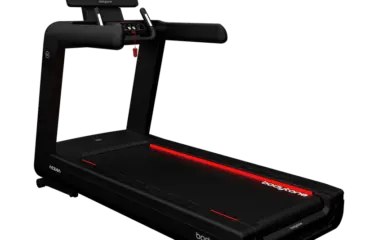
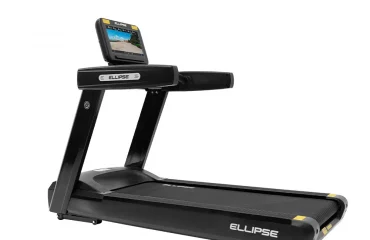
Professional Cardio Equipment for Gyms, Hotels and Clinics
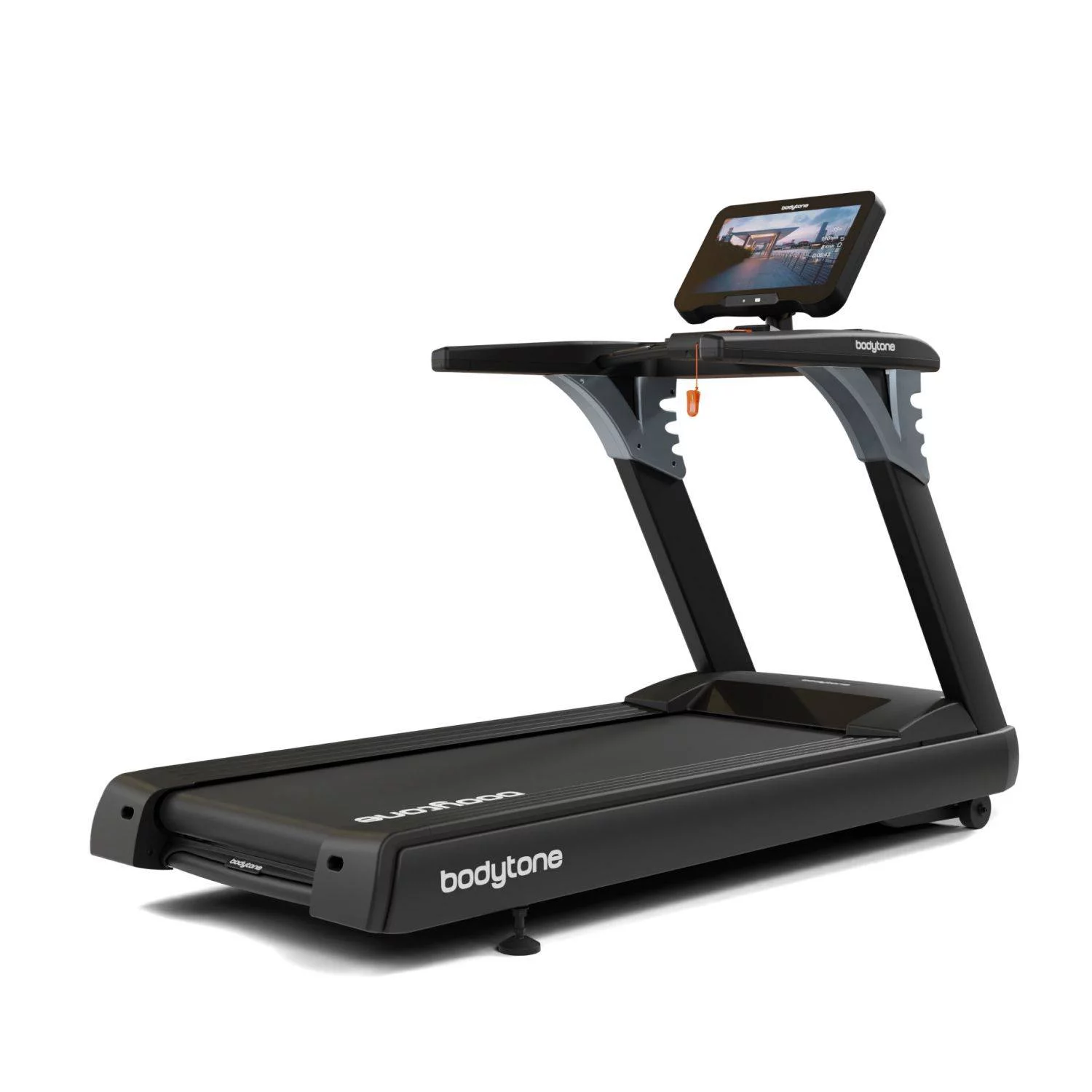
In brief: professional cardio equipment is separated from consumer machines by five things: a heavy inertia flywheel, high continuous motor power (3 to 6 CHP on a treadmill), a reinforced steel frame, a three to five year warranty written for intensive use, and a maximum user weight of 160 to 200 kg. Those are the specifications a gym, hotel, clinic or corporate fitness room should be buying against.
Light In Fitness has supplied professional cardio equipment to gyms, fitness centres and healthcare facilities since 2013. The catalogue covers the four families every commercial cardio floor is built from: treadmills, upright and recumbent exercise bikes, rowing machines and cross trainers. Cardiovascular work is the entry point for most members and most patients, which is why the cardio zone is the part of a floor that wears out first and the part that has to be specified most carefully.
Professional or consumer: the difference is the duty cycle
A consumer machine is designed for a few hours of use a week by one or two people. A professional machine is designed to run all day, every day, for several different users an hour. Every line of the specification follows from that single difference.
- Inertia flywheel. A heavy flywheel is what produces a smooth, quiet pedal stroke or rowing stroke, and what stops a machine feeling jerky at low resistance. It is also the component that carries the load hour after hour.
- Continuous motor power. On a treadmill the figure that matters is continuous horsepower (CHP), not peak power. Professional belts run on 3 to 6 CHP continuous so the motor is never working at its own limit.
- Reinforced steel frame. The frame absorbs impact and keeps the geometry true after years of use. It also decides whether a machine can still be refurbished or resold at the end of a contract.
- Warranty written for intensive use. Three to five years on commercial use, not a domestic warranty that lapses the moment the machine is installed in a paying facility.
- Maximum user weight. 160 to 200 kg on professional machines, well above consumer figures. In an open-access facility you do not get to choose your users.
The four families of a commercial cardio floor
| Family | Typical role on the floor | What to check first |
|---|---|---|
| Treadmills | The busiest station in almost every facility, and the one that dictates the electrical layout | Continuous horsepower, deck and belt construction, maximum user weight |
| Exercise bikes, upright and recumbent | Low-impact work, warm-ups, and the default choice for older or deconditioned users | Flywheel mass, seat and handlebar adjustment range, step-through access on recumbent models |
| Rowing machines | Full-body conditioning and class work, in a small footprint | Resistance type, rail length, folding or storage arrangement |
| Cross trainers | Impact-free alternative to running, high occupancy in hotels and corporate rooms | Stride length, flywheel mass, frame rigidity under a heavy user |
The full range is set out in the professional cardio equipment section, and the belt models in the dedicated professional treadmills category.
Specifying by type of site
Gyms and fitness clubs. Occupancy is the constraint. Machines run from opening to closing, so continuous power ratings, frame rigidity and the terms of the commercial warranty matter more than the console. Plan the cardio zone around peak-hour throughput rather than around total membership.
Hotels and residences. The room is usually small, unstaffed and used by guests who will not read an instruction panel. Compact footprints, simple consoles, low running noise and equipment that tolerates a very wide range of user weights are the priorities.
Clinics and rehabilitation centres. Accessibility comes first: step-through frames, recumbent bikes, fine low-resistance increments and stable handrails. The machine has to be usable by a patient who is deconditioned, not by an athlete.
Corporate fitness rooms. Usage is concentrated into short windows at lunchtime and after work. Machines spend most of the day idle and then run hard for two hours, which is exactly the pattern that destroys under-specified equipment.
Build quality and technology
Light In Fitness works directly with the manufacturers it distributes, which is what makes it possible to hold professional build quality at a competitive price rather than choosing between the two. Machines are built from materials selected for durability under continuous load, and the console and connectivity generations are refreshed as the manufacturers release them.
A worked example of what a premium club specification looks like: the Etenon V10T multimedia professional treadmill pairs an intensive-duty motor with a touchscreen console and is listed at 7,500.00 EUR excluding VAT.
Support before and after the order
Choosing a cardio line-up is not obvious, and the wrong split between belts, bikes and cross trainers is expensive to correct once the floor is laid out. The team advises on the mix, on the power supply the treadmills will need and on the circulation space around each station, and stays available through the whole purchase. After-sales support and spare parts availability are part of the specification, not an afterthought.
Frequently asked questions
Which professional cardio equipment should I choose?
Reference brands on the professional market include Life Fitness, Technogym, Precor, Matrix, Bodytone and Etenon. Whatever the brand, compare three figures before anything else: continuous horsepower, the length of the intensive-use warranty, and the maximum user weight.
How much does a professional treadmill cost?
From around 1,500 EUR for an entry-level professional belt up to about 8,000 EUR for a top-of-the-range club model. As a live reference point, the Etenon V10T multimedia treadmill is listed at 7,500.00 EUR excluding VAT.
Where can I buy professional cardio equipment?
From specialist B2B distributors such as Light In Fitness, which quote, deliver, install and service cardio equipment for gyms, hotels, clinics and public authorities.
Ask for a quote on your cardio floor
Send us the surface area, the expected number of members or guests and the profile of your users, and we will come back with a costed cardio line-up rather than a price list. Request a quote and an adviser will work through the specification with you.