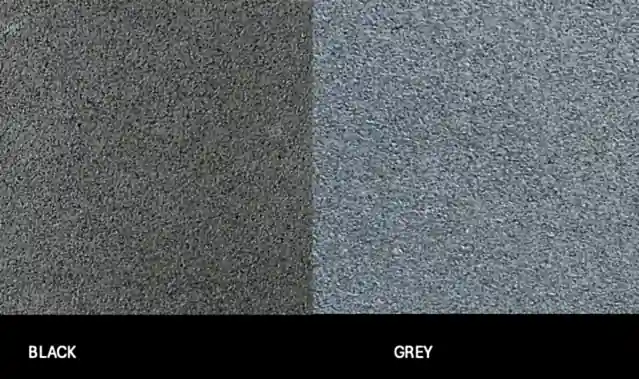
20 mm Rubber Tile Black and Grey with Connectors - Gym Flooring
20 mm Rubber Tile Black and Grey with Connectors - Gym Flooring : rubber gym flooring tiles, marque Light In Fitness, 55,86 EUR excl. VAT. Delivery and installation priced on quotation across Europe.
55.86 € excl. VAT
i.e. 67.03 € incl. VAT · VAT 20%
Shipping quoted separately The shipping cost is confirmed before you approve the order.
20 mm rubber gym floor tile in black flecked with grey, assembled with connectors and no bonding to the floor. Dismantlable and repositionable surface. Connectors invoiced separately: 2.80 EUR excluding VAT per pack of 7. Sold by the square metre.
Quotation = itemised pricing with delivery, installation and trade discounts, within 24 business hours. No commitment. Our commitments
Warranty: specified in the quotation for each reference — details of our warranties.
Description
Connectors, not glue: this 20 mm rubber tile locks into a single continuous surface that holds under foot, survives a trolley and comes apart the day the gym is reorganised.
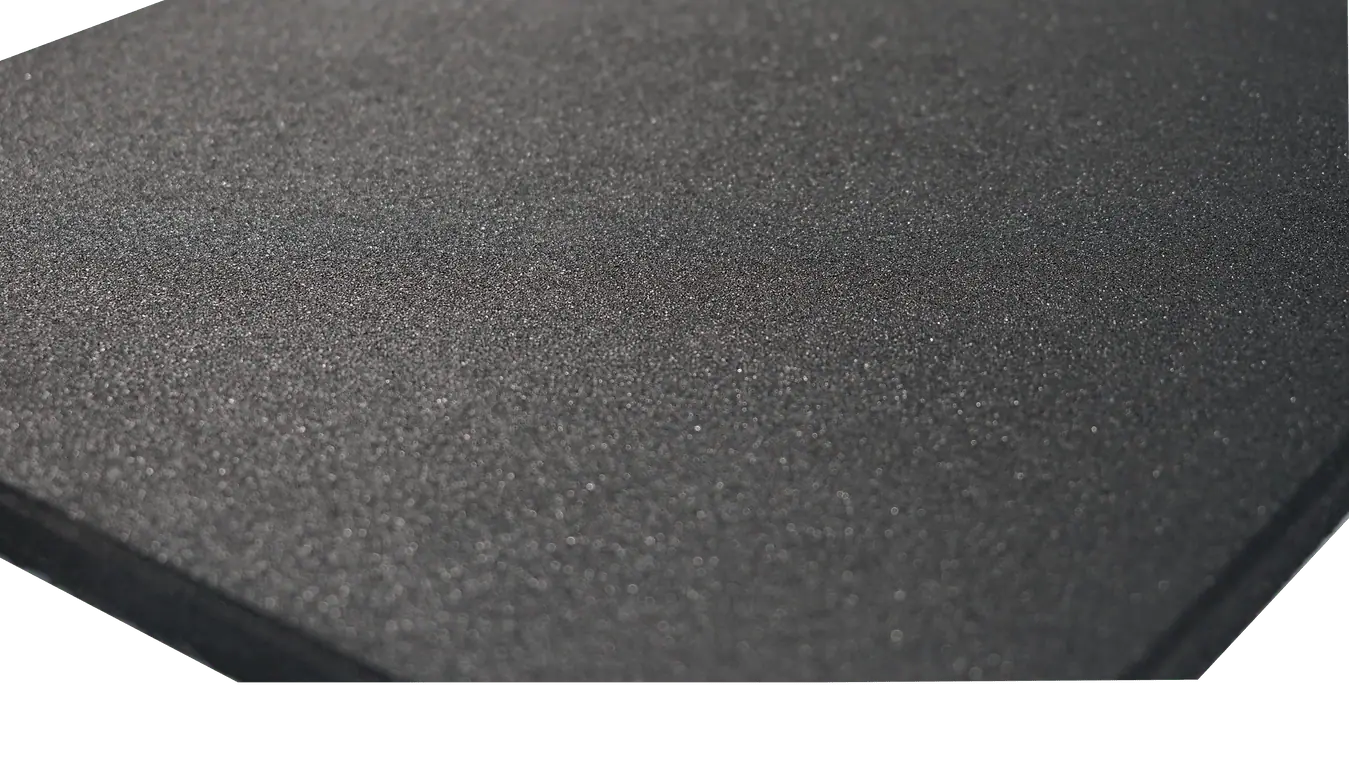
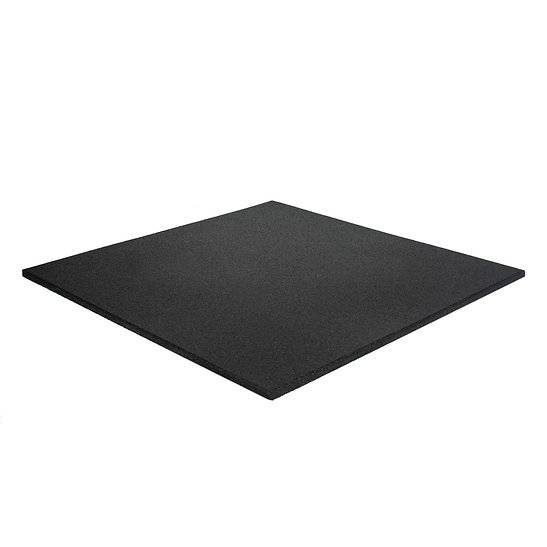
20 mm rubber tile in black with grey fleck, connector assembly
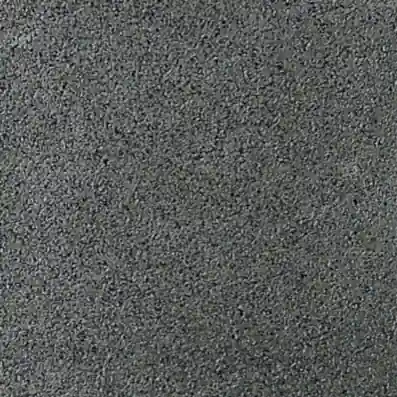
What sets this tile apart is the way it goes together. Connectors join the tiles to each other, which produces a surface in one piece without gluing anything to the floor. The result stays put under foot, does not come apart when a trolley crosses it, and can be fully dismantled when the layout changes. The black finish flecked with grey hides the wear of a weights area far better than a plain colour.
Materials and installation
Installation is loose-laid and joined by connectors, with no adhesive on the subfloor. In most cases nothing needs to be glued down: the connectors hold the tiles together and the weight of the assembly keeps it in place. Perimeter bonding may be advisable in a high-traffic area or over a very large surface. Connectors are invoiced separately and are not included in the square metre price – budget for them and order them, because a surface delivered without connectors cannot be assembled.
Technical specifications
| Product | Rubber floor tile with connector assembly |
| Thickness | 20 mm |
| Colour | Black flecked with grey |
| Assembly | By connectors – invoiced separately, not included in the price per m2 |
| Connectors | Pack of 7 connectors: 2.80 EUR excluding VAT |
| Sold by | The square metre |
| Tile size | On request |
| Density | On request |
| Granulometry and binder | On request |
| Fire classification | On request |
| Installation | Loose-laid, joined by connectors, no bonding to the floor |
| Maintenance | Vacuum then damp mop, neutral detergent – no solvent, no acidic product |
| Price | 55.86 EUR excluding VAT per m2, connectors extra |
What is it for?
Weights room and free-weight area. At 20 mm the tile absorbs the everyday impacts of a lifting area: bars set down, moderate dumbbell drops, bench and rack feet. This is the reference thickness for a standard weights floor.
Cross-training box – the zones off the platform. Around the weightlifting platforms, the 20 mm tile covers the movement, core work and light equipment areas at a lower cost than running a thick tile everywhere.
Corporate gym, hotel, residential facility. Connector assembly produces a solid surface that does not shift under foot and takes a trolley or a vacuum cleaner without the tiles moving apart.
Evolving layouts and rented premises. A connected floor comes up and goes down again elsewhere. That is the decisive argument for a leased unit, a temporary fit-out or a gym that will change its layout.
What to know before ordering
Connectors are invoiced separately. They are not included in the price per square metre. Count them into your budget and your order.
20 mm is not enough for heavy weightlifting. For loaded bar drops and dedicated platforms you need a 40 mm tile or a purpose-built platform. The 20 mm tile covers the weights floor, not the drop zone.
A rubber smell in the first few weeks is normal. It fades with ventilation and drops markedly after the commissioning period. Plan to ventilate the room on delivery, particularly in an enclosed volume.
Density, granulometry, binder and fire classification are not published. These are the figures that separate two tiles of the same thickness and that are required in public-access venues. Ask for the full technical data sheet before comparing with another offer.
Frequently asked questions
How many connectors are needed per m2?
It depends on the tile size and on the setting-out chosen: edge and corner tiles use fewer than field tiles. Send us the surface and the plan of the zone for an exact costing of the connector lot.
Do the tiles have to be glued to the floor?
Not in most cases: the connectors join the tiles to each other and the weight of the assembly keeps it in place. Perimeter bonding may be recommended in a high-traffic area or over a very large surface.
Is the tile suitable under a squat rack?
Yes for a free-standing rack in normal use. For a bolted rack or a repeated drop zone, plan a greater thickness under the receiving area.
What maintenance does it need?
Sweeping or vacuuming, then a damp mop with a neutral detergent. No solvent and no acidic product: they attack the binder of the rubber over time.
Can the floor be taken up and relaid?
Yes. That is the main benefit of connector assembly: the surface comes apart without special tools and goes back down elsewhere, provided the connectors are kept.
Request your quotation
Send us the surface, the thickness and the plan of your zone through the quotation request form and we will price the tiles and the connector lot together. The full range is in rubber gym flooring tiles.
Informations de livraison
Livraison en France métropolitaine
- Délai de préparation : 24–48 h ouvrées
- Délai de livraison : 3–7 jours ouvrés
Livraison sur rendez-vous
Pour les équipements lourds et volumineux, la livraison se fait sur rendez-vous avec des transporteurs spécialisés.
Installation
Nous proposons un service d'installation sur devis. Contactez-nous pour plus d'informations.
Related products
-
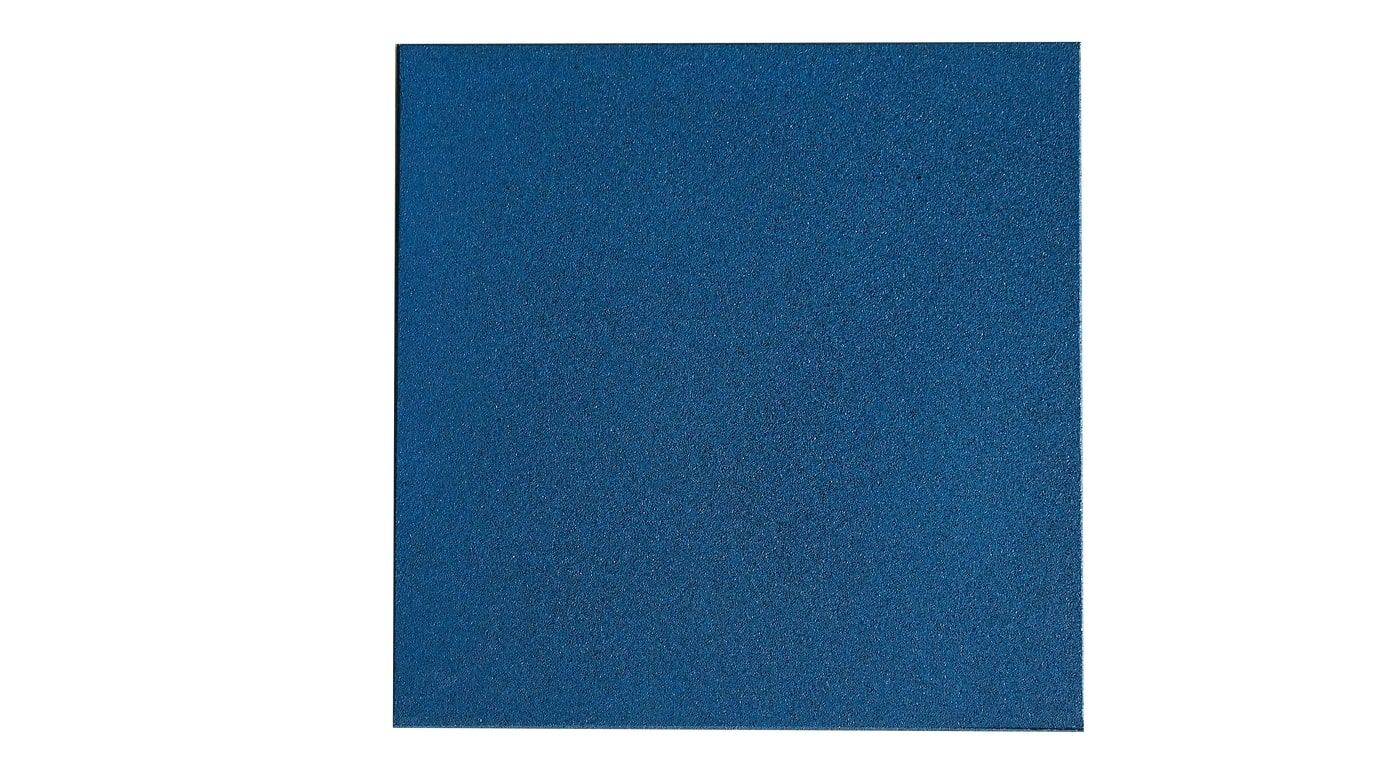
Blue Rubber Gym Tile 15 mm — 100 × 100 cm to Pinterest (opens in a new window)Save on Pinterest : Blue Rubber Gym Tile 15 mm — 100 × 100 cm
 Add to cartMORE INFO
Blue Rubber Gym Tile 15 mm — 100 × 100 cm
23.00 € excl. VAT -
40 mm rubber training tile, 100 x 100 cm, drop zone specification to Pinterest (opens in a new window)Save on Pinterest : 40 mm rubber training tile, 100 x 100 cm, drop zone specification
![40 mm rubber training tile, 100 x 100 cm, drop zone specification]() Add to cartMORE INFO
Add to cartMORE INFO40 mm rubber training tile, 100 x 100 cm, drop zone specification
38.50 € excl. VAT -
Fire rated rubber gym tile 40 mm, Dfl-S1 to Pinterest (opens in a new window)Save on Pinterest : Fire rated rubber gym tile 40 mm, Dfl-S1
![Fire rated rubber gym tile 40 mm, Dfl-S1]() Add to cartMORE INFO
Add to cartMORE INFOFire rated rubber gym tile 40 mm, Dfl-S1
58.00 € excl. VAT