20 mm High Density Puzzle Tile - Martial Arts and Fitness Floor
20 mm High Density Puzzle Tile - Martial Arts and Fitness Floor : tatami mats for dojos and combat sports halls, marque Light In Fitness, 38,43 EUR excl. VAT. Dalle puzzle 20 mm pour arts martiaux, gainage et travail au sol La dalle puzzle de 20 mm couvre l'essentiel de la pratique au sol : gainage, mobilité, étirements, renforcement, travail pieds nus. Delivery and installation priced on quotation across Europe.
38.43 € excl. VAT
i.e. 46.12 € TTC selon la destination de livraison
Shipping quoted separately The shipping cost is confirmed before you approve the order.
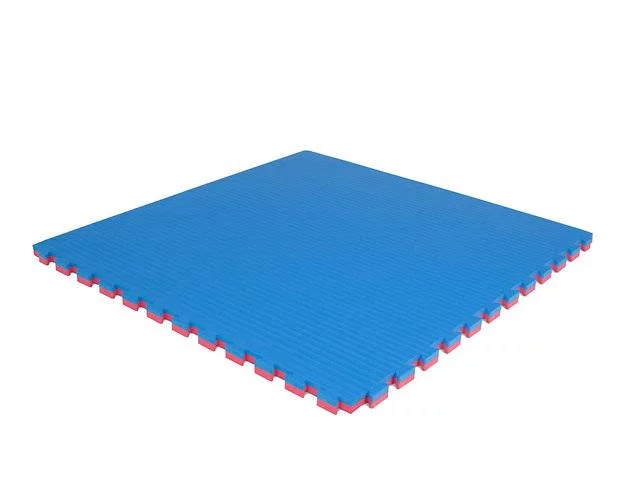
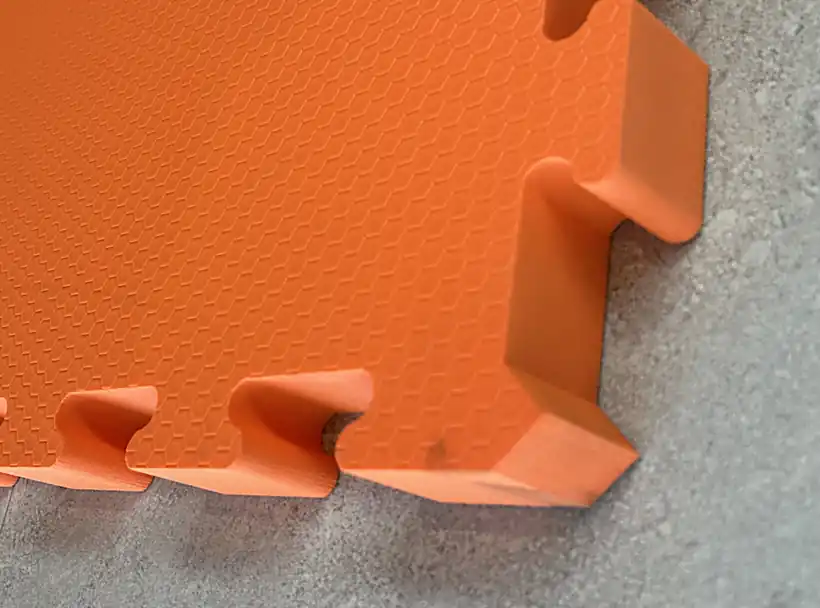
20 mm interlocking puzzle tile with a hexagonal textured surface, laid loose without adhesive and interlocking on all four sides. For floor work, core training, mobility and barefoot practice; choose 40 mm where there is throwing and fall reception. Sold per square metre. Price excluding VAT.
Quotation = itemised pricing with delivery, installation and trade discounts, within 24 business hours. No commitment. Our commitments
Description
20 mm of interlocking tatami that covers the whole of floor practice: core work, mobility, stretching, strength work and barefoot training. Laid without glue, taken up to free the room, extended as the club grows.
The thickness is enough for comfort on the knees and in prolonged lying positions, without becoming unstable underfoot when standing. That balance is the whole point of a 20 mm tile: soft enough for the floor, firm enough to stand and move on.
Textured surface, four-sided interlock
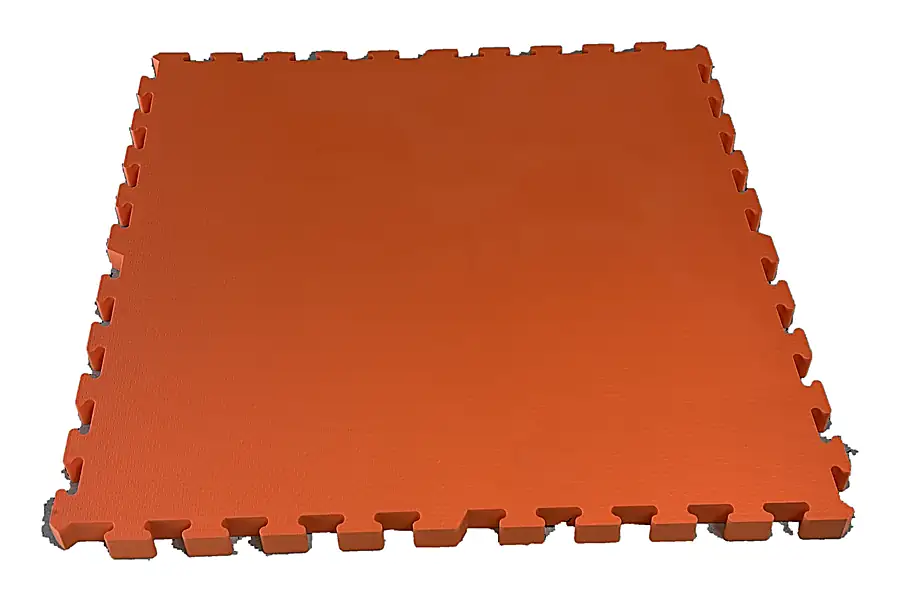
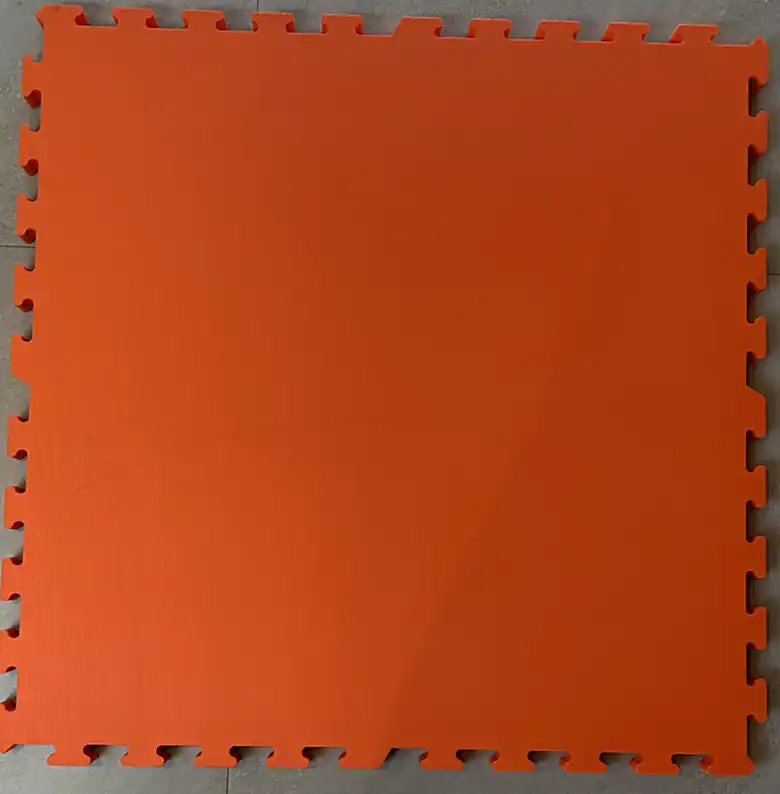
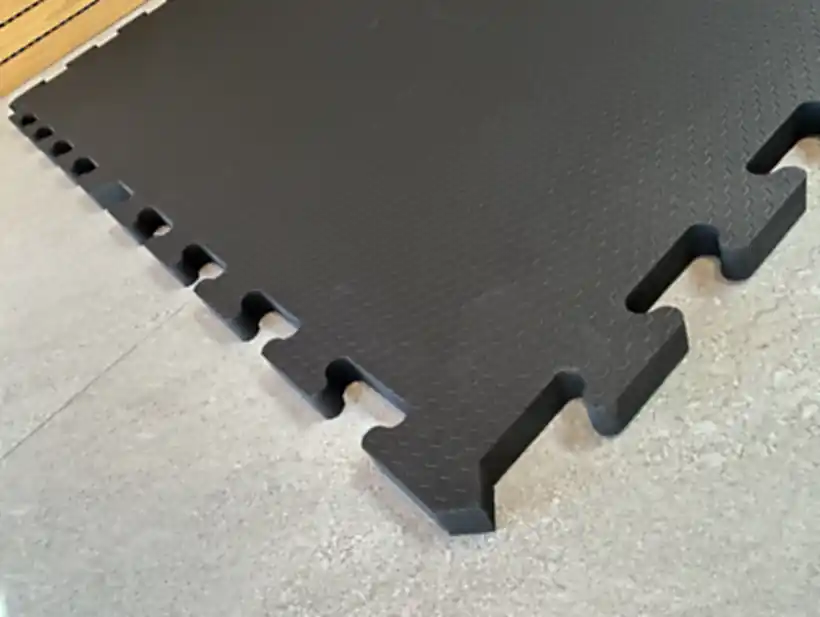
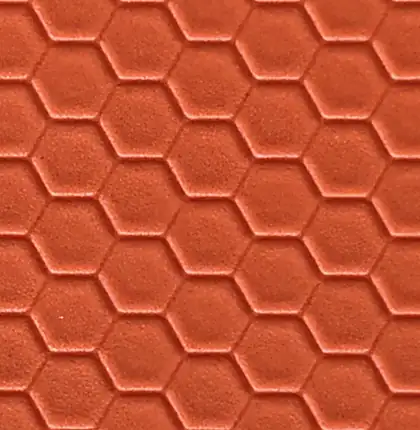
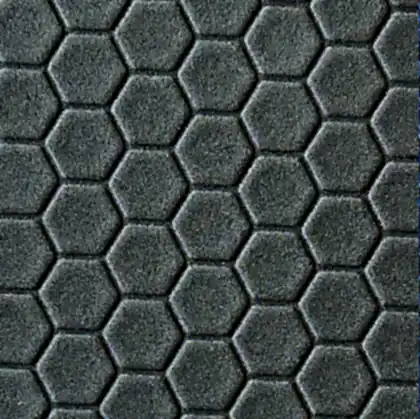
The visible face carries a regular hexagonal relief, which breaks the smooth-surface feel under a bare foot and under the hand during floor work. All four sides are toothed: tiles lock into each other and the surface extends in both directions, with no adhesive and no fixing to the substrate. Finishing edges are recommended along the perimeter to remove the step at the edge of the mat area.
20 mm or 40 mm: get this right first
Thickness and use go together. 20 mm covers floor work, core training, stretching and ordinary barefoot practice. 40 mm becomes necessary as soon as there is throwing and fall reception: judo, wrestling, grappling, self-defence. Choosing 20 mm for a throwing discipline is a sizing mistake, not a saving. For mixed use, 40 mm covers both needs. Compare the thicknesses across the tatami mats range before you order.
Where it earns its place
Martial arts and combat sports rooms. The interlocking tile is the standard of dojos and grappling rooms: laid without glue, dismantled to free the room, extended as the club needs it.
Core, mobility and floor work zones. In a fitness room it marks out the area where people work on their knees and on the floor. The surface stays comfortable without becoming unstable under standing support.
Children, baby gym and motor skill areas. Surface flexibility and tool-free installation suit supervised motor skill spaces where the layout changes often.
Multi-purpose halls and event use. Tiles store flat and go back down quickly, so the same room can move from a combat class to another activity within the day.
What to check before ordering
Density matters as much as thickness. At equal thickness, a tile that is too soft sinks under support and tires the ankles; too hard, and it no longer absorbs a fall. The density value is not published on this range, so ask us for it before comparing with another offer.
Plan the finishing edges. The interlocking teeth stay visible around the perimeter. Finishing edges are recommended along the tatami edge for safety and for appearance, and they are ordered together with the surface.
Fire classification is not published. A club or municipal room open to the public goes before a safety commission. Ask us for the classification test reports before committing to an order on that kind of project.
Specifications
| Product | Interlocking puzzle tile for martial arts and floor work |
|---|---|
| Thickness | 20 mm |
| Installation system | Puzzle interlock, loose laid without glue |
| Sales unit | Per square metre |
| Recommended use | Floor work, core training, mobility, barefoot practice without throwing |
| Material | On request |
| Density | On request |
| Tile format | On request |
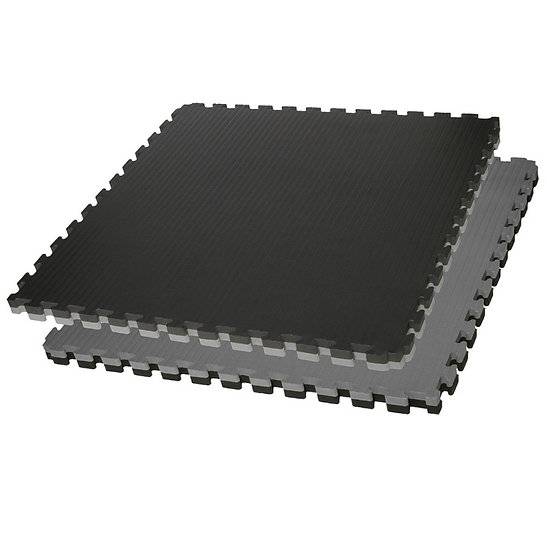
| Colours | On request; the images on this page show an orange and a black colourway |
| Fire classification | On request |
| Finishing edges | Recommended at the perimeter, to be ordered with the surface |
| Maintenance | Water and neutral detergent after each session in intensive use |
| Price excluding VAT | 38.43 EUR excluding VAT per m2 |
Frequently asked questions
20 mm or 40 mm?
20 mm suits floor work, core training, stretching and barefoot practice without throwing. 40 mm is required as soon as there are falls and throws: judo, wrestling, grappling, self-defence. For mixed use, 40 mm covers both.
Does installation need adhesive?
No. The tiles interlock with each other and rest freely on the floor. That is exactly what lets you dismantle the surface to free the room or reconfigure it.
Can the tiles be cut?
Yes, with a fresh blade, for the edges and around posts. Allow a material margin when you order.
What upkeep does it need?
Cleaning with water and a neutral detergent after each session in intensive use, particularly for barefoot practice. Avoid aggressive products, which make the surface slippery.
Which colours are available?
Available colours depend on the current production run. Tell us the colour you want when you request your quotation so we can check availability and the associated lead time.
What if I need a roll-out surface instead?
For a surface that goes down and comes up in one piece, look at the roll-out gym mats. For machine and drop zones, see the rubber gym flooring tiles.
Price: 38.43 EUR excluding VAT per m2. Send us your surface area, your discipline and the colour you want and we will price the tiles and the finishing edges together: request a quote.
Delivery and installation
Lead times are confirmed in the quotation according to the product, available stock and destination.
Access requirements and delivery appointments for heavy equipment are agreed before dispatch.
Installation is included when stated for the product or in the quotation; otherwise it is quoted separately.
Related products
-
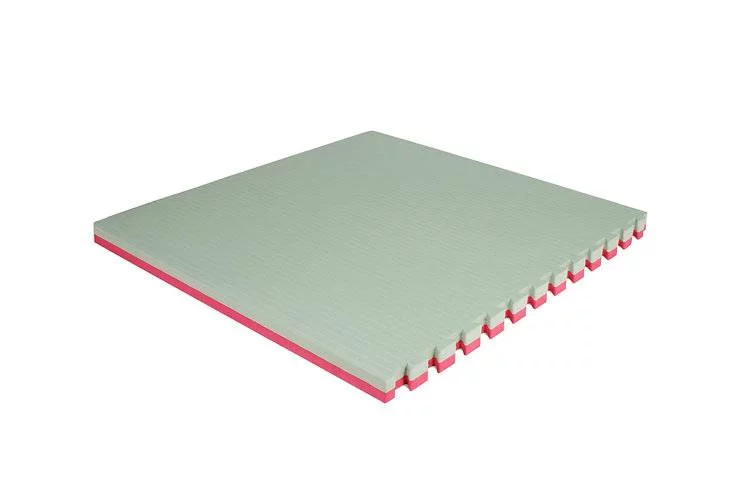
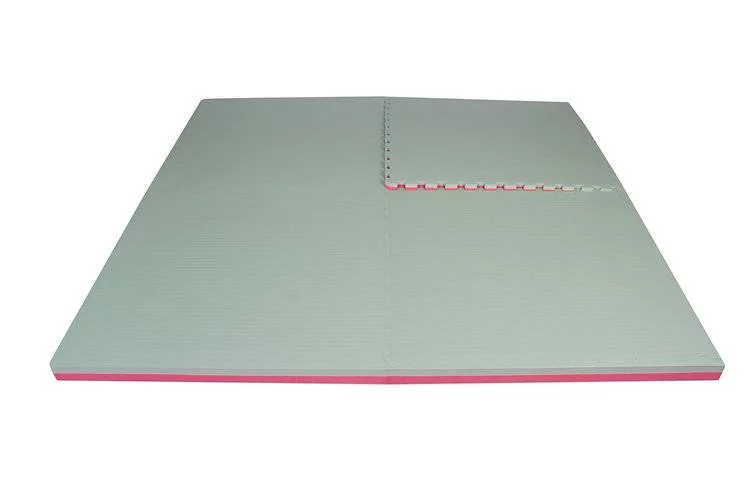
Puzzle tatami tile 50 mm for martial arts to Pinterest (opens in a new window)Save on Pinterest : Puzzle tatami tile 50 mm for martial arts
 Add to cartMORE INFO
Puzzle tatami tile 50 mm for martial arts
45.00 € excl. VAT -
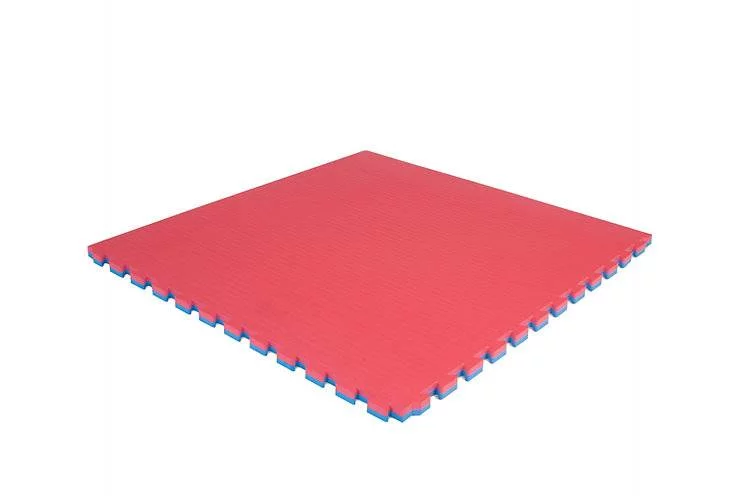
Puzzle Tatami Dojo Tile 30 mm — Martial Arts Mat 100 × 100 cm to Pinterest (opens in a new window)Save on Pinterest : Puzzle Tatami Dojo Tile 30 mm — Martial Arts Mat 100 × 100 cm
![Puzzle Tatami Dojo Tile 30 mm — Martial Arts Mat 100 × 100 cm]()
 Add to cartMORE INFO
Puzzle Tatami Dojo Tile 30 mm — Martial Arts Mat 100 × 100 cm
28.00 € excl. VAT -
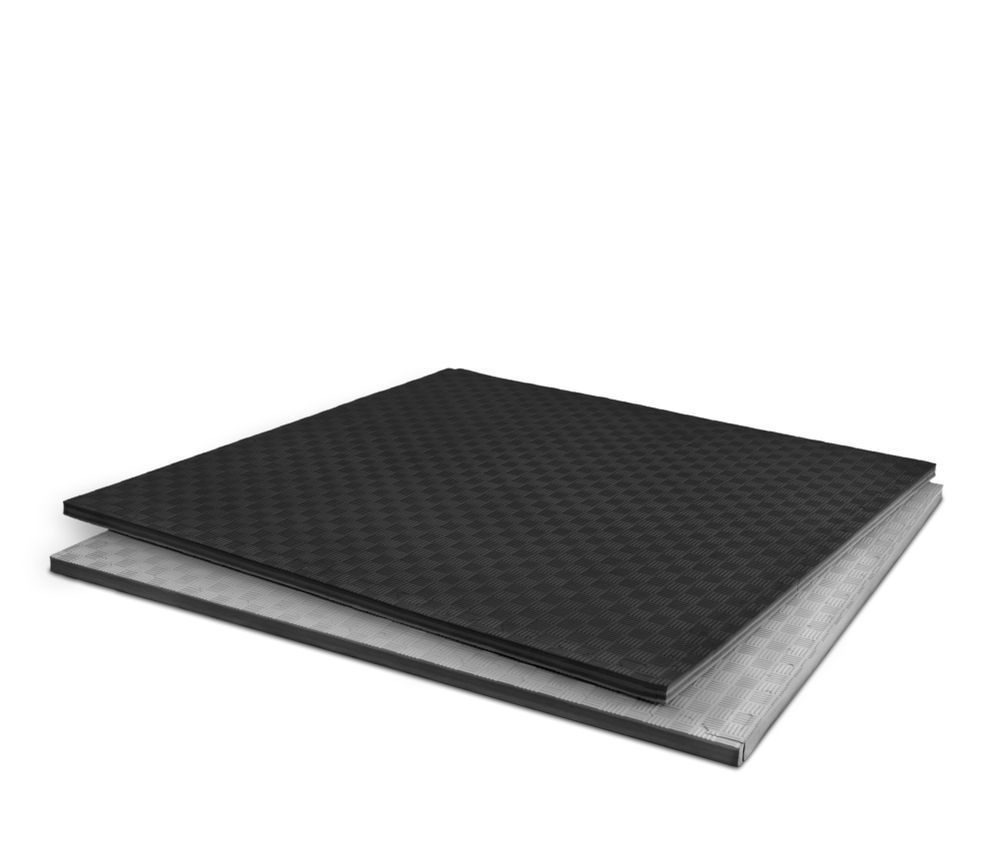
Dojo puzzle tatami tile 40 mm, reversible two colour to Pinterest (opens in a new window)Save on Pinterest : Dojo puzzle tatami tile 40 mm, reversible two colour
![Dojo puzzle tatami tile 40 mm, reversible two colour]()
 Add to cartMORE INFO
Dojo puzzle tatami tile 40 mm, reversible two colour
36.00 € excl. VAT