Ninja Warrior rigs and OCR modules
Ninja Warrior rigs and OCR modules: our professional selection
Repères de gamme — 19 modèles, dont 18 à prix affiché : 11 000 €–55 500 € HT par appareil ; 13 modèles conçus à Tours et fabriqués en Europe (calcul du 29/09/2026).
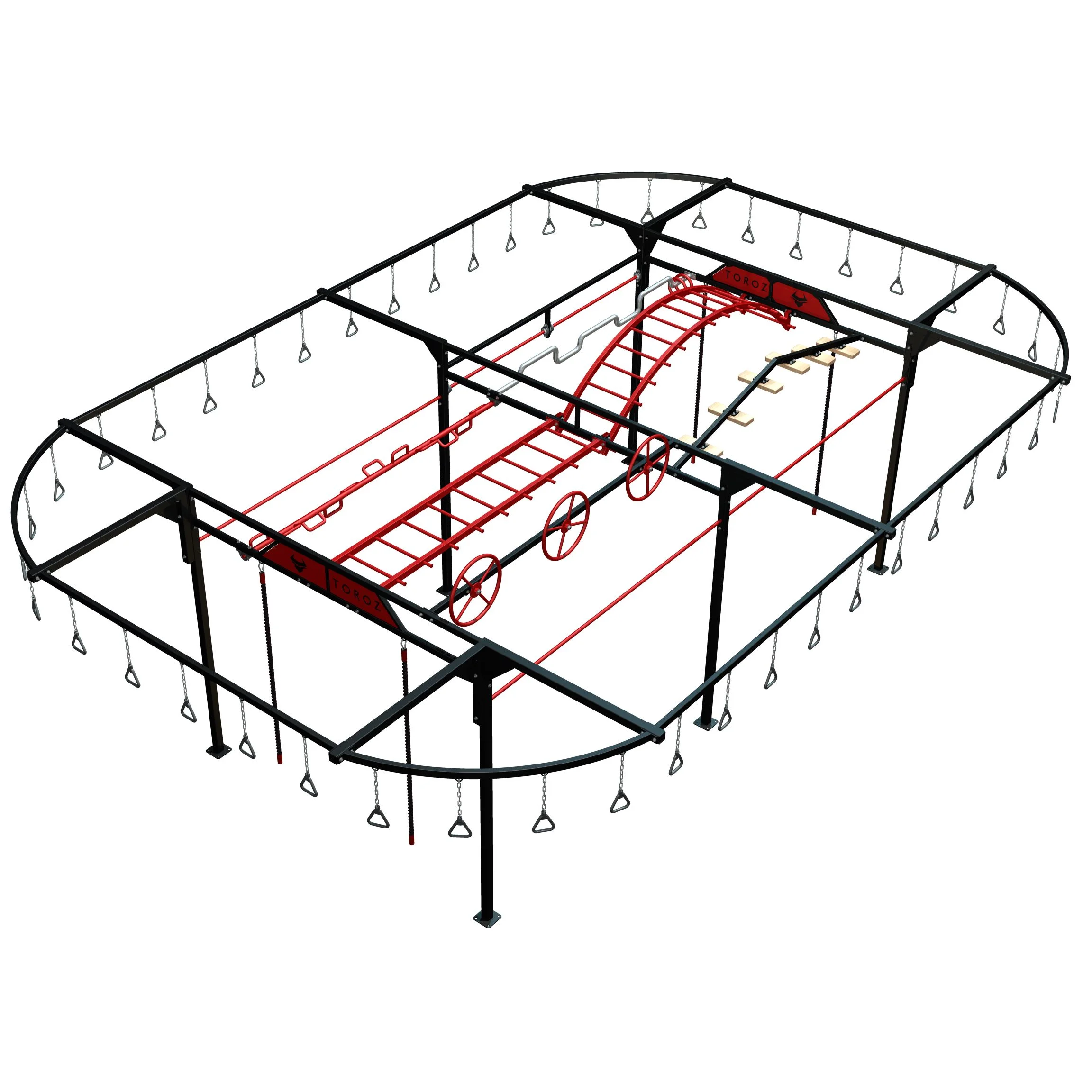
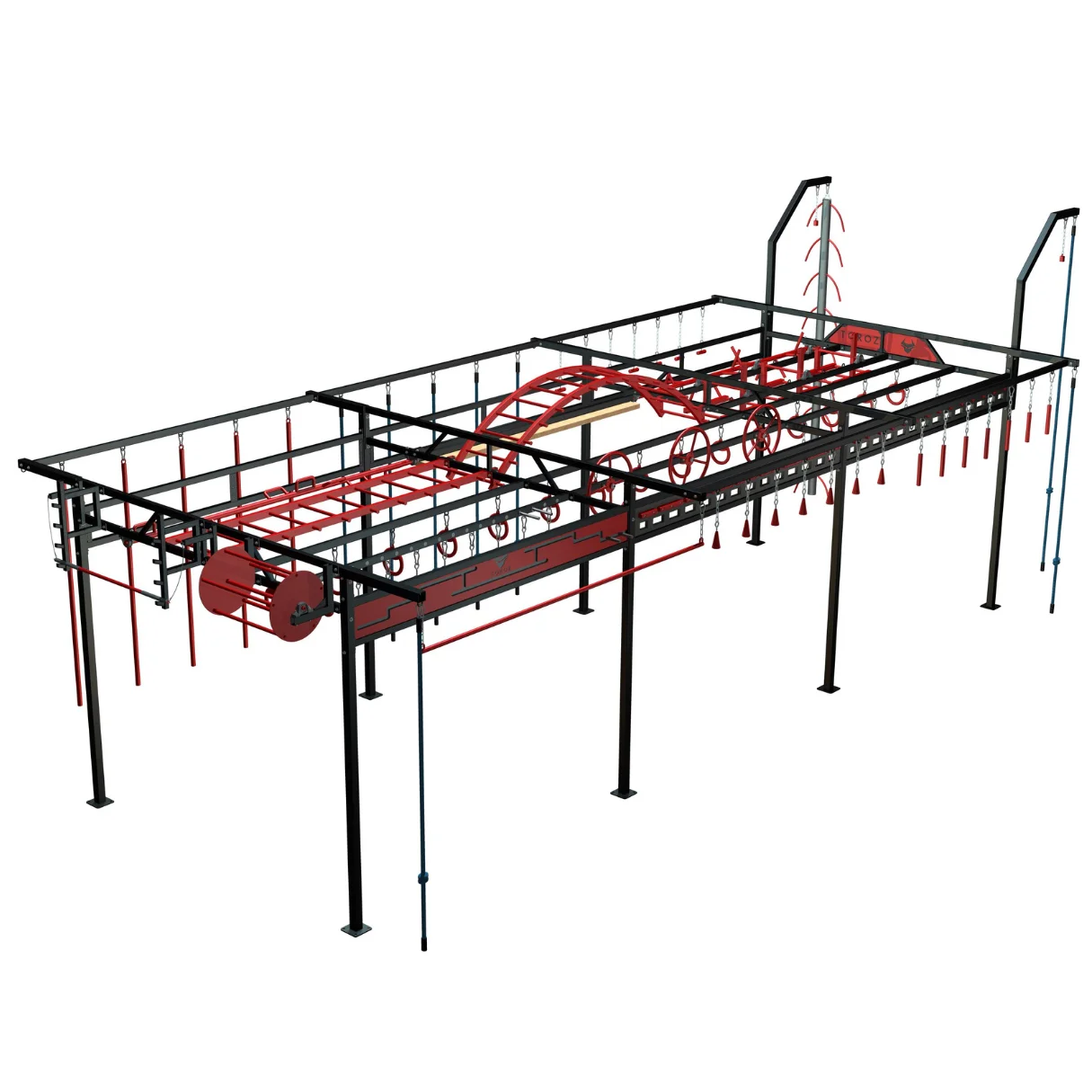
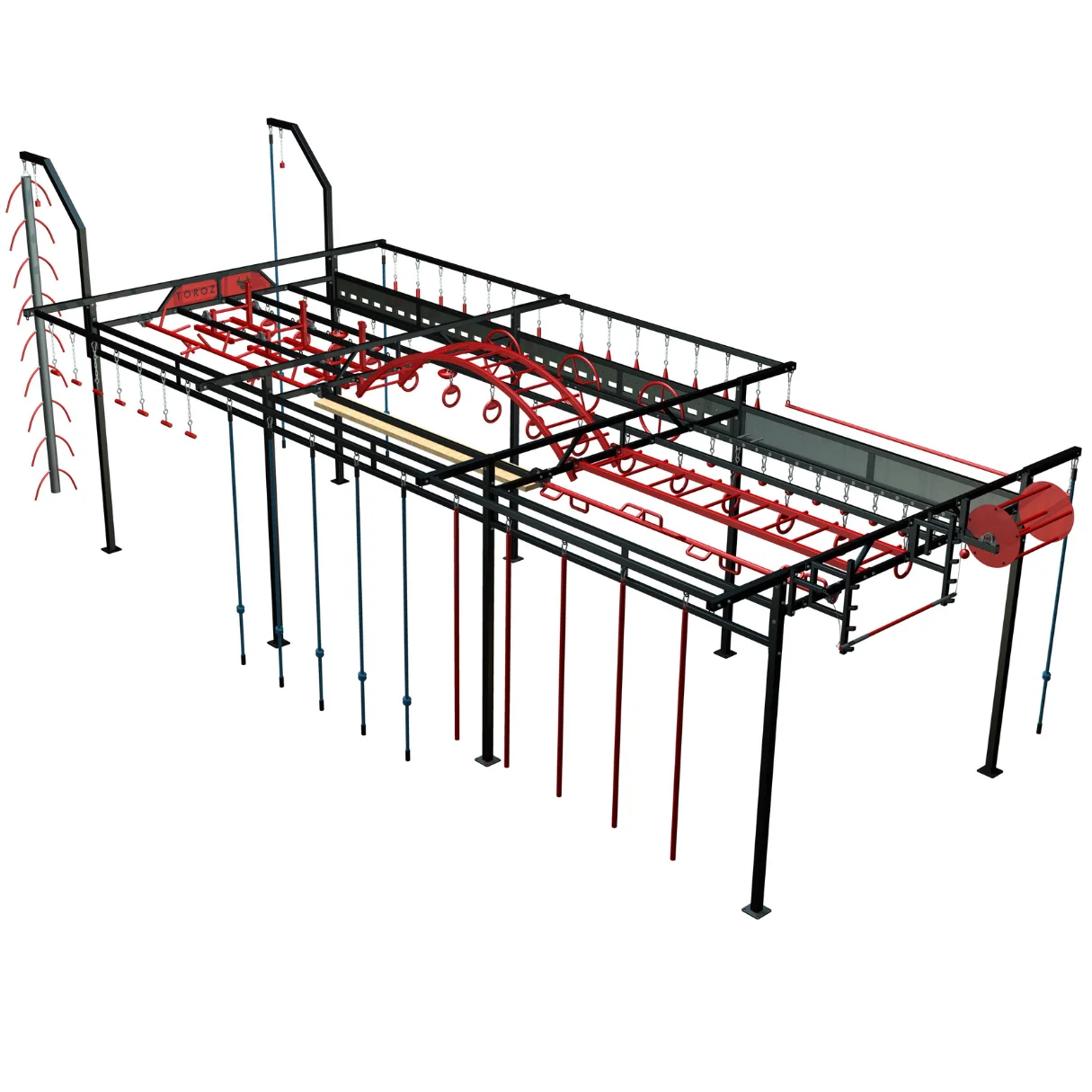
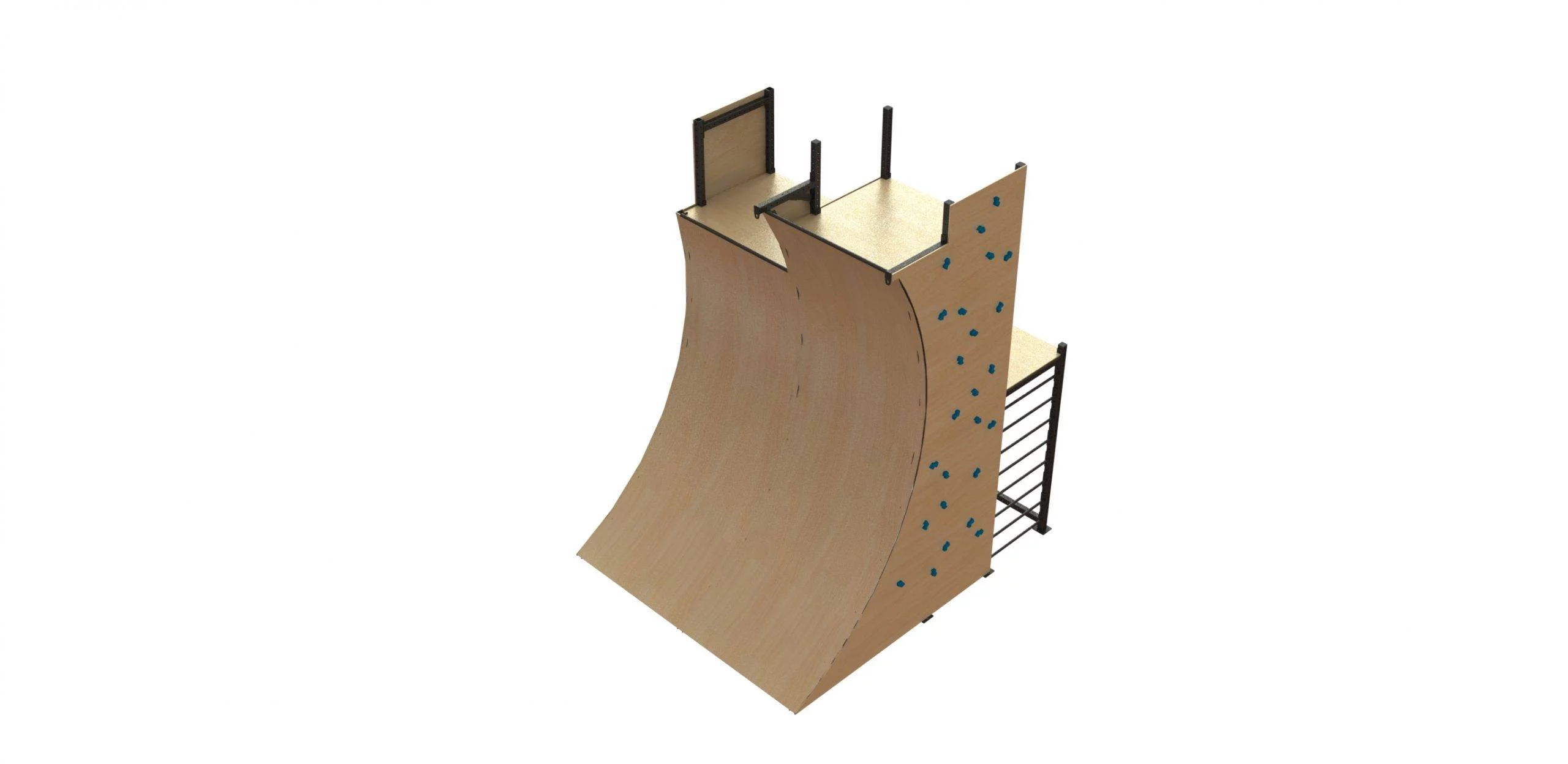
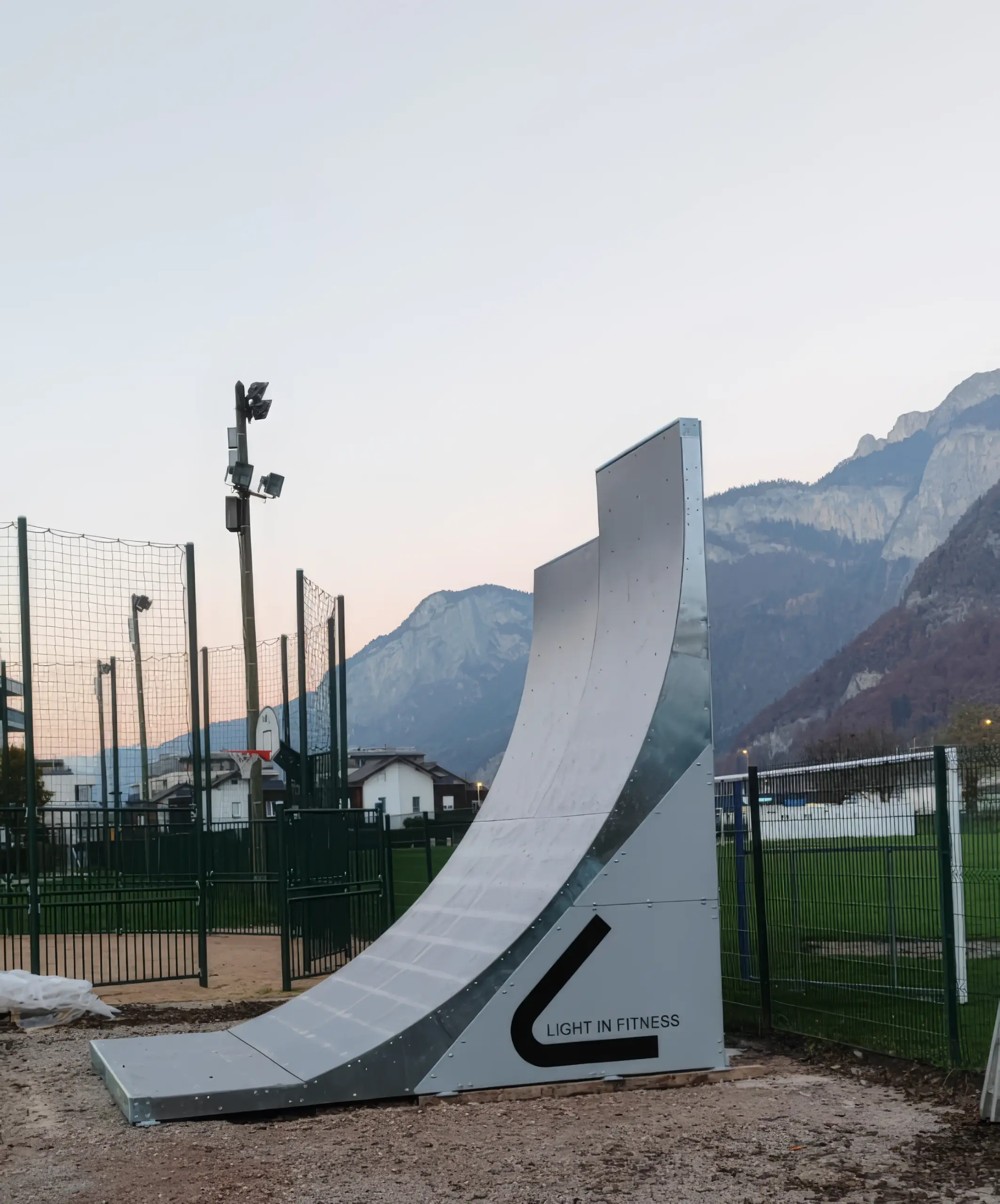
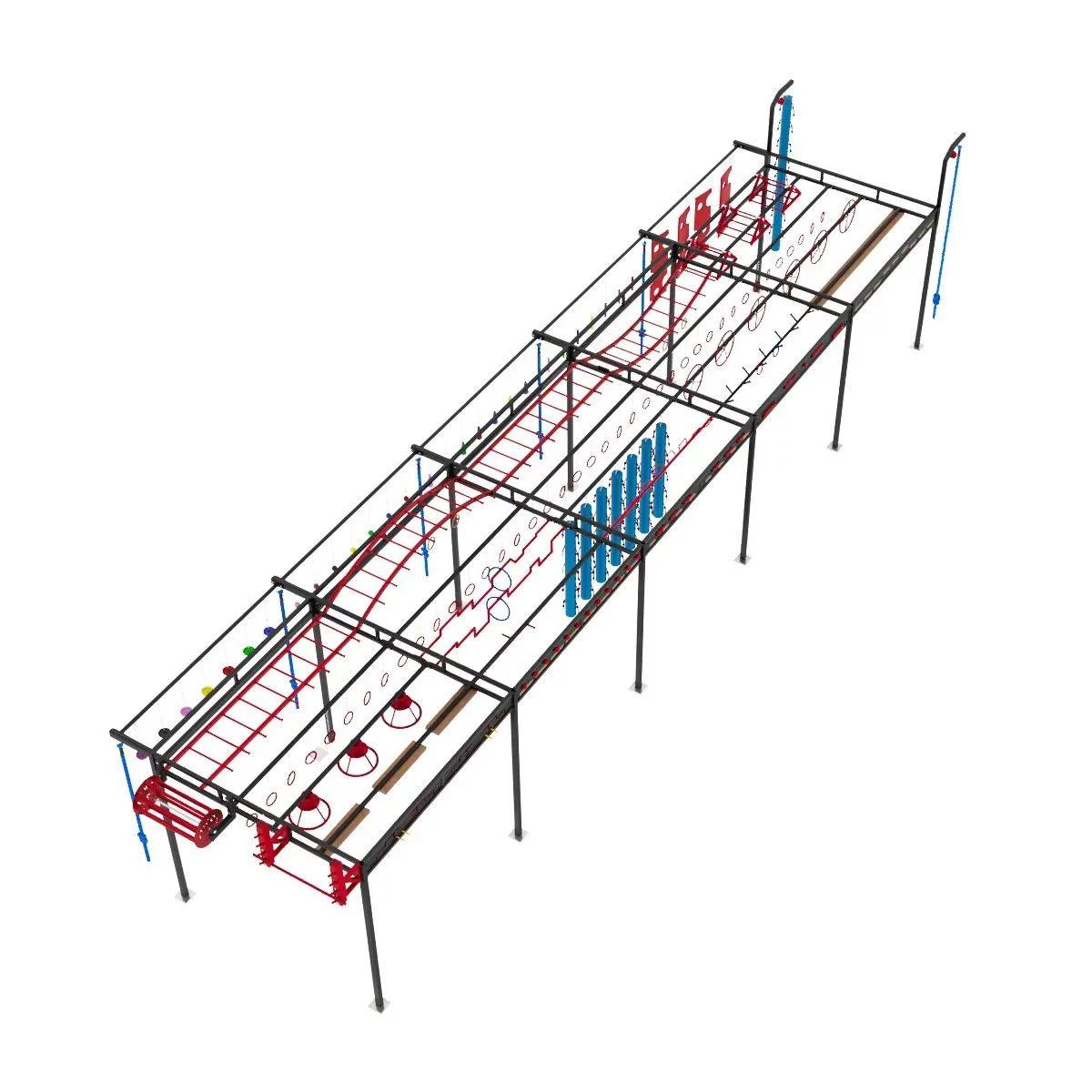
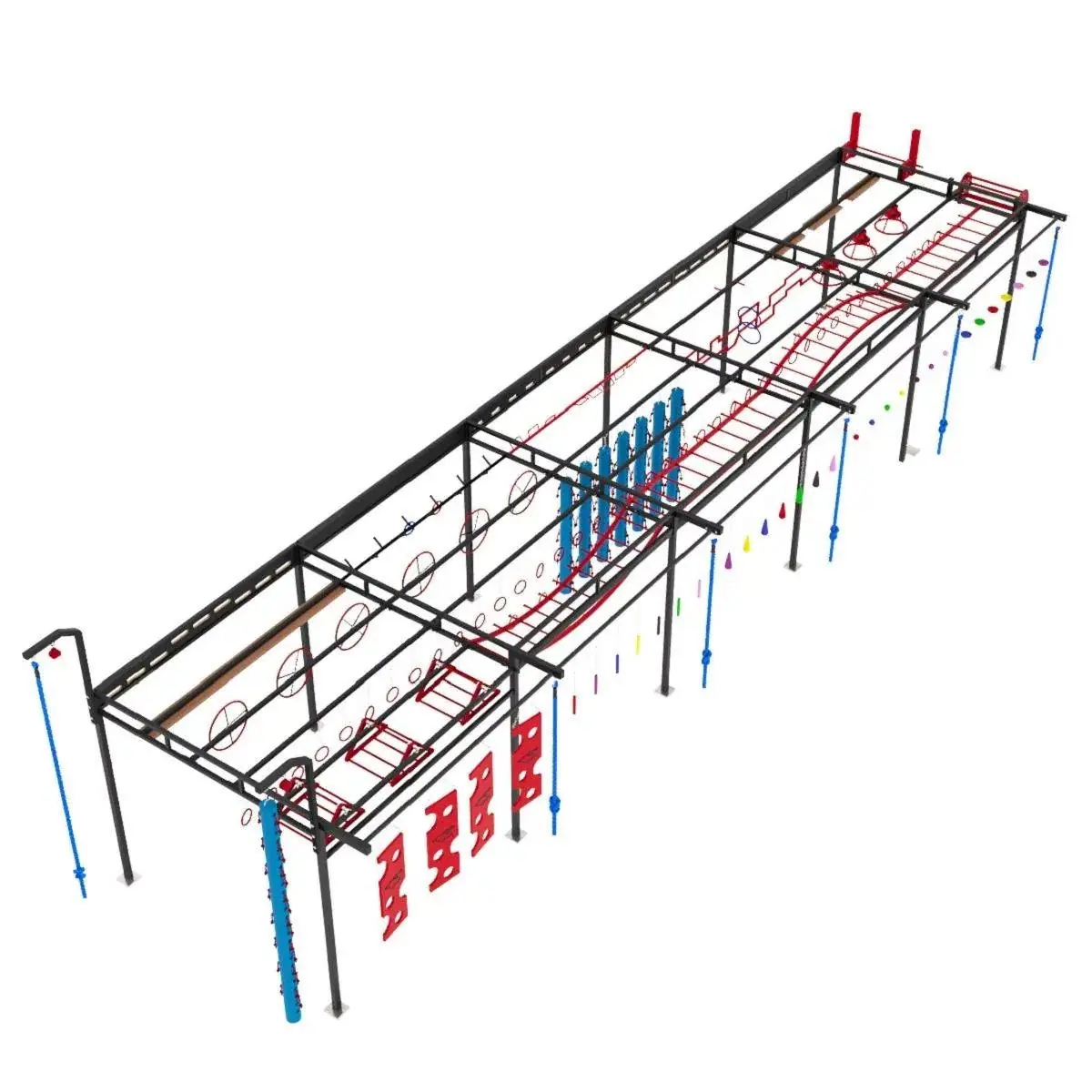
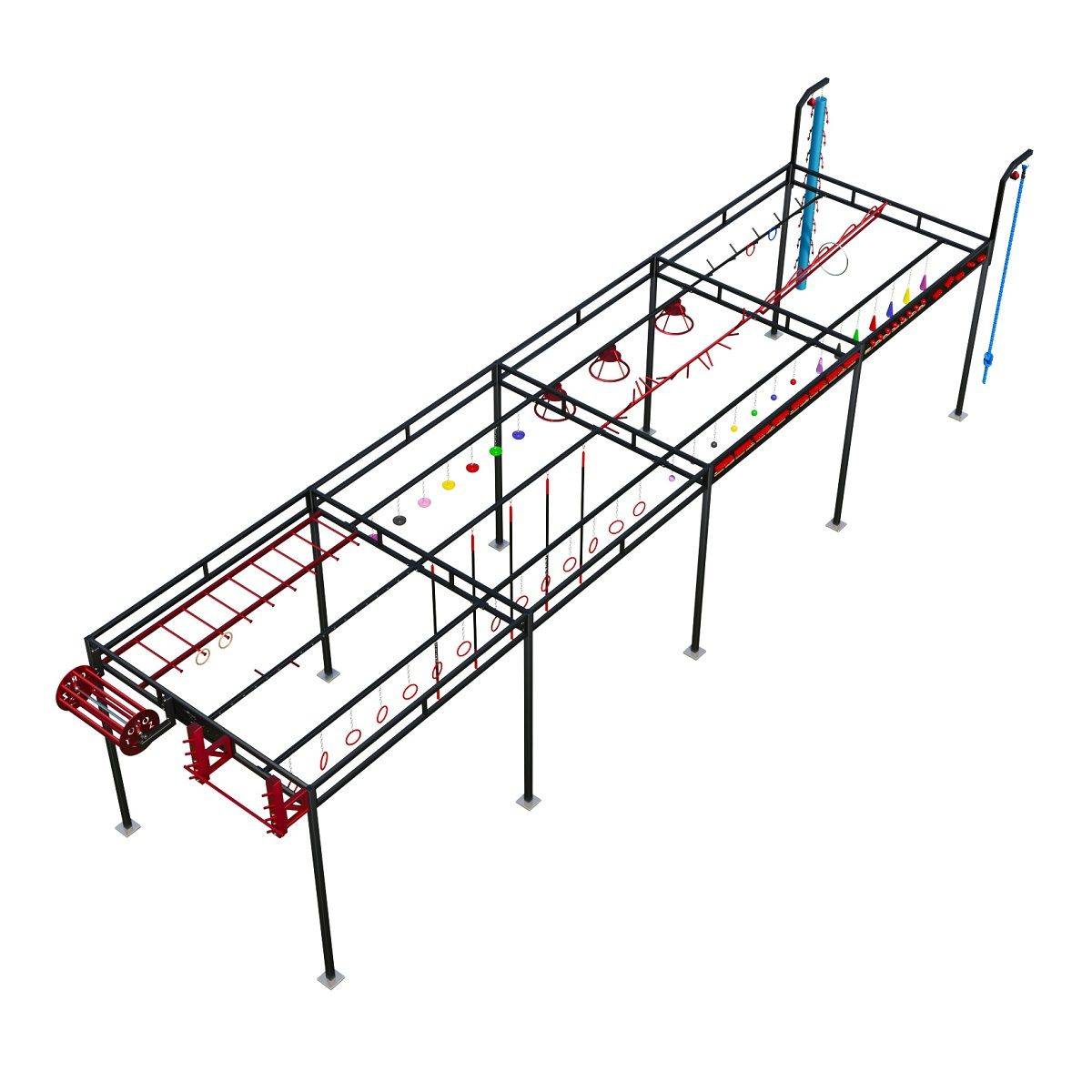
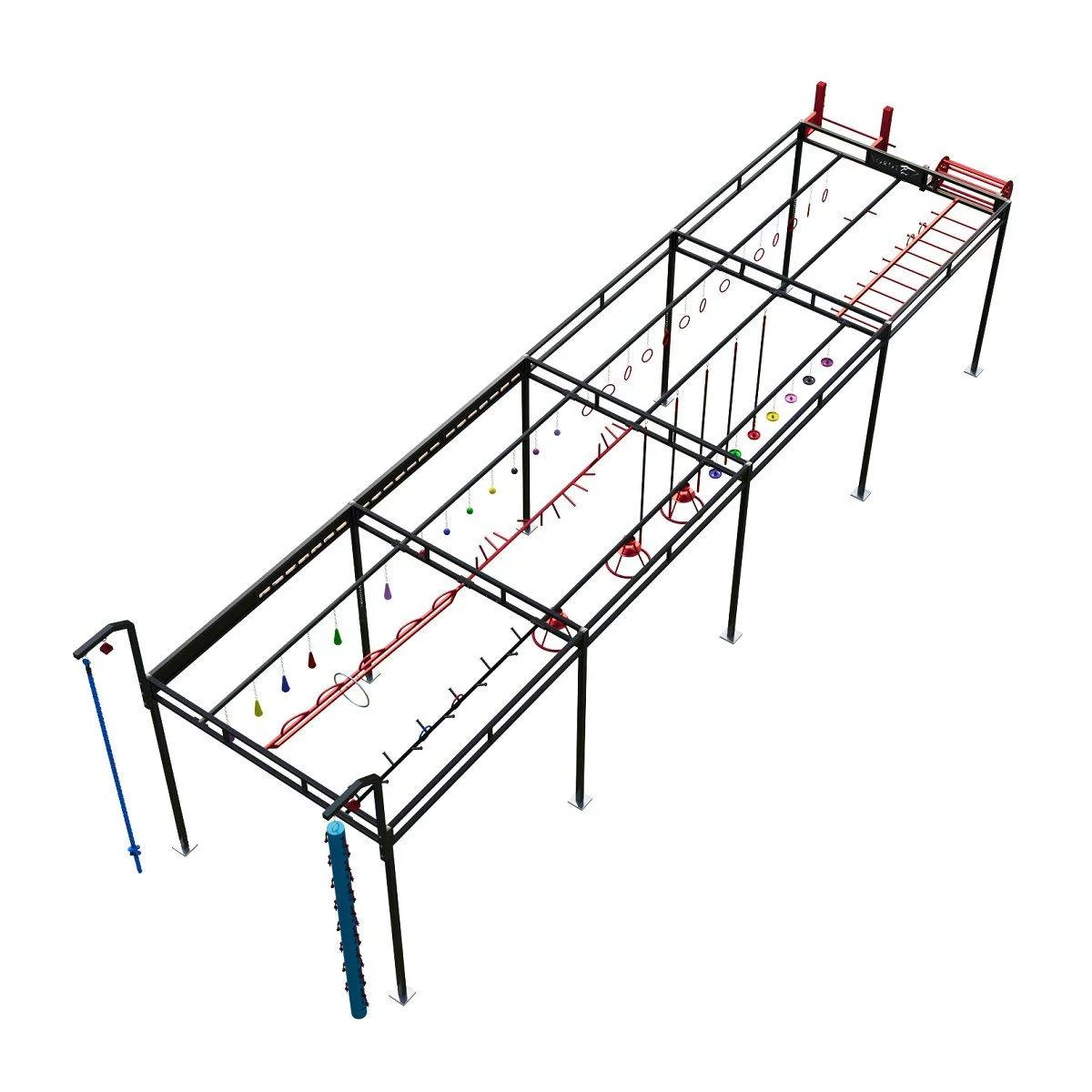
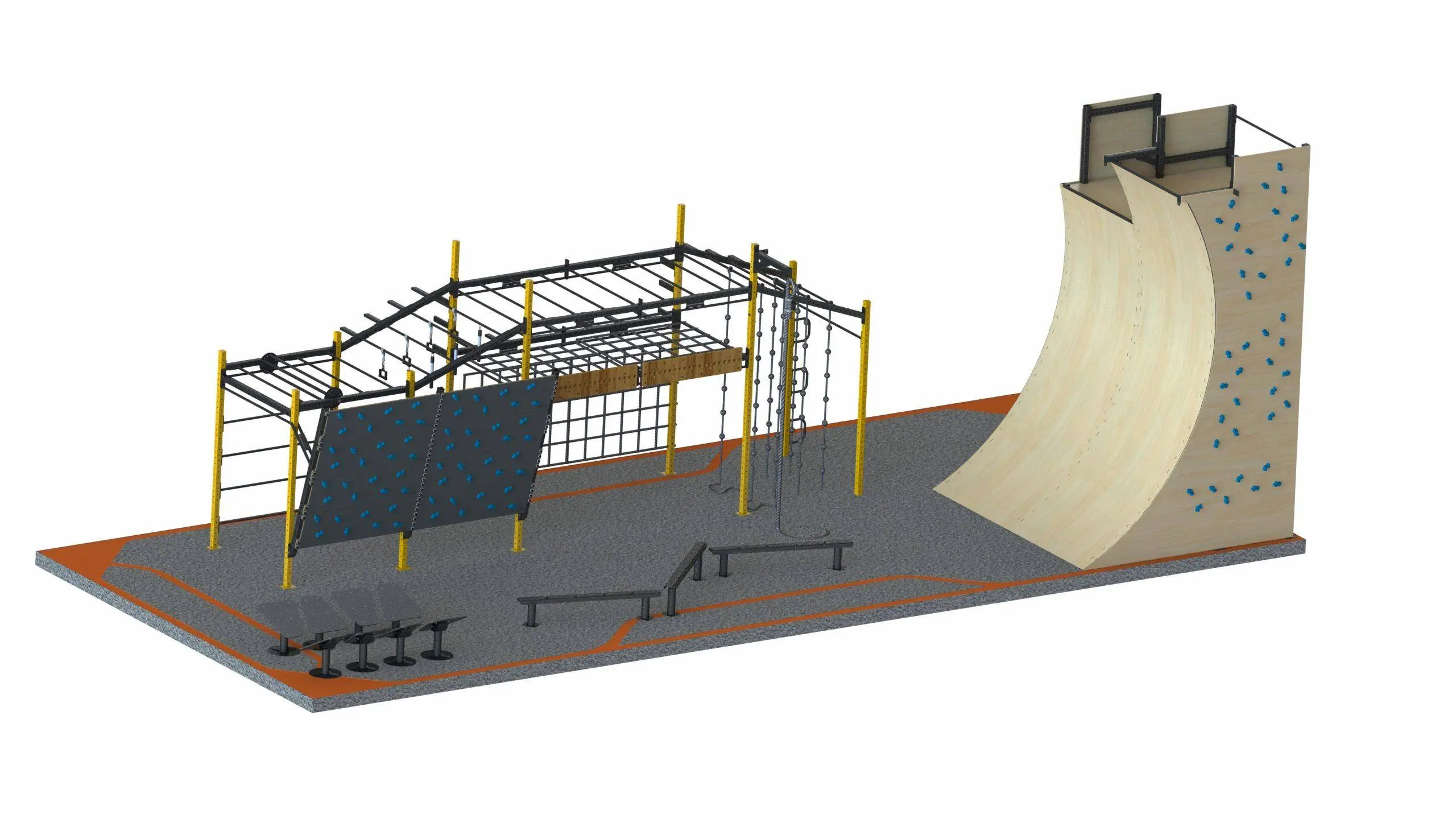
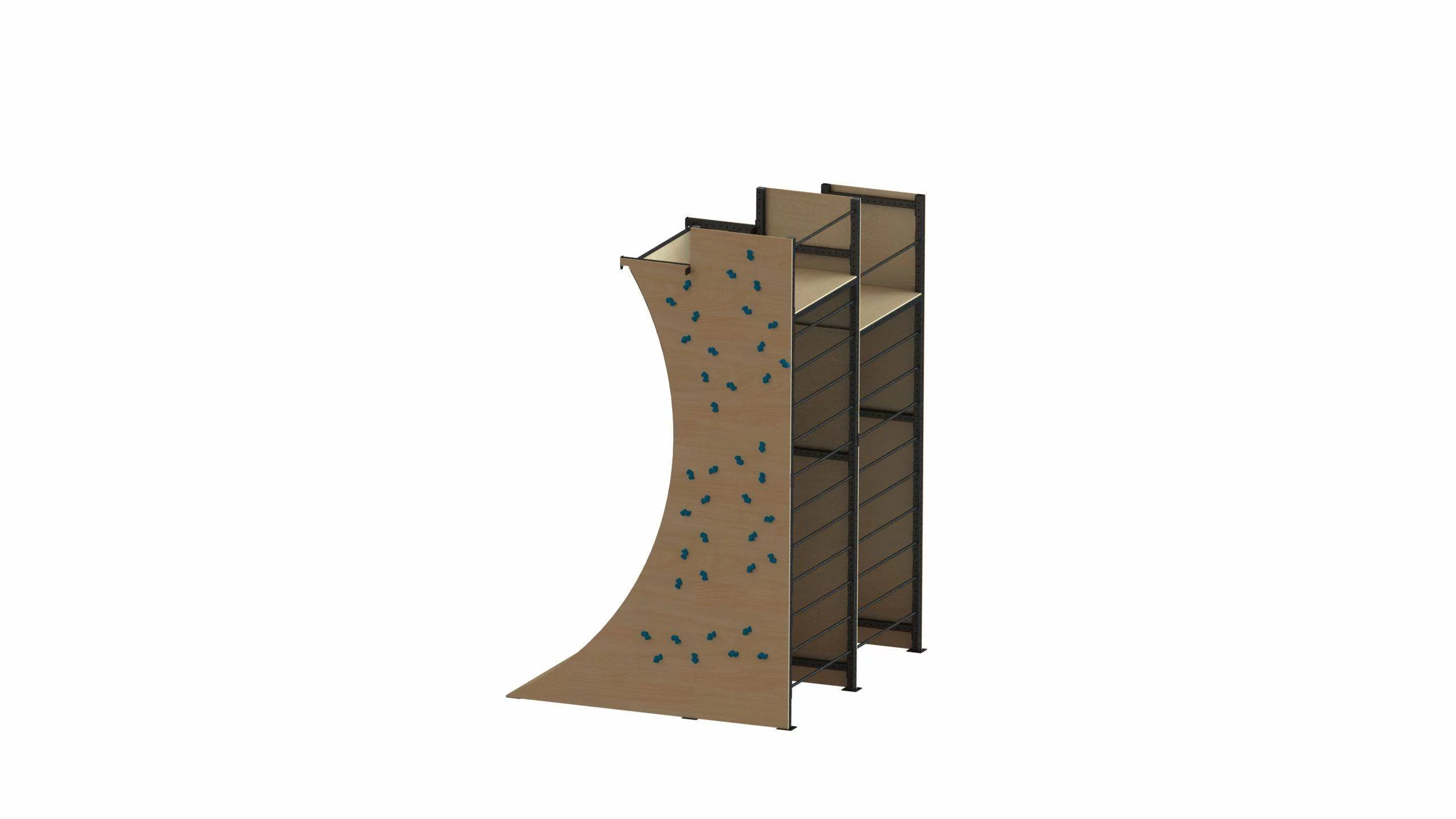
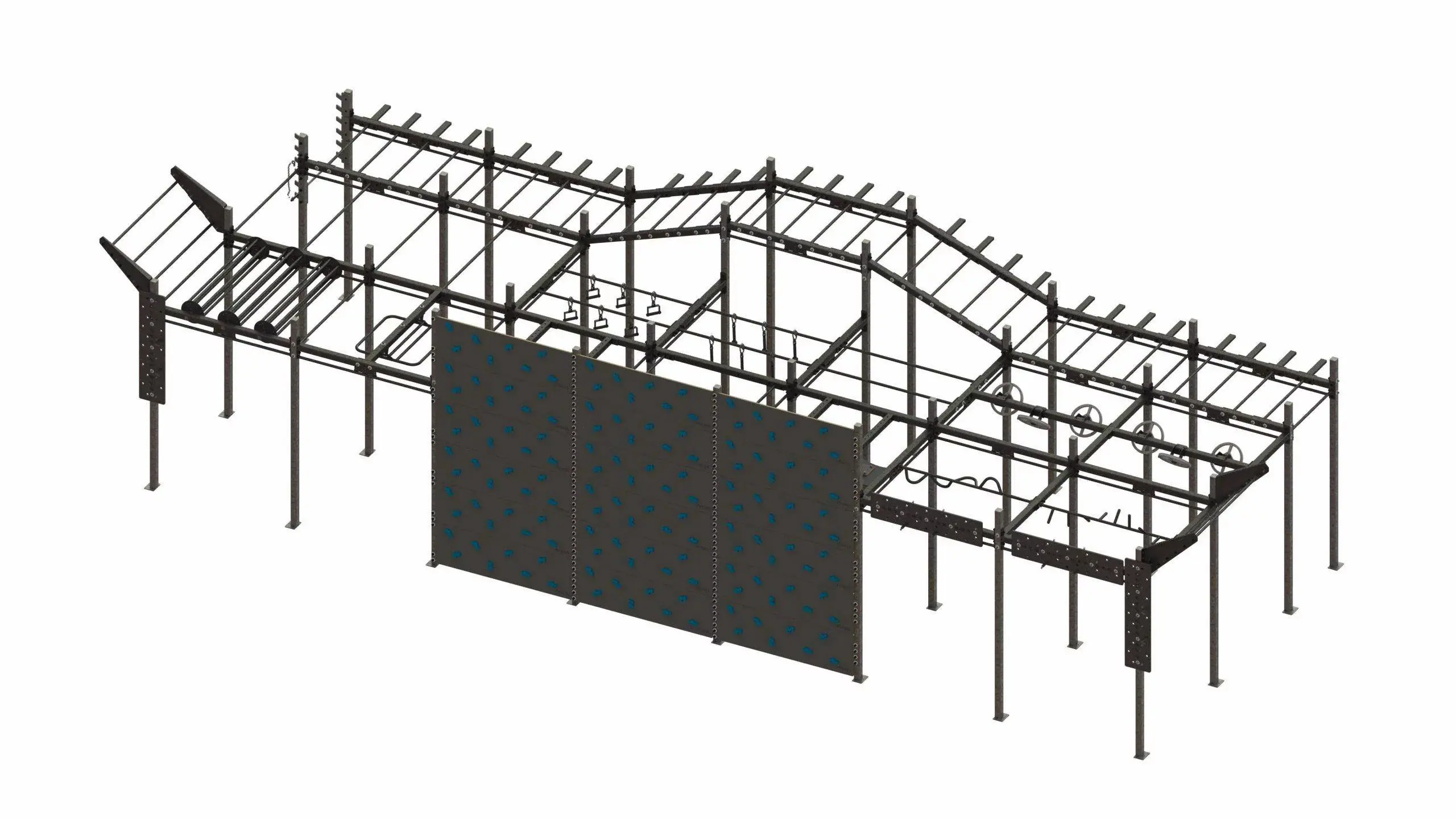
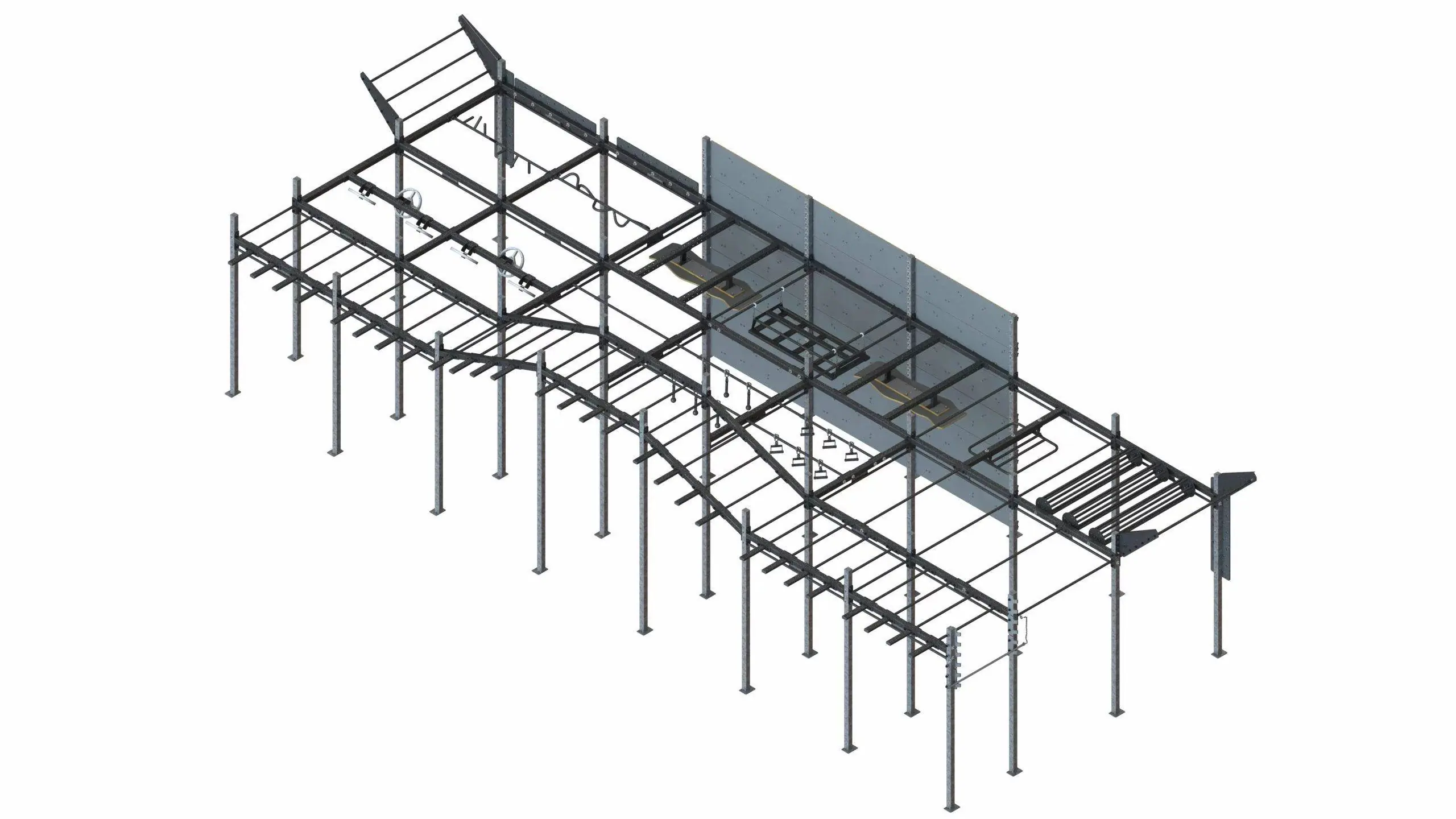
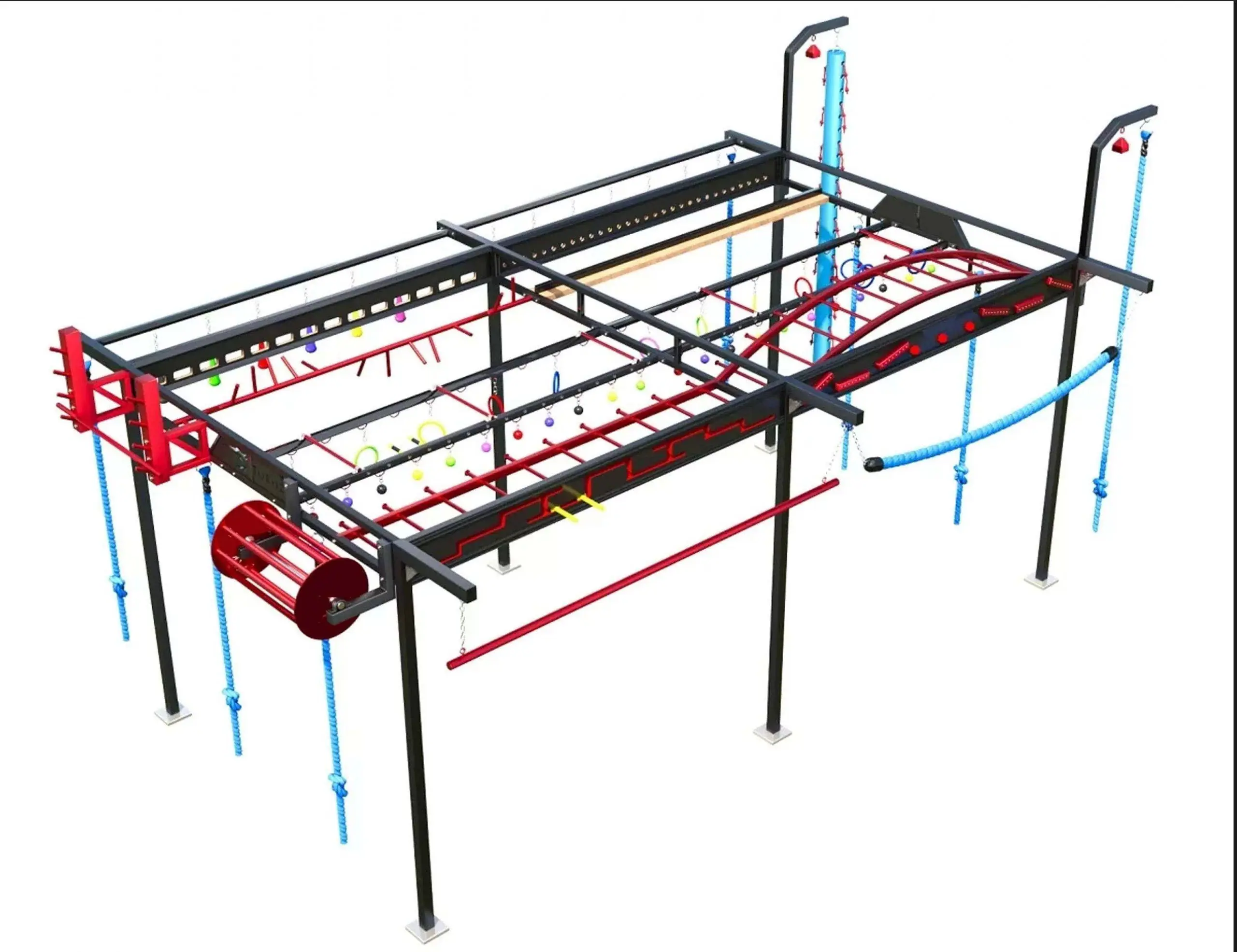
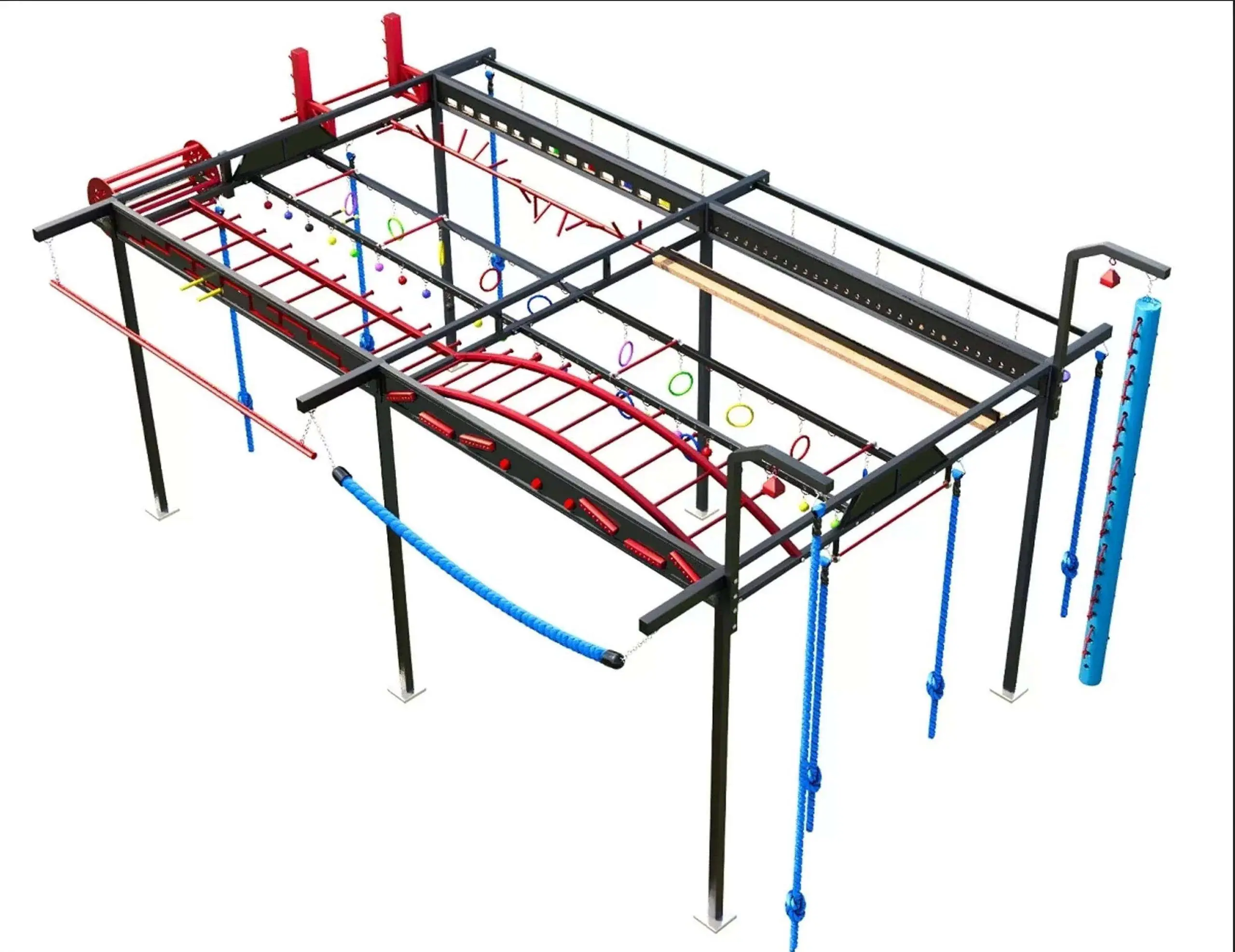
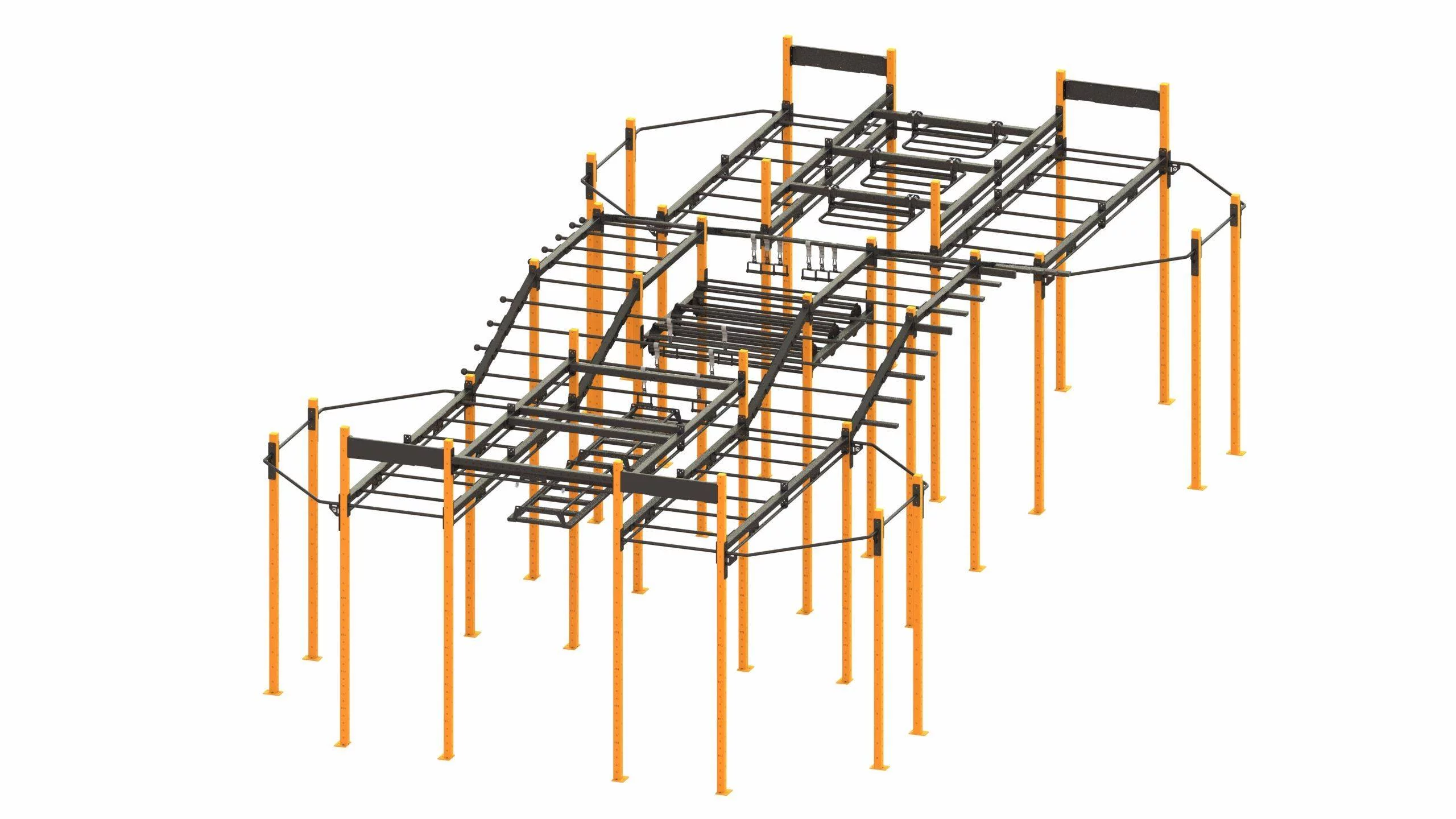
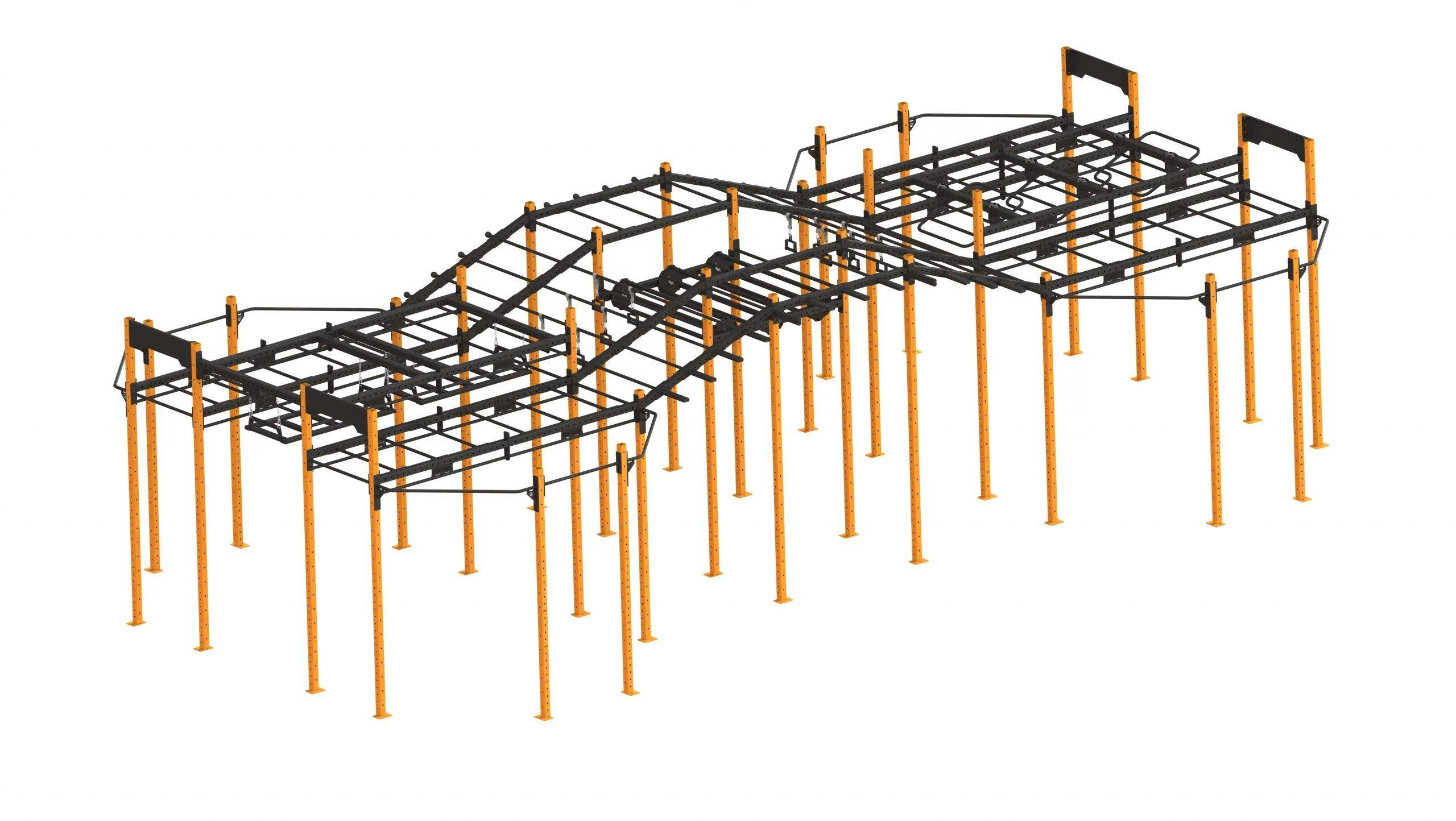
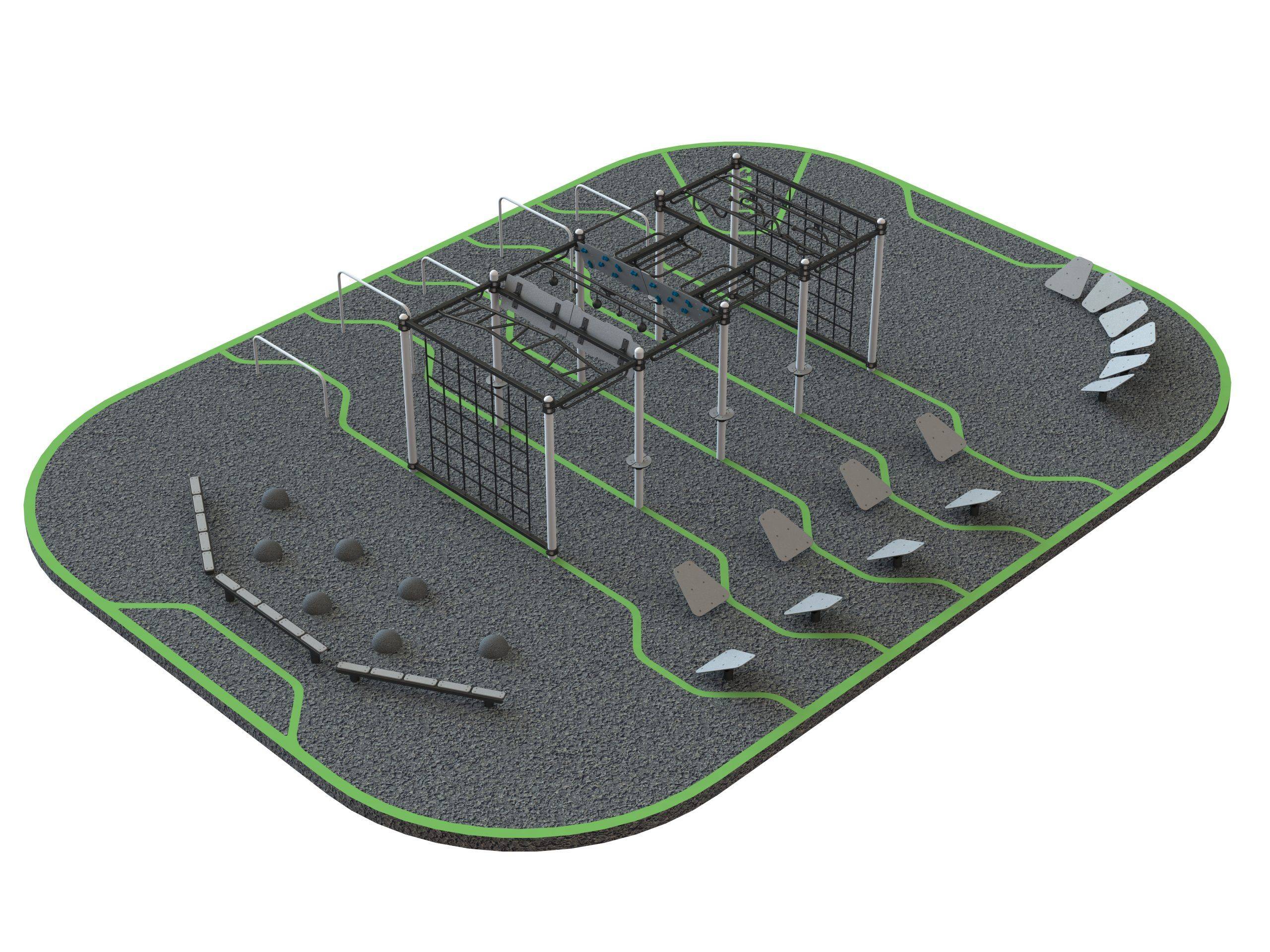
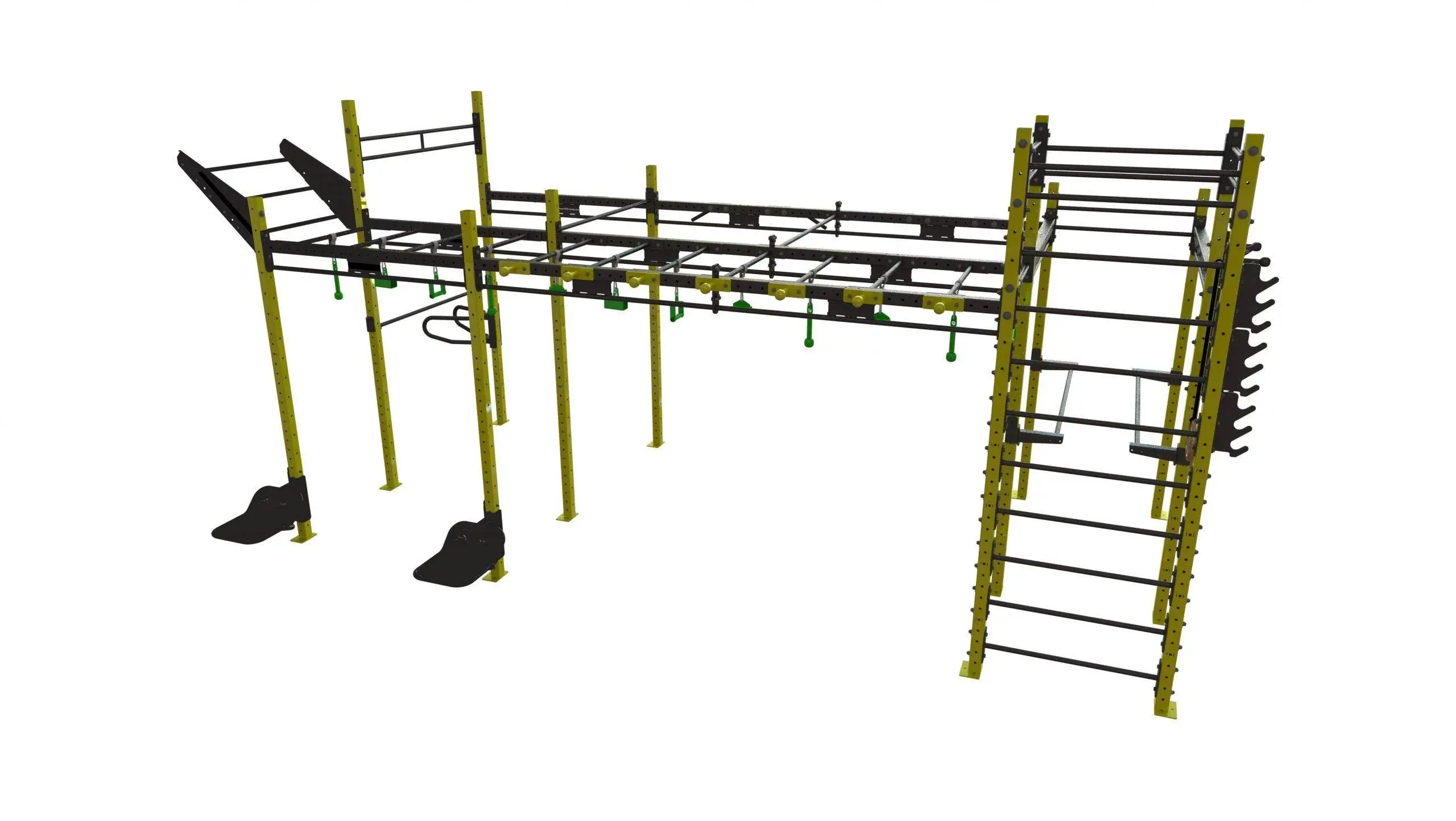
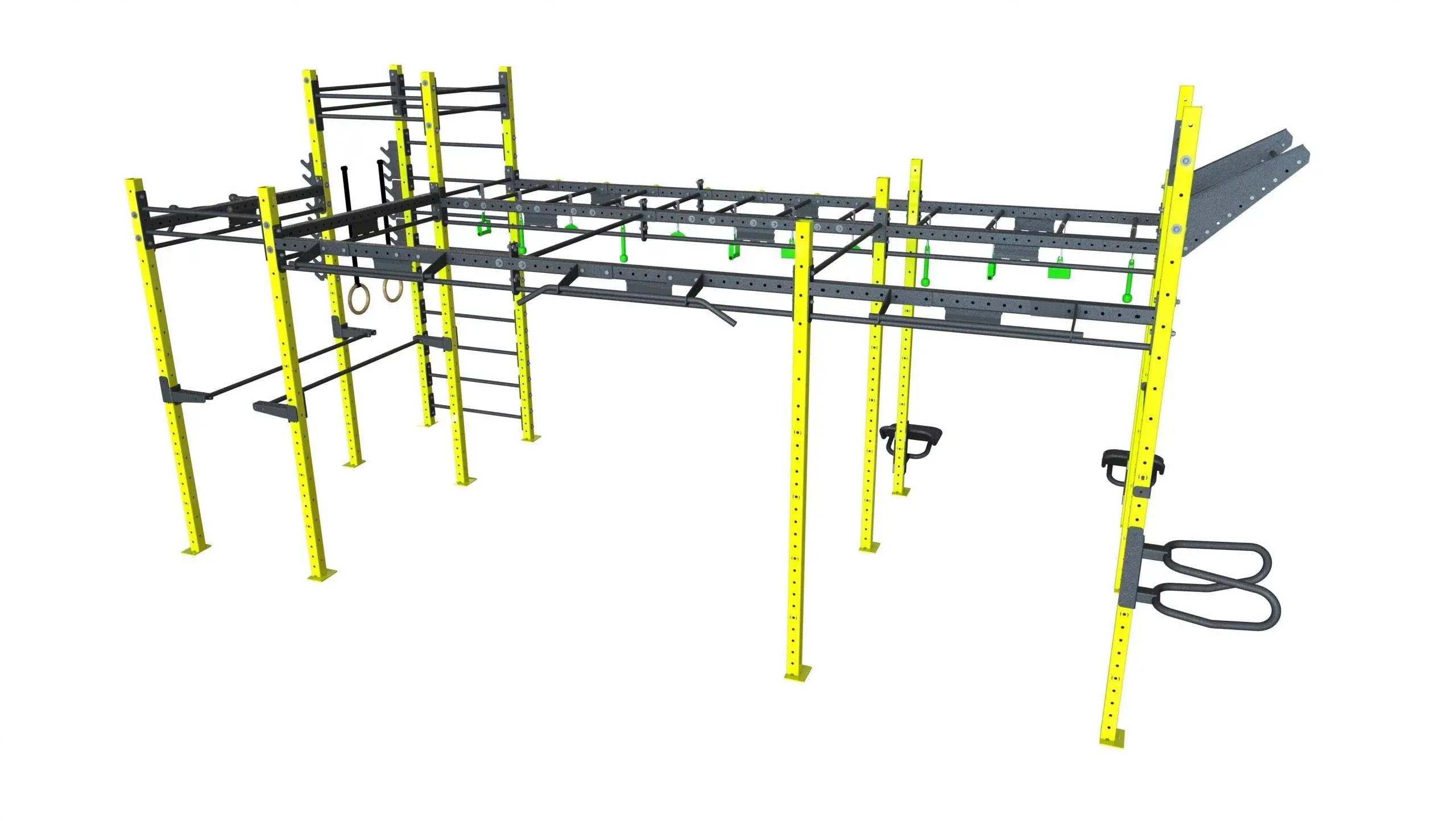
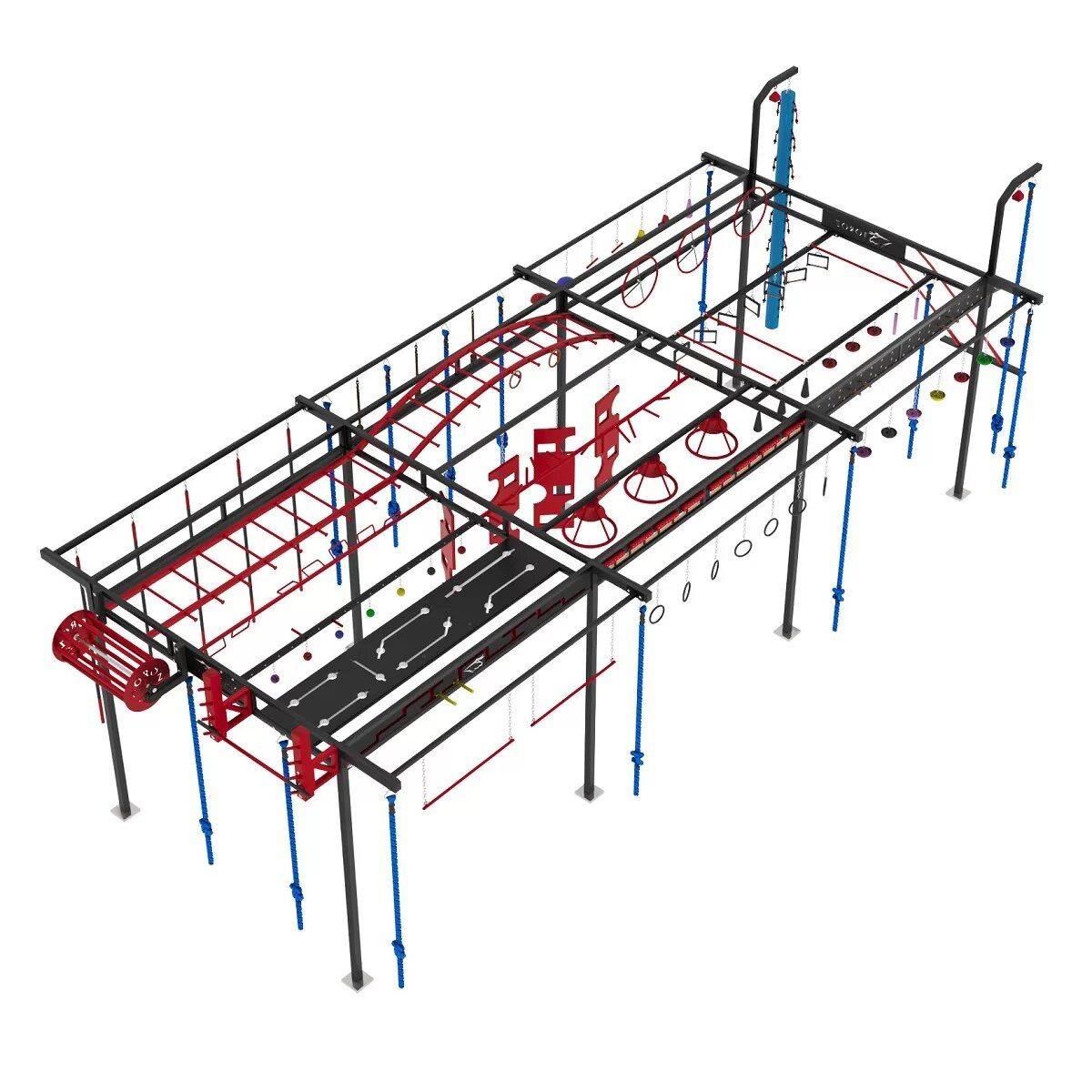
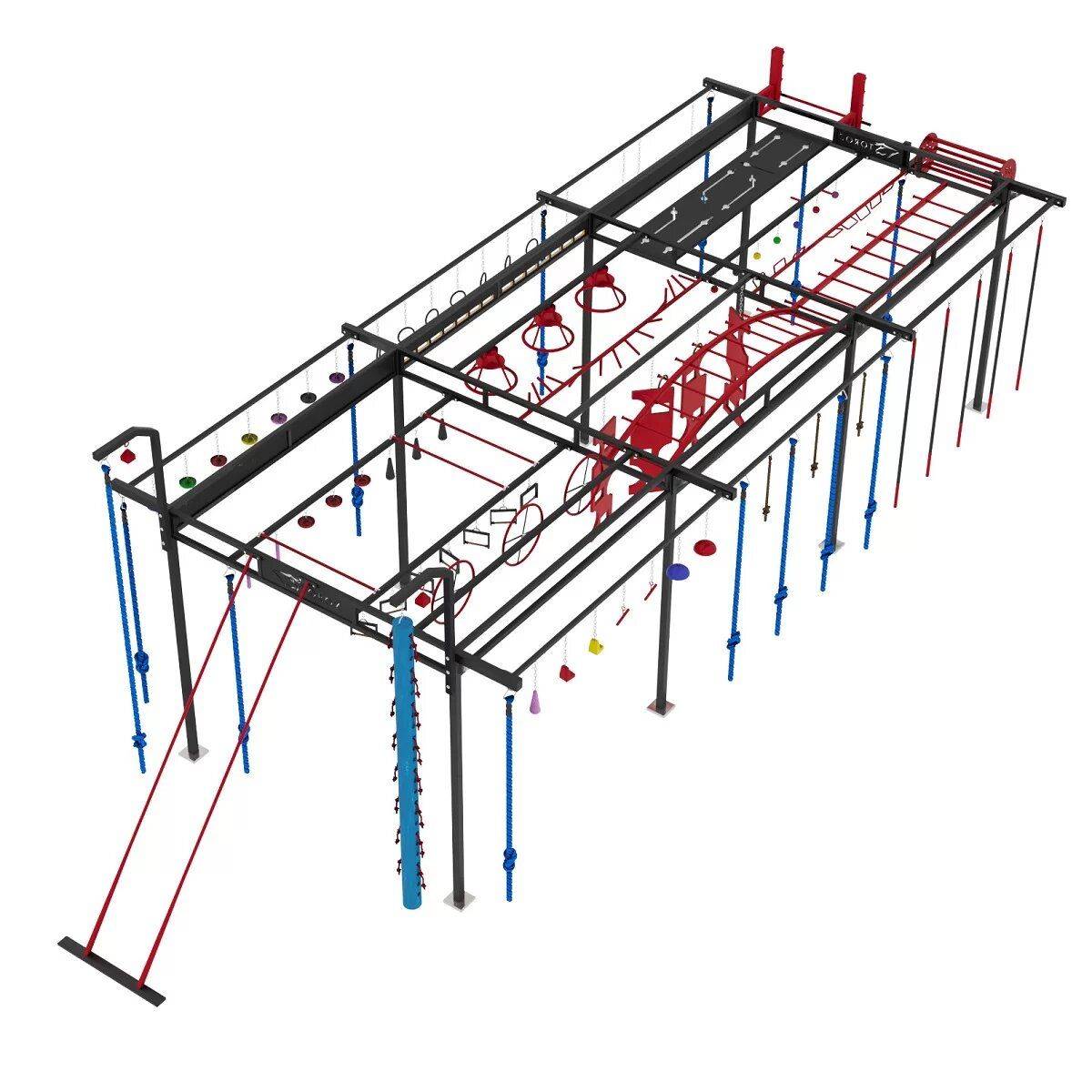
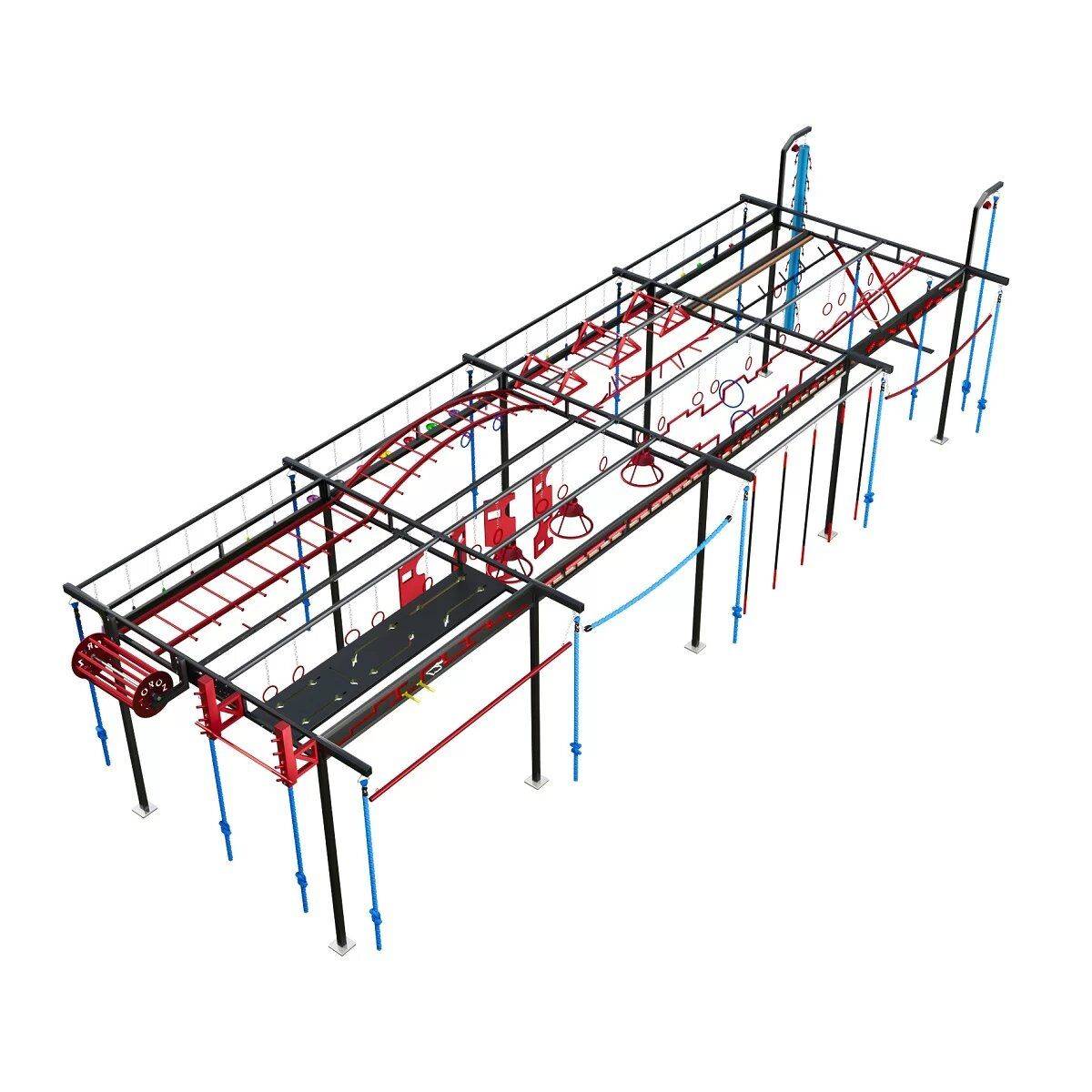
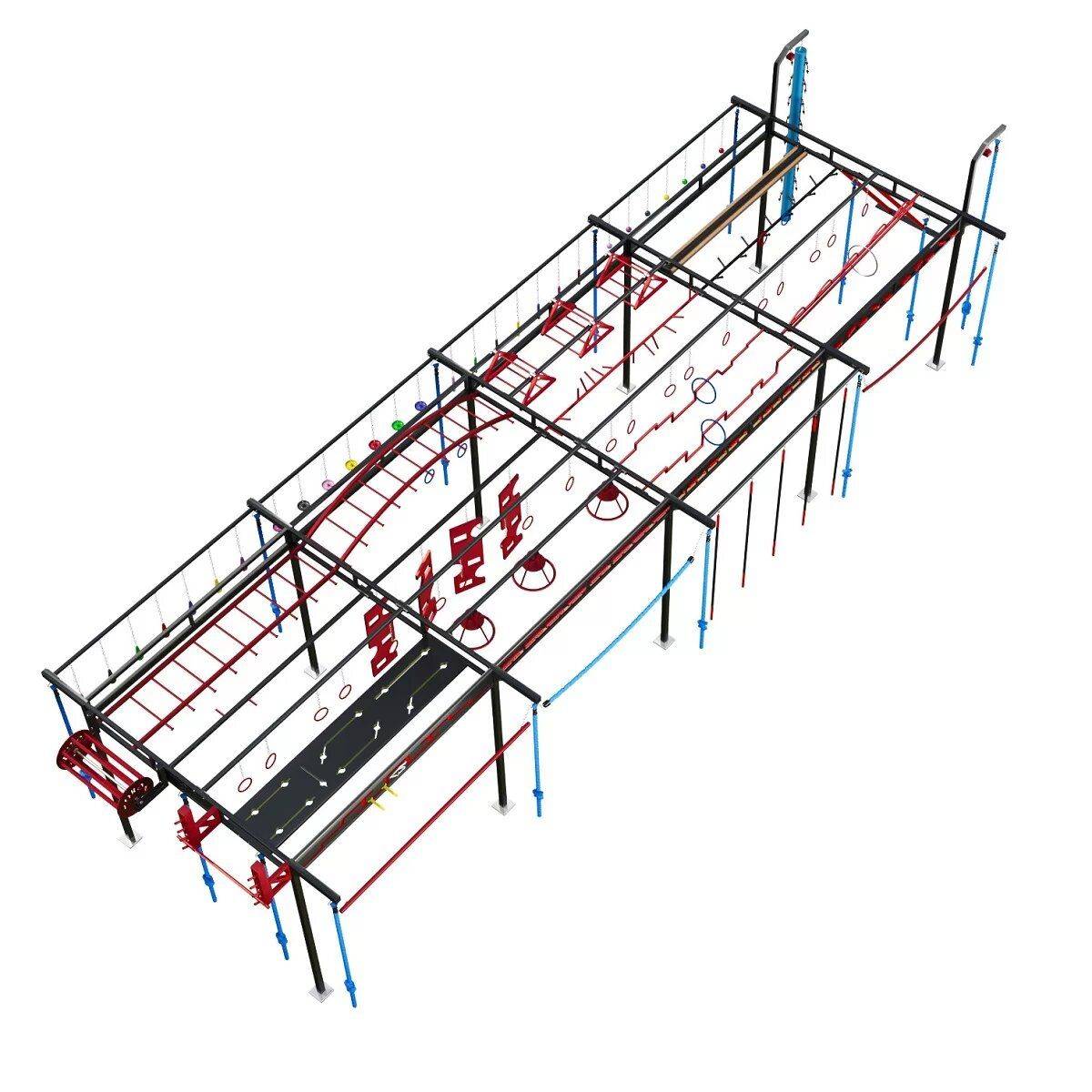
A Ninja Warrior rig is a modular steel structure reproducing obstacle course elements such as warped walls, monkey bars, rings and climbing ramps, for training in strength, agility and endurance. Light In Fitness manufactures and distributes these rigs in France and Europe for CrossFit gyms, outdoor sports parks, local authorities, schools, obstacle course racing clubs and military bases, in indoor versions and in outdoor versions certified to EN 16630.
The framework behind our playgrounds and trails
| Standards applied | EN 1176:2015 for playground equipment, EN 16630:2015 for permanently installed outdoor fitness, EN 1177 for impact-attenuating surfacing |
|---|---|
| Certification | Ranges tested and certified by an independent body, TÜV Rheinland on the TRAINER ranges — certificate supplied on request |
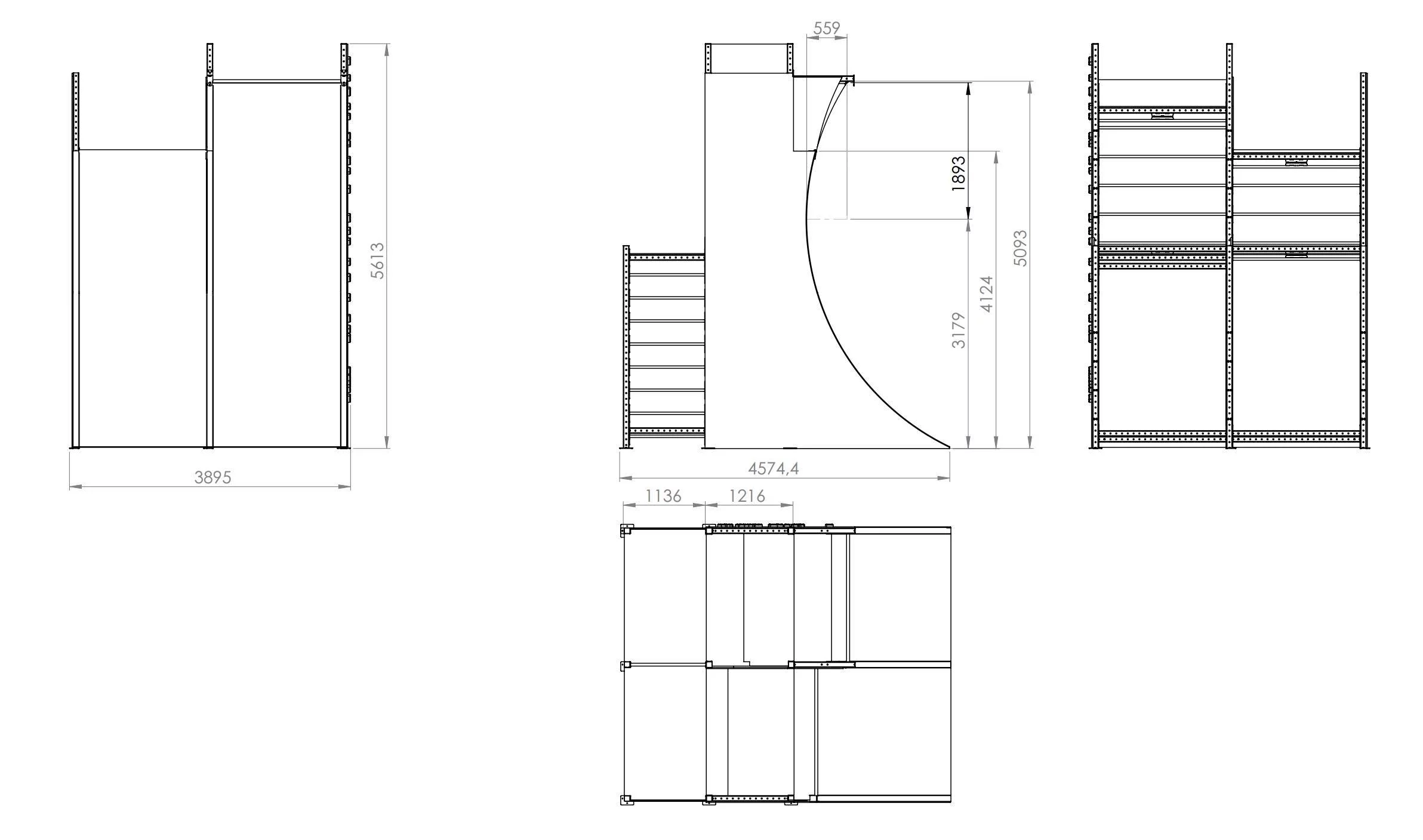
| Data published per reference | Age range, free fall height, safety zone, foundation depth and overall dimensions |
| Materials | Hot-dip galvanised and powder-coated steel, stainless steel, HPL and HDPE panels, laminated timber, braided polyamide ropes |
| Impact-attenuating surfacing | Sized from the equipment free fall height, never from its product family |
| Structural warranty | 20 years on steel structures, lifetime on stainless structures manufactured by Light In Fitness |
| Spare parts | Available for at least 20 years after delivery |
| Statutory inspections | Downloadable inspection log, compliant with French decree 96-1136 for public play areas |
| Design and manufacturing | Structures designed in Tours, France and manufactured in Europe — priced quotation within 72 hours |
Showing all 19 resultsSorted by latest


What the range covers
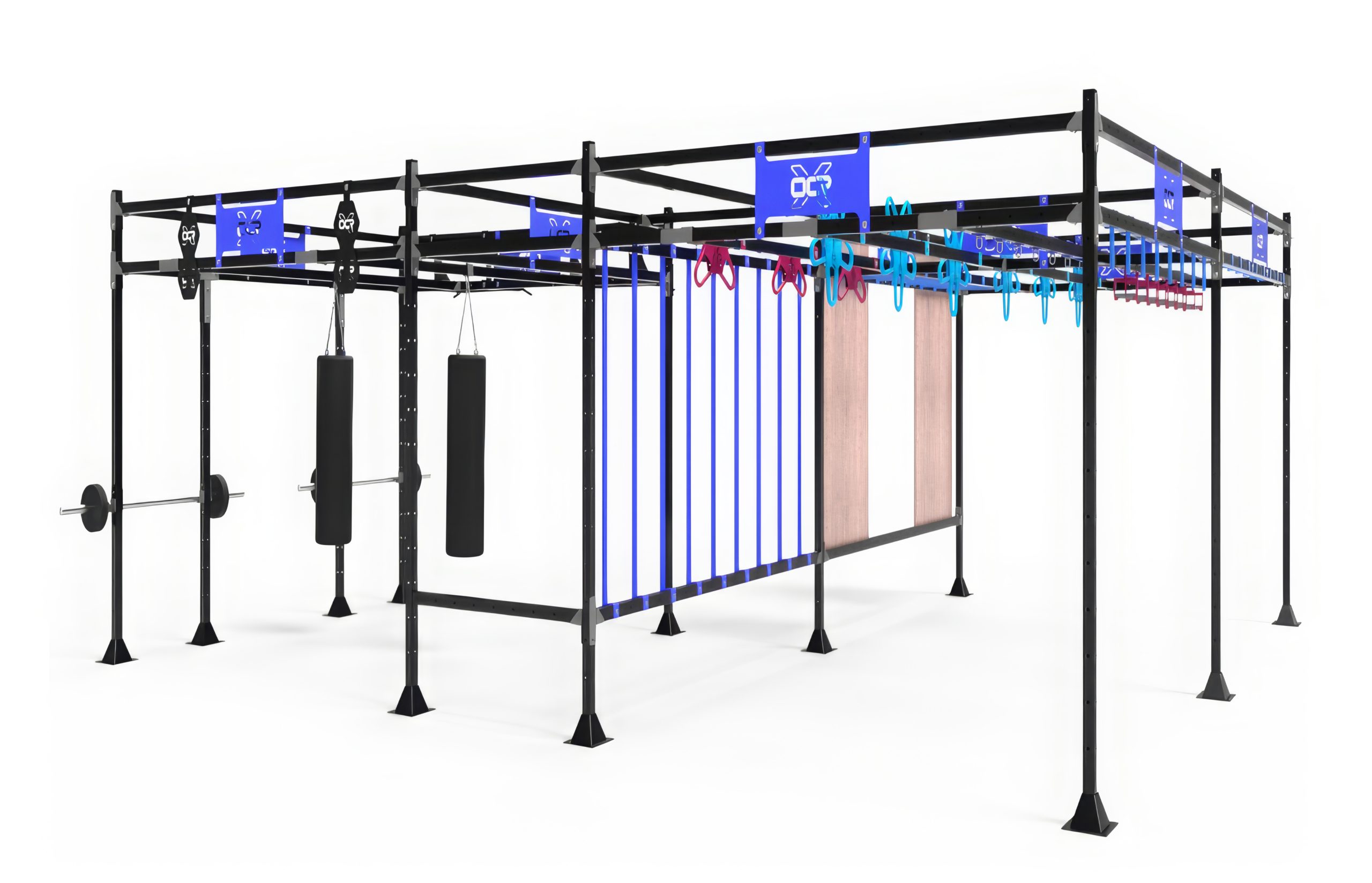
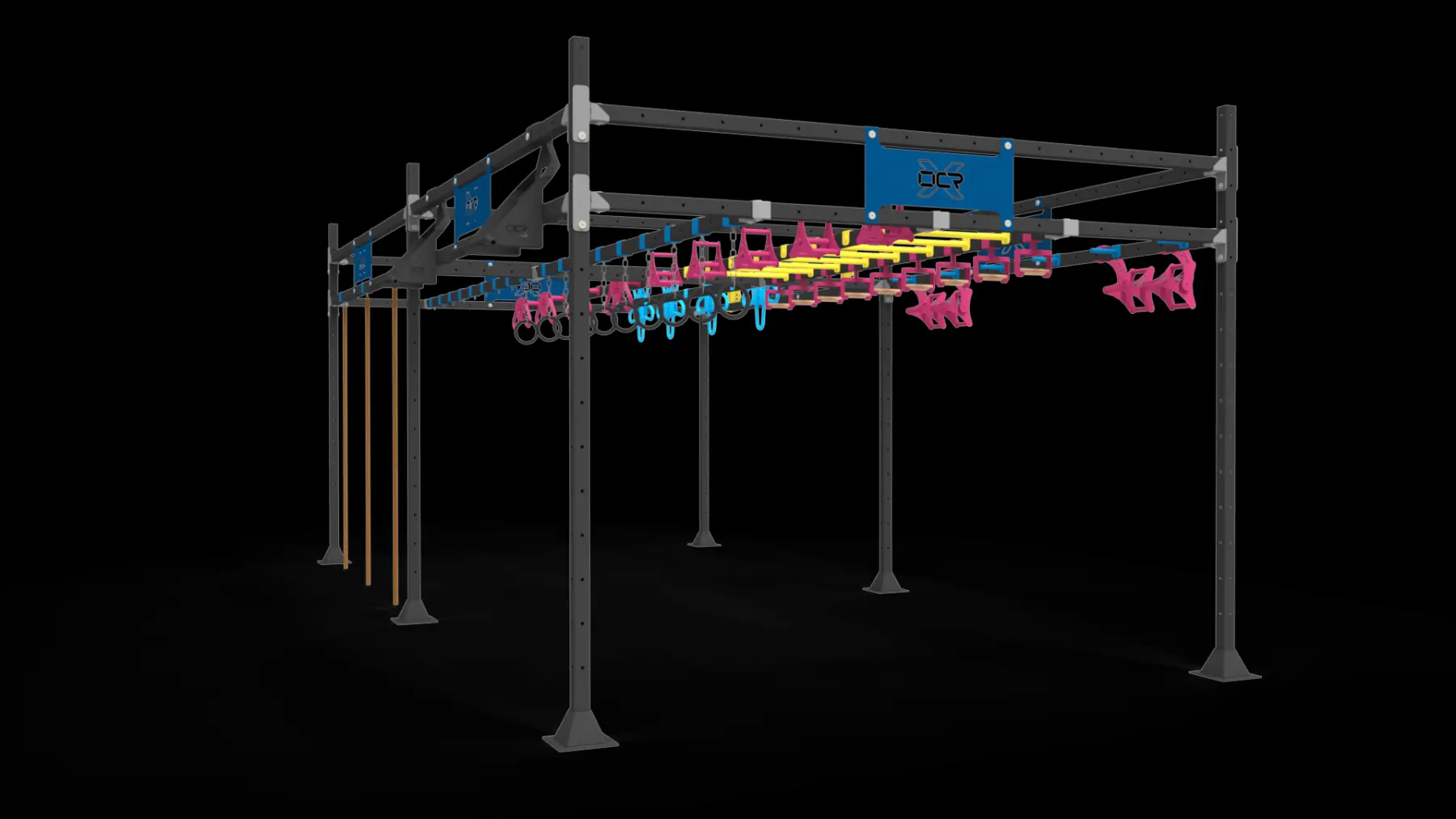
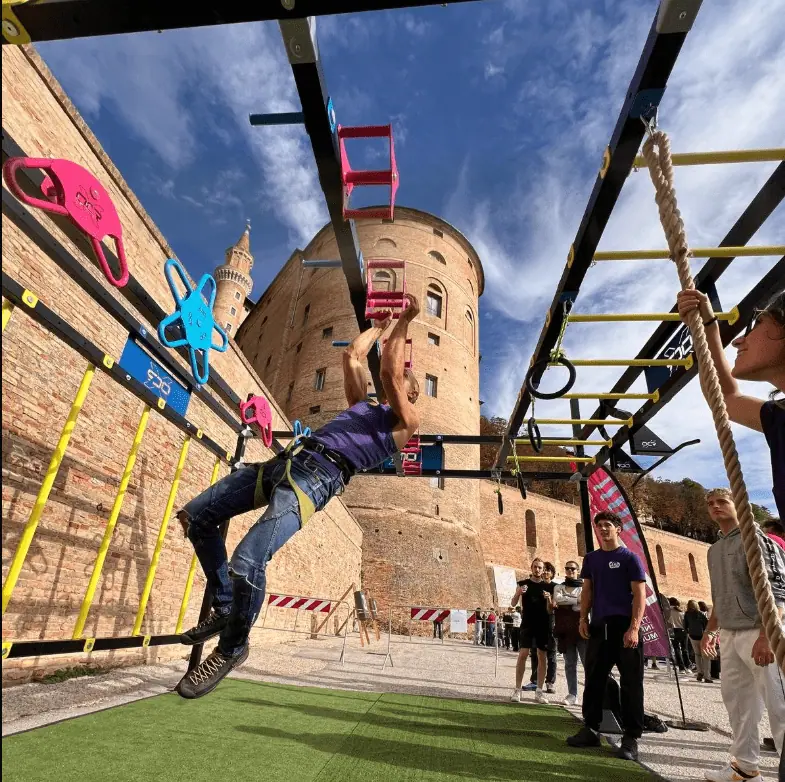
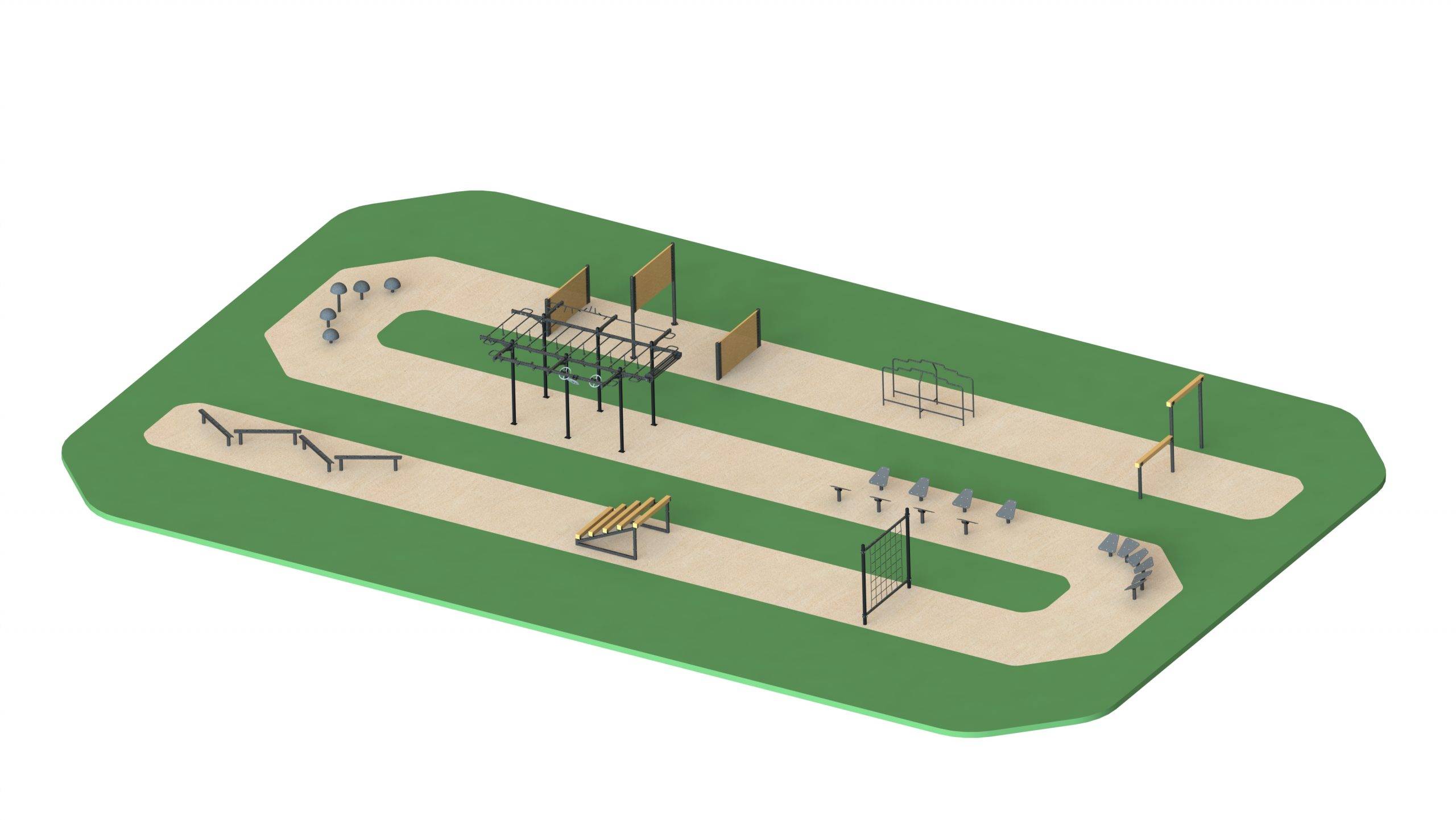
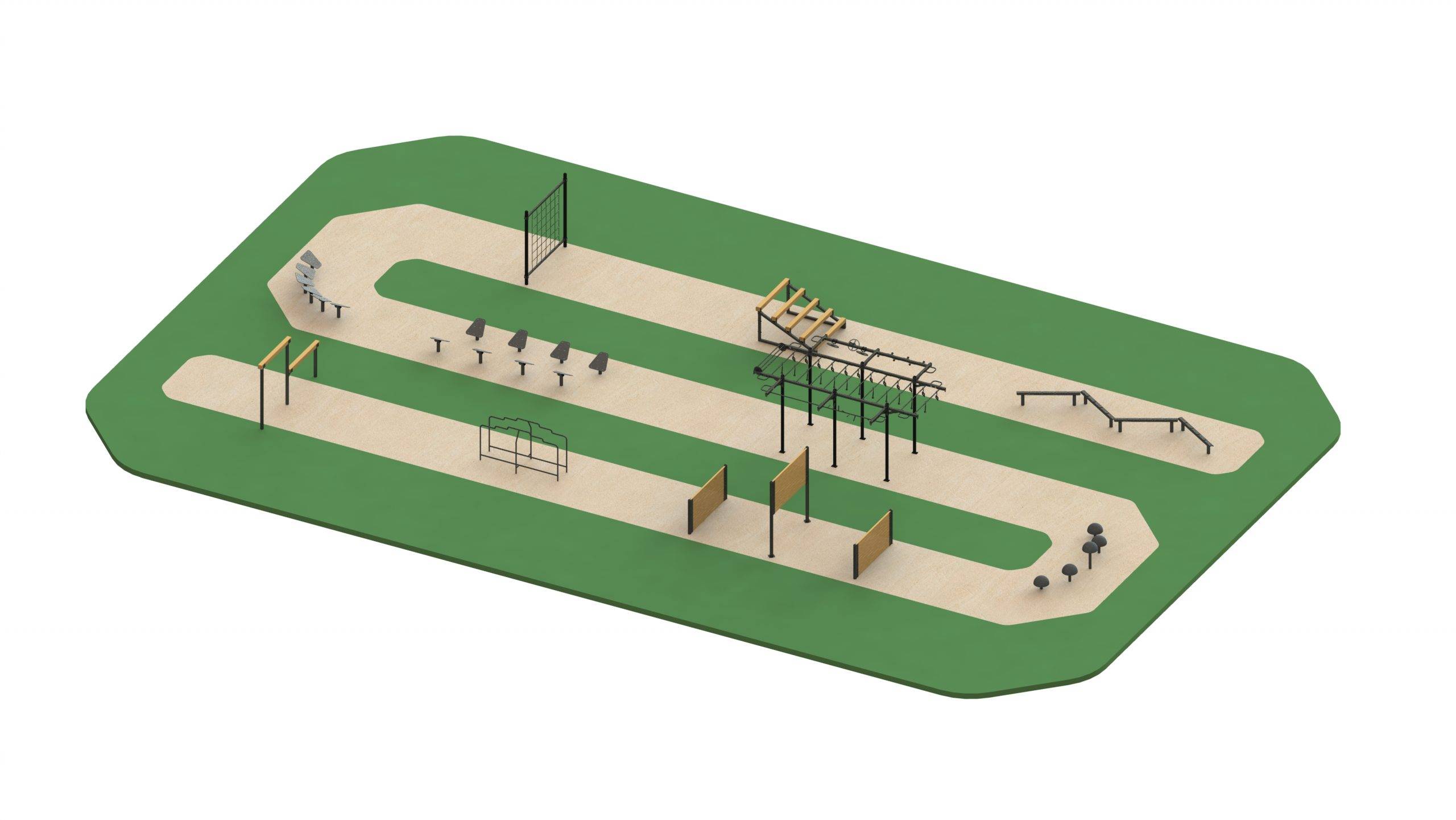
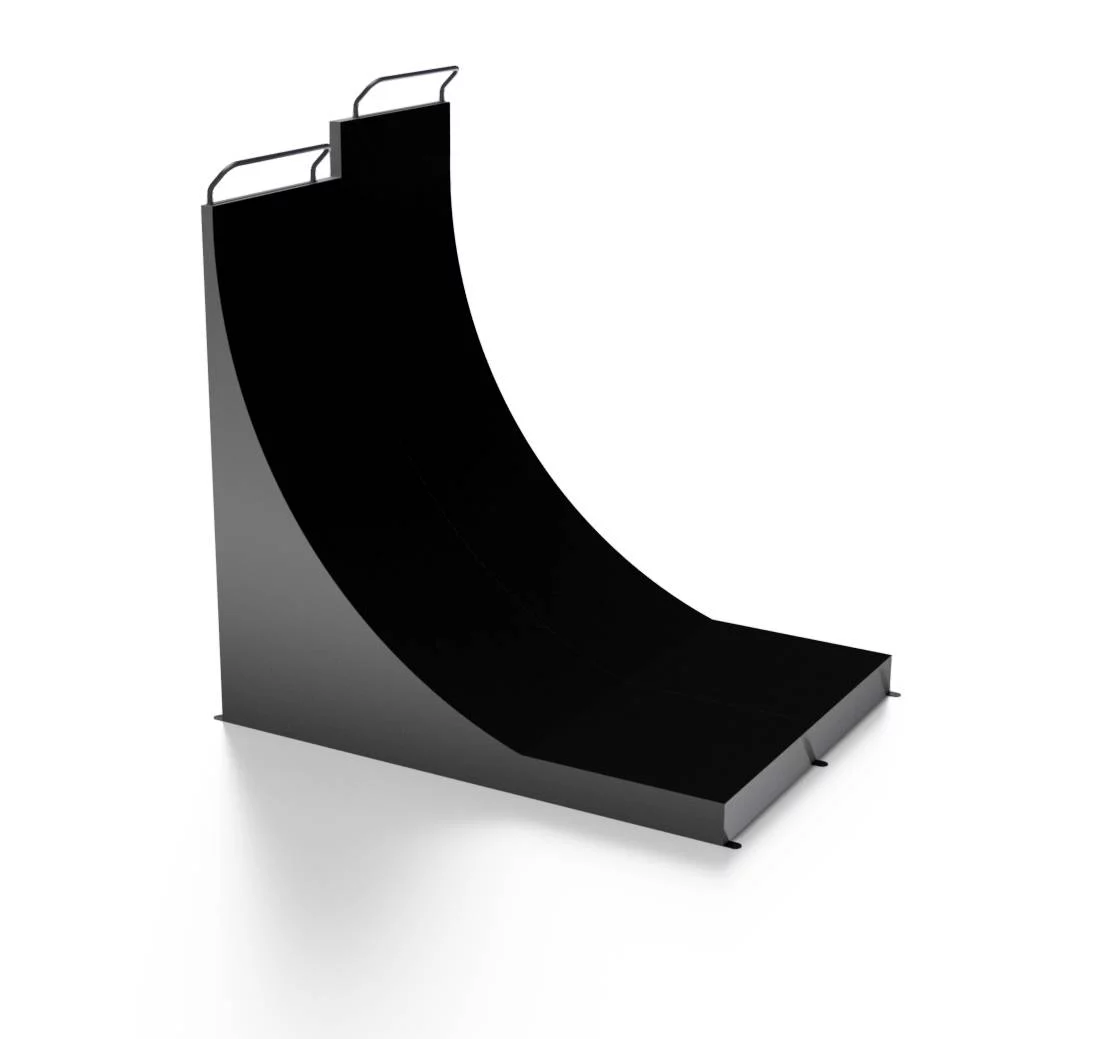
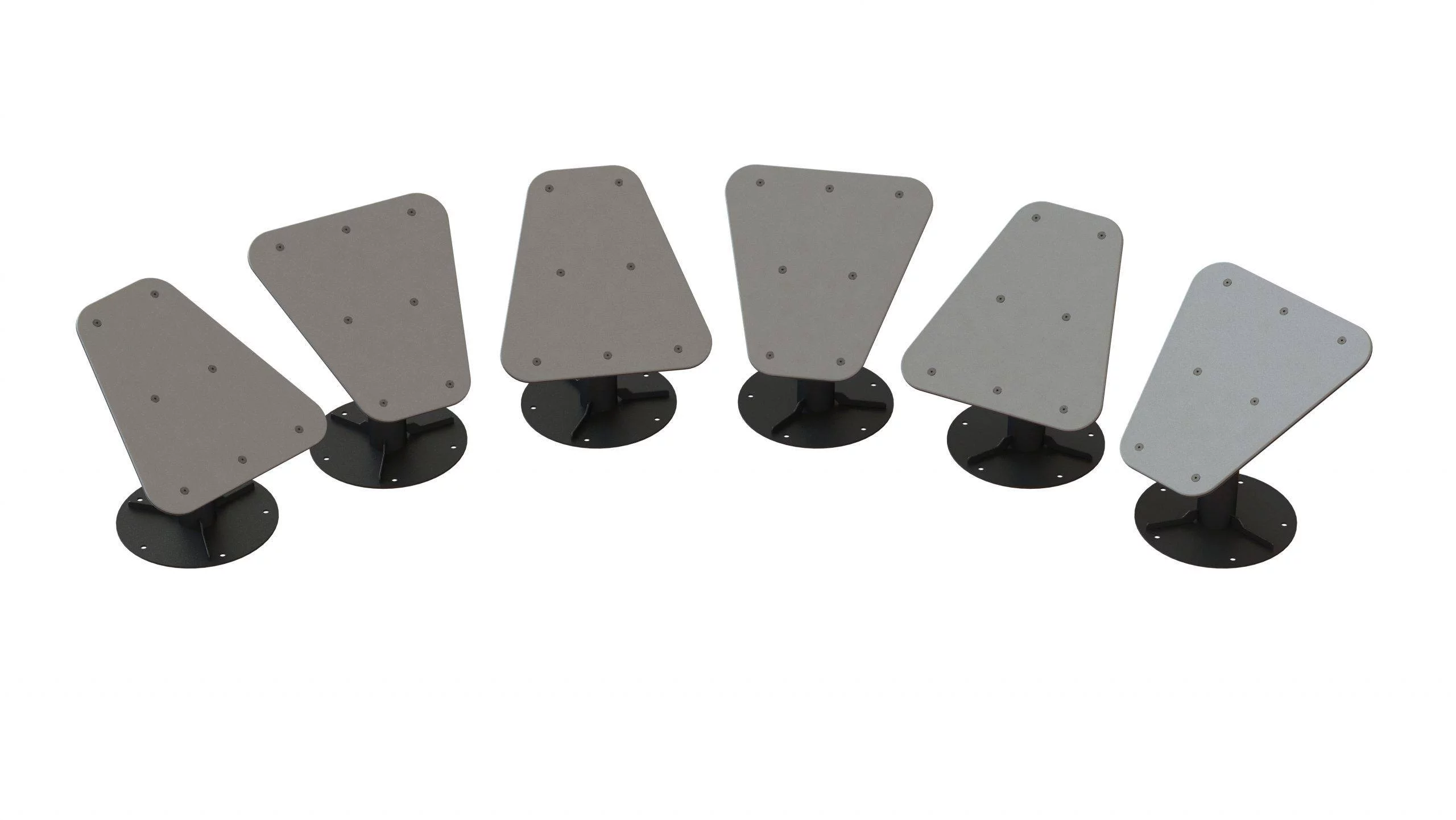
Complete Ninja and obstacle course racing rigs, individual obstacle modules and cross training structures. Typical elements include warped walls, monkey bars and traverse bars, hanging rings, cliffhanger and ledge obstacles, salmon ladders, rope climbs, cargo nets and unstable hand holds. Indoor versions are designed for gym floors with a defined ceiling height; outdoor versions use galvanised steel or 316L stainless steel for permanently exposed sites. Configurations run from a single obstacle lane for a training room to a full competition specification rig for a park or a leisure complex.
Indoor or outdoor, and how to size a rig
| Installation | Key constraint | Material | Typical use |
|---|---|---|---|
| Indoor training rig | Clear height under the lowest obstacle | Coated steel | CrossFit gyms, OCR clubs, training centres |
| Outdoor park rig | Safety zones plus impact surfacing | Galvanised steel | Municipal sports parks, schools, leisure sites |
| Coastal outdoor rig | Corrosion exposure | 316L stainless steel | Seafront promenades, holiday villages |
| Military or emergency service | Group throughput, loaded work | Galvanised or stainless steel | Bases, training grounds, selection courses |
Layout, surfacing and safety
Two figures drive the design: clear height above the highest usable element, and the linear run available for the obstacle sequence. Indoors, ducts, lighting and sprinkler heads usually set the real height limit rather than the slab, so send the height under the lowest obstruction. Because every element on a Ninja rig has a free height of fall, impact absorbing surfacing is mandatory beneath and around the structure, sized from that fall height. Outdoors this means an outdoor rated rubber surface on a drained sub base; see outdoor sports flooring. Indoors, thick rubber gym flooring tiles or mats are used under landing zones.
Standards, installation and warranty
Outdoor rigs on freely accessible sites fall under EN 16630, which sets safety requirements, protection zones and the operator maintenance plan. Where a rig is installed in a declared play area for children, EN 1176 applies to the equipment and EN 1177 to the surfacing. Indoor structures fall under EN ISO 20957-1 class S (successor to the former EN 957). Anchoring is required in all cases and a structural study confirms the fixing detail on bespoke projects. Warranty runs from 2 to 5 years depending on the range, with extensions available on steel structures.
Frequently asked questions
What ceiling height is needed for an indoor Ninja rig?
It depends on the obstacles selected: monkey bars and rings need enough height for a tall user to hang with feet clear of the mat, while a warped wall sets its own dimension. Rather than quoting a single figure, we size the rig from the height under your lowest obstruction. Send that measurement with your enquiry.
Is surfacing mandatory under a Ninja rig?
Yes. Every usable element has a free height of fall, and the surfacing has to be matched to it. This is the item most often underestimated in a Ninja project budget, because the surface area to be covered extends beyond the footprint of the structure itself.
Can a rig be used for competition?
Competition specification obstacles are available within the range, and rigs are supplied to obstacle course racing clubs and event operators. What a competition setup adds is repeatability between lanes and clear officiating sight lines, which is a layout question. Tell us at enquiry stage if competition use is planned.
Send us the available run, the clear height and whether the rig is indoor or outdoor, and we will return a configuration with a layout drawing. Request a quotation for a reply within 24 working hours.