How to Build Muscle Mass: A Complete Training Guide
A muscle-gain phase, often called a bulking phase, means increasing lean muscle mass while keeping fat gain to a minimum. It is one of the most common goals a gym hears from its members, from first-year trainees to experienced lifters, and it is also one of the goals most often pursued badly. This article sets out the strategy that works: how to structure the phase, what nutrition it requires, how to train, why recovery decides the outcome, and what a facility needs on its floor to support members who are actually trying to do it.
The steps of a muscle-gain phase
Building muscle is not a single intervention but a set of conditions held in place at the same time. Training, food and recovery each have to be right, and none of them compensates for another being wrong. The steps below are the ones that decide whether the phase produces a result.
1. Define the goal
Before a programme begins, the goal has to be explicit. Is the member trying to gain muscle, lose fat, or both? Those are different programmes with different calorie targets, and trying to run them simultaneously is why so many members spend a year without visible change. A clear goal sustains motivation and lets the programme be adjusted against something measurable.
2. Follow a suitable nutrition plan
Nutrition is decisive in a muscle-gain phase. The member needs enough calories to support muscle growth while keeping a balance between the macronutrients: protein for building tissue, carbohydrate for training energy, and fat for general health. This is genuinely specialist territory, and members with specific requirements should be referred to a registered nutritionist or dietitian for an individual plan rather than given a template.
3. Train for strength
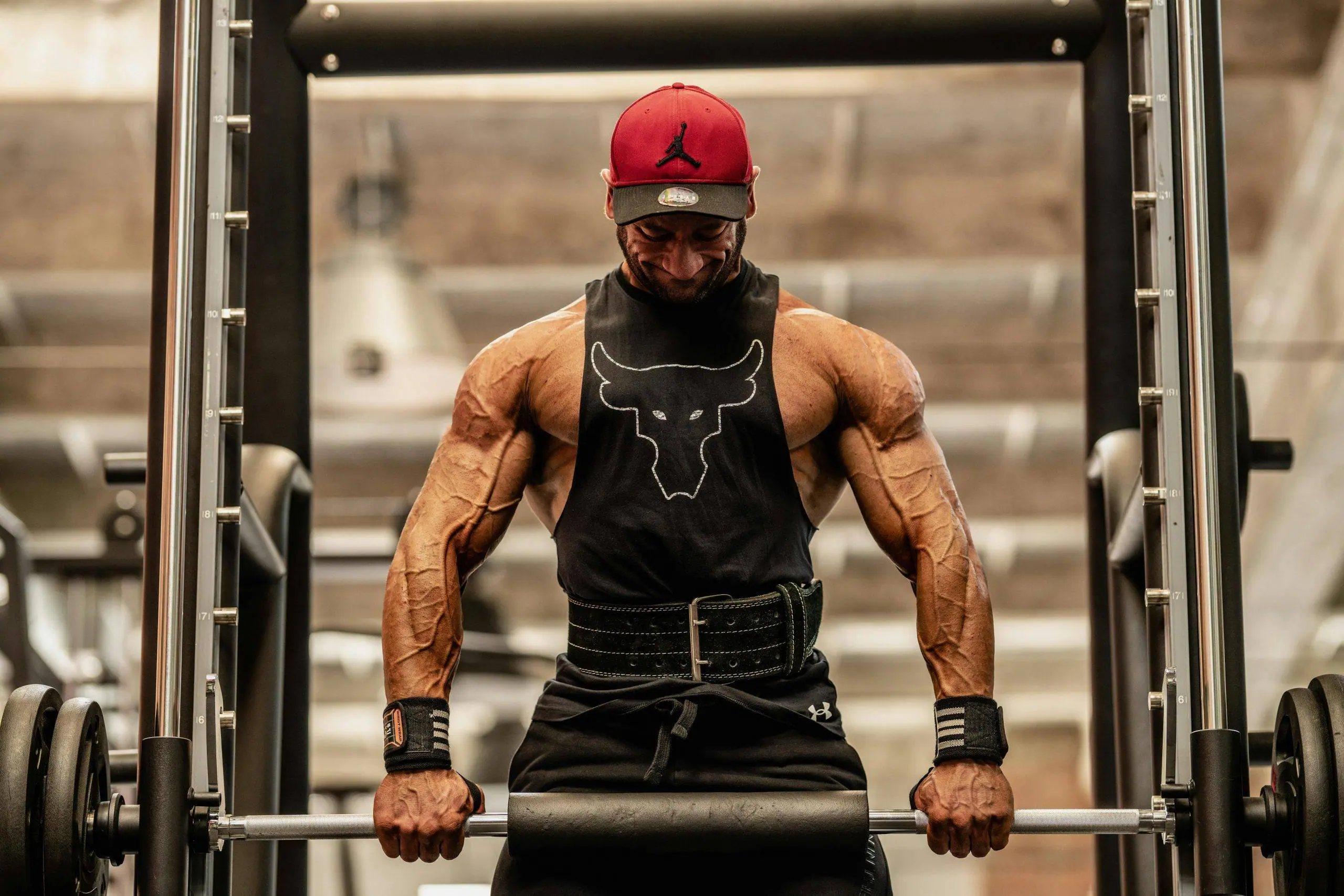
Strength training is what provides the stimulus for growth. The core of the programme should be compound movements: squats, deadlifts, bench presses and pull-ups. These recruit several muscle groups at once and drive whole-body development in a way isolation work does not. The programme should be structured rather than improvised, with progressive increases in load and enough variation to avoid stagnation.
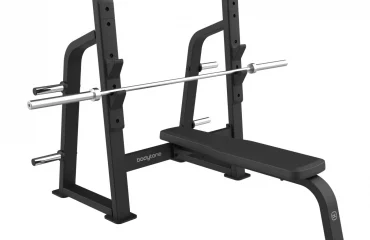
This is where a facility’s equipment mix becomes the limiting factor. Compound training needs racks, benches and loadable bars, not only pin-loaded stations. Our squat racks and power racks and professional weight benches cover that requirement.
4. Prioritise recovery
Recovery is the step most often skipped, and it is where the adaptation actually happens. The body needs time to rest and repair after hard sessions. Adequate sleep, proper hydration and relaxation practices such as stretching all belong in the plan. Active recovery, in the form of light swimming or mobility work, also has a place on the easy days.
5. Use supplements sensibly
Supplements can support a muscle-gain programme, but they do not replace a balanced diet, and their contribution is small compared with training and food. Protein powders, amino acids and creatine are the most commonly used. Anyone considering supplementation should speak to a healthcare professional first, since some products cause unwanted effects or interact with medication.
6. Track progress
Progress has to be recorded or it cannot be managed. A training log capturing sessions, loads and performance shows what is working and what is not, and gives a basis for adjusting the programme instead of guessing at it. Members who track their loads progress; members who do not tend to repeat the same session for months.
What this means for a facility
Members in a muscle-gain phase train heavier, longer and more often than the average user, and they concentrate on a narrow set of stations. Two practical consequences follow for an operator.
The first is capacity. Racks and benches become bottlenecks at peak hours in any gym with a serious training population. A single rack in a facility with several hundred members is a queue, not a service.
The second is durability. Equipment used for heavy compound training takes loads that light circuit equipment never sees. Indoor equipment for professional use should conform to EN ISO 20957-1 class S, the professional-use classification; class I designates professional equipment for inclusive access and is a separate professional category rather than a level above class S. Frame gauge, weld quality, bearing and bushing specification and the condition of upholstery under heavy use are what determine whether a station is still serviceable in year five.
A balanced strength floor combines free-weight provision for the compound lifts with selectorised stations for accessory volume and for members not yet ready to load a barbell. Our full range of professional strength training machines covers both sides of that mix.
Frequently asked questions
How long should a muscle-gain programme run?
It varies with individual goals. As a general rule, at least 8 to 12 weeks is needed for meaningful results. Some people extend the phase over several months or longer, depending on their objectives and their rate of progress.
Do you have to eat more calories to gain muscle?
Yes. Gaining muscle requires a calorie surplus, meaning more calories consumed than expended each day. The important qualification is that the surplus should come from nutritious food with a sensible macronutrient balance, not simply from an increase in empty calories.
Will a muscle-gain phase add fat as well?
Some fat gain is normal during a calorie surplus. With a balanced diet and consistent training it can be kept modest, so that most of the gain is muscle. The skill of the phase is finding the balance between muscle gain and body-fat management.
Can you do cardio during a muscle-gain phase?
Yes. It is sensible to limit the duration and intensity of cardio sessions so that they do not burn too many calories and compromise the surplus. One or two light to moderate sessions a week support cardiovascular health and recovery.
What are the best exercises for building muscle?
The compound movements that recruit several muscle groups at once. Squats, deadlifts, bench presses, pull-ups and overhead presses are the effective examples. They recruit large amounts of muscle and drive whole-body growth.
What equipment does a gym need to support members in this phase?
At minimum, squat or power racks with adjustable safety catches, a set of adjustable and flat benches, loadable bars and plates, and a selectorised group for accessory work. The right quantity of each depends on membership numbers and peak-hour patterns, which is a question of layout rather than of catalogue.
Building the floor to support it
A muscle-gain phase demands time, patience and consistency from the member. It demands something from the facility too: enough stations of the right kind, built to take the load, arranged so that members are not queuing for the one rack in the building. Members who cannot train the programme they came for do not stay long.
Light In Fitness has supplied professional strength equipment to gyms, hotels, clubs, sports halls and public facilities since 2013. Send us your floor plan and your membership profile and we will propose a strength layout with a costed specification. Request a quote and our team will come back to you with a configuration built around your site.