Interlocking Puzzle Tatami Mats: Transform Your Floor with a Look of Its Own
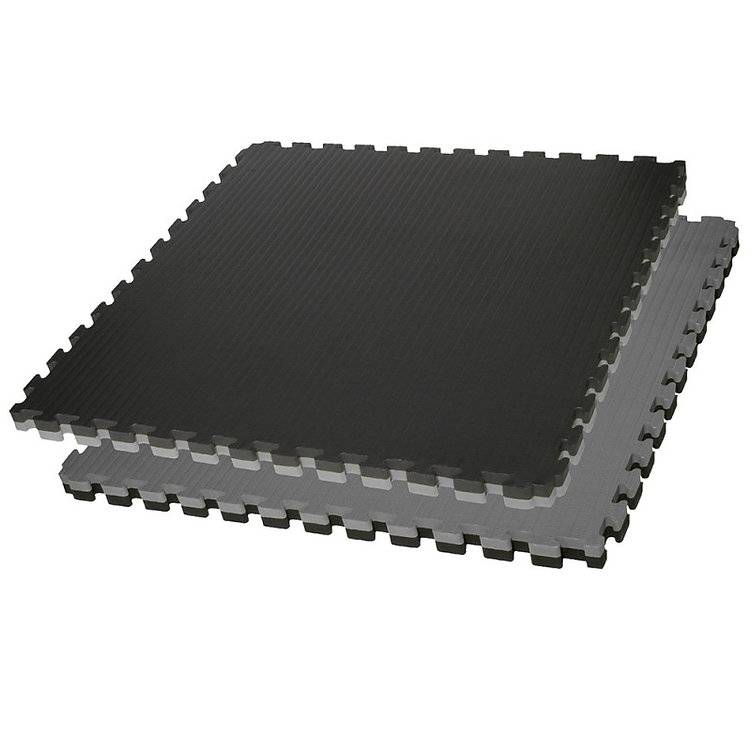
Few decisions change the character of a training room as quickly as the floor. Walk into a dojo, a combat sports club or a functional training area and the surface underfoot tells you almost everything about how the space is used and how seriously it is run. Interlocking puzzle tatami mats are the fastest way to make that statement, because they combine a genuinely technical surface with the freedom to design a floor that belongs to nobody else.
They are tiles that clip together along their edges, like the pieces of a puzzle, into a continuous surface. That single characteristic gives operators something conventional flooring cannot: a floor that can be laid in an afternoon, extended when the room changes, repaired one tile at a time, and coloured to mark zones, lanes or a club identity. Underneath the design freedom sits a shock-absorbing, non-slip surface designed for people who fall on it deliberately.
This guide is for the people who specify and buy that floor: martial arts club owners, gym and box managers, school and university sports departments, local authority facility officers, hotels and rehabilitation centres.
What interlocking puzzle tatami mats are
A puzzle tatami mat is a moulded tile, usually of high-density closed-cell foam, with toothed edges that lock into neighbouring tiles. Laid across a room, the tiles form a floating floor that needs no adhesive and no fixings. Most ranges include straight edge strips so the perimeter finishes cleanly rather than showing exposed teeth.
The visible face is normally embossed with a rice-straw texture that recalls traditional tatami, which is where the name comes from, and that texture is functional: it provides grip for bare feet while still allowing the controlled slide that throwing and ground work require. The underside is smooth or lightly channelled so the tile sits flat on the subfloor.
They are laid over hard subfloors of every kind: concrete, screed, tile, timber and resin. Because the system floats, it can be lifted and relaid elsewhere, which matters for clubs that share a hall with other users or operate in a building they do not own.
What the surface actually does for you
It absorbs impact. The core reason to install tatami is that people land on it. A dense foam tile spreads the energy of a fall across a wider area and over a longer time, which is what protects joints, hips and heads. This is also what makes the same floor comfortable for barefoot standing work over a long session, whether that is a two-hour grading or a full day of school PE.
It grips without gripping too much. The textured face gives secure footing for pivots, stances and takedown entries, while remaining smooth enough that skin does not catch during ground work. That balance is the difference between a martial arts surface and a generic anti-fatigue mat.
It goes down fast and comes up faster. No adhesive, no curing time, no specialist installer. A club can convert a bare hall into a usable training area between sessions, and a multi-purpose room can be reconfigured for a competition and returned to its original state afterwards.
It survives being repaired. When a tile is damaged, you replace that tile. Sheet or bonded flooring has to be cut out and patched; a puzzle floor is maintained one square at a time, which keeps the long-term cost of ownership honest.
Designing the floor: patterns, zones and colour
Because the tiles interlock in every direction, the layout is a design decision rather than a constraint. The classic choice is a two-colour chequerboard, which reads as a dojo instantly and has the practical benefit of making distances legible during technique work. Alternating blocks of colour are used to divide a hall into a competition area and a warm-up area without a single line of tape.
A perimeter band in a contrasting colour marks the safety zone around a mat area. A central panel in club colours turns the floor itself into branding that appears in every photograph and every video posted by your members. Where a room hosts several disciplines, colour is the cheapest way to signal which zone belongs to which activity.
Some ranges move away from the dojo look altogether. Stone and marble effect finishes in the 7 mm interlocking puzzle tile range are specified for studio, wellness and hotel spaces where the floor has to read as an interior finish rather than as sports equipment, while keeping the clip-together installation.
The advice worth repeating: draw the layout before ordering. A scale sketch of the room with tile dimensions marked will tell you where cuts fall, whether the pattern lands symmetrically, and how many edge strips you need. It takes twenty minutes and it prevents the most common ordering mistake.
Choosing the right mats for your facility
Start with the discipline, not the room. Thickness and density follow from what happens on the floor. Striking arts, fitness classes and barefoot conditioning work on a thinner, firmer tile that keeps the stance stable. Grappling, judo, aikido and anything involving throws need a thicker, more absorbent tile because bodies arrive on it from height. A club that does both usually zones the room rather than compromising across the whole surface.
Then measure properly. Take the room dimensions at floor level, note every obstruction, pillar and door swing, and decide whether the mats stop at the training zone or run wall to wall. Order edge strips for every exposed border. Ordering a few spare tiles at the same time is standard practice and costs far less than a part-order later against a different production batch, where colour matching is never guaranteed.
Check the density, not just the millimetres. Two tiles of identical thickness can behave completely differently. A high-density core keeps its shape under repeated impact and under the point loads of equipment and furniture; a soft, low-density tile feels comfortable in the showroom and takes permanent dents within a season. Ask for the density figure and treat it as the more important number of the two.
Match the finish to the audience. A dojo wants the rice-straw texture and the traditional colour pairings. A children’s activity room wants bright colours and a forgiving surface. A hotel or studio wants something that does not look like a gym. All three exist within the professional tatami mat range, and the choice is genuinely aesthetic once the technical specification is settled.
For a club that wants one product to cover most situations, a mid-weight dojo tile such as the 40 mm dojo puzzle tatami tile is the usual starting point: enough absorption for throws, enough firmness for standing work, and a reversible two-colour face that lets the same stock produce different layouts.
Cleaning and upkeep
Maintenance is undemanding but not optional. Vacuum or sweep the surface regularly, because grit trapped between tiles is what wears the interlocking teeth and eventually lets joints open. Wash with a damp mop and a mild neutral detergent; for combat sports, a disinfectant approved for skin-contact surfaces should be part of the routine, since mat hygiene is a real infection-control issue rather than a cosmetic one.
Avoid aggressive solvents and stiff brushes, both of which attack the embossed surface and leave it slippery once smoothed. Do not flood the floor: water that runs into the joints sits underneath the tiles and takes far longer to dry than the surface suggests. Lift a section occasionally and let the subfloor air.
Keep the floor out of prolonged direct sunlight where you can, since ultraviolet exposure fades colours and hardens foam over time. Where a hall has large south-facing glazing, this is worth factoring into the colour choice, as darker tiles show fading less obviously than bright ones.
Where they earn their place
Martial arts and combat sports clubs. The core application. A puzzle floor gives a club its own identity at a fraction of the cost of a fitted competition mat, and it can grow tile by tile as membership grows.
Gyms and functional training areas. Used to create a defined floor work, mobility or stretching zone inside a larger room, visually separated from the lifting platforms and the cardio line.
Schools, colleges and universities. A sports hall that has to serve gymnastics on Monday and judo on Tuesday needs a floor that appears and disappears. Puzzle tiles are stored on edge on a trolley and relaid by two people.
Children’s activity rooms and soft play areas. Warm, forgiving and easy to clean. One point needs stating plainly: an indoor puzzle mat is not a substitute for the impact-attenuating surfacing required under playground equipment. Playground equipment is governed by EN 1176-1 and its surfacing by EN 1177, and those requirements are met with a system tested for the free height of fall involved, not with interlocking foam tiles.
Hotels, residences and rehabilitation centres. Small dedicated rooms where a comfortable, quiet, non-slip floor is worth more than a sports specification, and where the finish has to sit alongside the rest of the interior.
Frequently asked questions
Do puzzle tatami mats need to be glued down?
No. The interlocking system holds the field together and the tiles float on the subfloor. Adhesive is only considered for very small areas or narrow runs where there is not enough field for the tiles to hold each other in place.
What subfloor do they need?
A clean, dry, flat hard surface. Concrete, screed, tile, timber and resin all work. Puzzle tiles follow the shape of what is underneath them, so an uneven subfloor will show through and will cause joints to open under use.
Can the floor be taken up and reused?
Yes, and that is one of the main reasons clubs choose the system. Tiles separate by hand, stack flat and go back down in a different room or a different building.
What thickness should we order?
It depends on the discipline rather than the room. Standing and striking work uses a thinner, firmer tile; throwing and ground work needs a thicker, more absorbent one. Tell us what is trained on the mat and we will specify against it.
Will the colours match if we order more later?
Not always. Production batches vary slightly. Ordering spares with the original delivery is the reliable way to keep a floor uniform over its life.
A floor with your name on it
Interlocking puzzle tatami mats give an operator a rare combination: a technical surface that does a serious job, an installation that takes an afternoon, and a design that can be exactly what you want it to be. The floor stops being something you tolerate and becomes part of how the facility presents itself.
Get the technical part right first, then enjoy the design freedom. Tell us the room dimensions, the disciplines practised and the look you are after, and we will come back with a layout, a tile specification and a figure. Request a quote and we will work from your floor plan.