EVA Puzzle Mats for Baby Play Areas: The Complete Specification Guide
In short: interlocking EVA foam puzzle mats give babies and toddlers a cushioned, non-slip floor for their first crawling and walking. Recommended thickness: 10 to 25 mm. Specify tiles certified free of formamide and phthalates under the EN 71 toy safety standard. Large continuous surface, washable, resistant to urine.
Nurseries, hotel kids clubs, family leisure centres, paediatric rehabilitation rooms and soft-play corners in fitness clubs all face the same problem: a hard floor and a child who is learning to fall. Interlocking EVA puzzle mats answer it with the simplest possible product – a cushioned tile that clips into its neighbour and turns any flat surface into a continuous play zone. This guide covers what a professional buyer should actually check before ordering: thickness, chemical certification, surface finish, installation and cleaning.
Why interlocking EVA tiles suit baby and toddler areas
The first argument is impact absorption. A toddler learning to stand falls dozens of times a day, almost always backwards and from a low height. A foam tile absorbs that energy where tiles, concrete or laminate return it. This is the core reason childcare and paediatric settings use puzzle mats rather than a rug.
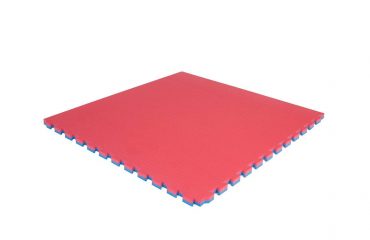
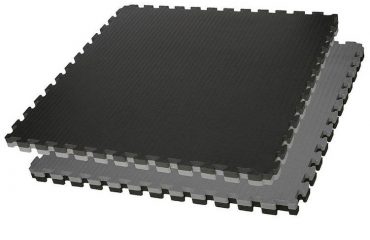
The second is continuity. Because the tiles interlock, you can cover a 4 square metre corner or a whole room with the same product, and reconfigure it when the room changes use. There is no adhesive, no trim, no specialist installer. Border strips close the perimeter so there is no raised lip for a child to catch a foot on.
The third is hygiene. EVA foam is closed-cell: it does not absorb liquid, which matters in a setting where spills, dribble and urine are daily events. A tile can be lifted out, washed and put back, or replaced individually when it is damaged – something no roll or carpet allows.
Finally, colour. Contrasting tiles help mark zones (changing area, play area, quiet corner) and give visual stimulation for very young children without any extra product.
Specifying the right tile
Four criteria decide whether a puzzle mat is fit for a professional childcare setting.
| Criterion | What to specify |
|---|---|
| Thickness | 10 to 25 mm. The lower end suits crawling and light play; the upper end is for areas where children stand, walk and fall. |
| Chemical safety | Certification under the EN 71 toy safety standard, with documented absence of formamide and phthalates. |
| Surface | Textured, non-slip top face, for bare feet and for socks. |
| Cleanability | Closed-cell foam, wipeable, resistant to urine and to repeated washing. |
Formamide is the point that separates a professional purchase from a consumer one. It has been found in cheap uncertified foam tiles, and it is exactly the kind of product that has no place in a room full of children who put things in their mouths. Ask the supplier for the test report, not just a claim on the packaging.
If your specification is for older children in a martial arts or gymnastics context rather than infants, the product family changes: look at tatami mats or roll-out gym mats, which are designed for throws and falls from standing height rather than for crawling.
Installing the mats in a professional setting
Installation is deliberately simple, but a few points are worth writing into the method statement.
- Lay the tiles on a clean, dry, flat subfloor. Dust and grit under foam tiles wear them from below.
- Assemble from one corner outwards, pressing each joint fully home. A partly engaged joint creates a ridge, and a ridge is a trip hazard.
- Close the perimeter with the border strips so the edge is flush.
- Do not lay foam tiles directly on a polished or wet surface where the whole assembly can slide.
- Keep the play zone clear of hard furniture corners, radiators and anything a child can pull over.
Where the same room also carries adult fitness equipment, do not extend the foam under machines: point loads from a rack or a machine foot will crush the foam permanently. Use rubber gym flooring tiles for that zone and butt the two floors together.
For outdoor play equipment the rules are different again: impact-absorbing surfacing there is governed by EN 1177 and the equipment itself by EN 1176-1. Foam puzzle mats are an indoor product and are not a substitute – see playground surfacing for the outdoor equivalent.
Cleaning and service life
Routine cleaning is warm soapy water and a microfibre sponge. Avoid bleach and solvents: they attack EVA foam and leave the surface chalky and brittle. Let the tiles air dry before putting them back down, and lift them periodically so the subfloor underneath dries too.
Damaged tiles do not condemn the floor. Because the surface is modular, a torn or bitten tile is pulled out and replaced. Order a small stock of spares with the initial delivery – in a nursery this is the difference between a five-minute fix and a room out of service.
With that regime, a professional-grade puzzle mat floor lasts for years of daily use. What kills it early is almost always solvent cleaning, point loads from furniture, or grit trapped underneath.
Frequently asked questions
Which puzzle mat thickness should I choose for babies?
Between 10 and 25 mm. Choose the thicker end for areas where toddlers stand and walk, and specify tiles certified free of formamide and phthalates, with a non-slip surface. Bright contrasting colours also help visual stimulation.
Are puzzle mats dangerous for babies?
Not when they are certified to EN 71 and bought through a professional supply chain. The risk sits with cheap uncertified tiles, which have been found to contain formamide.
How do you clean a baby puzzle mat?
Warm soapy water and a microfibre sponge. Avoid bleach and solvents, which damage EVA foam. Air dry the tiles before reassembling the floor.
Specifying a floor for your setting
The right answer depends on the room, the age group and how the space is used the rest of the day. Send us the room dimensions and the intended use and we will come back with a tile specification, a layout and a price. Request a quote.
Réalisations documentées
- Dalles et sols sportifs : livraisons documentées – plusieurs chantiers
- Sol sportif extérieur, square Georges-Vallerey – Taverny (95)
À lire aussi sur le même thème
- Les Tatamis Emboîtables Sportifs Puzzle EVA 1×1 mètre : Le Choix Idéal pour Votre Salle d’Entraînement
- Découvrez les avantages étonnants des tatamis puzzle pour votre intérieur
- Interlocking Puzzle Tatami Mats: Transform Your Floor with a Look of Its Own
- Révolution dans les Sports de Combat : Tatami Puzzle Arts Martiaux Enroulable