How to Open a CrossFit Gym in Your Town: Step by Step
Opening a cross-training box in your town is a real business project, not a hobby with barbells. Functional fitness keeps gaining ground across Europe, and a well-run box builds a community that a conventional gym rarely manages. But the difference between a box that fills its classes and one that closes in its second year is decided long before the first workout: in the market study, in the site, in the equipment specification and in the coaching. This guide walks through the steps in the order they actually have to be taken.
What a cross-training box brings to a town
Three arguments carry most weight with landlords, lenders and local authorities.
- Community. A box brings together people with the same interests and creates a genuine sense of belonging. Members motivate each other and share their progress and their setbacks, which is what drives retention.
- Health and fitness. Functional training combines strength, endurance, agility and mobility in one session. Offering it locally encourages an active lifestyle and improves general fitness across a wide age range.
- Local employment. A box creates jobs for coaches and fitness professionals and contributes to the local economy, an argument that matters when you are negotiating premises or applying for support.
Step 1: run a proper market study
Before anything else, study the catchment. The point is to understand real demand, identify competitors and set defensible pricing. Work through at least these questions:
- How large is the population of the town and of the realistic catchment around the site?
- Which gyms, fitness centres and boxes already operate there, and what do they actually offer?
- What do competitors charge, and on what contract terms?
- What do local fitness enthusiasts want, and which segments are currently unserved?
Do not skip the competitor pricing question. A box priced against a national chain rather than against local reality is the single most common cause of an empty schedule.
Step 2: find the right premises
Once the study is done, look for a space large enough for the training area, the rig, the storage and the changing rooms, with the ceiling height that rigs, rope climbs and overhead lifting require. Check access and parking, and prefer a site close to residential districts or to a route people already travel. A cheap unit in an industrial estate with no passing trade costs more in marketing than it saves in rent.
Two technical points are decided at this stage and are expensive to change later: the floor loading capacity, because dropped barbells and heavy rigs concentrate load, and the ventilation, because a class of thirty people generates far more heat and humidity than a conventional gym floor.
Step 3: equip the box
Equipment is where a box either earns its reputation or loses it. Indoor equipment installed in a facility open to members has to be certified to EN ISO 20957-1 class S. That classification is the baseline for professional use, and anything outside it does not belong in a commercial box whatever the price looks like.
A functional core specification usually includes:
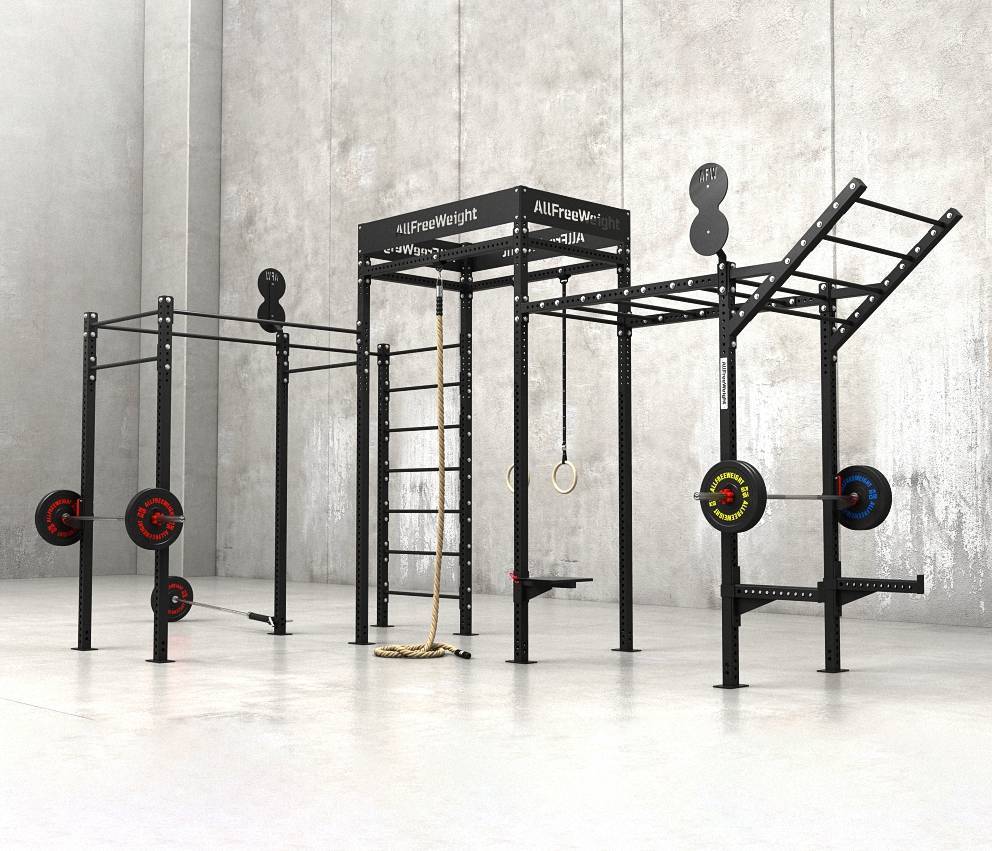
- A CrossFit rig sized to the class capacity and anchored to the structure, wall-mounted or freestanding depending on the building.
- Squat racks and power racks for the barbell work.
- Olympic barbells, bumper plates and gymnastic rings.
- Kettlebells, skipping ropes and the usual functional accessories.
- Conditioning machines: rowing machines, air bikes and ski ergometers.
- Weightlifting rubber tiles or lifting platforms for the drop zones, and rubber flooring across the training area.
Research suppliers as carefully as you research brands. What matters after the opening is spare parts, lead times on replacements and whether anyone answers when a rig component needs changing.
Step 4: hire qualified coaches
To deliver quality training you need certified coaches with real teaching experience, not simply strong athletes. Competent coaching is what keeps members progressing, prevents injuries and keeps people coming back through the difficult months. In most markets it is not legally required to hold a fitness qualification yourself in order to open a box, but hiring qualified coaches is strongly recommended and is often what insurers and landlords look at.
Step 5: build a varied programme
To attract and retain members, offer sessions adapted to different fitness levels. Alongside standard workouts, dedicated classes for beginners, for older adults and for specific goals let each person find a format that fits. A single intensity level filters your market down to the athletes who would have trained anywhere.
Step 6: create the atmosphere
A successful box is one that feels motivating and welcoming. Keep the space well lit, clean and organised. Build an environment where members feel comfortable and supported. Special events, friendly in-house competitions and challenges maintain enthusiasm through the year and give members a reason to bring other people in.
Frequently asked questions
What is cross-training?
A form of strength and conditioning training that combines weightlifting, cardio and gymnastic movements. It emphasises versatility, endurance and functional strength rather than isolated muscle work.
Is it suitable for everyone?
It can be adapted to every fitness level. Workouts are scaled to individual needs and abilities, which is precisely the coach’s job.
How long before members see results?
It varies with commitment, consistency and training intensity. Most people report significant improvements in fitness and strength after a few months of regular practice.
Do I need a fitness qualification to open a box?
Not necessarily as the owner, but hiring qualified coaches is strongly recommended in order to deliver safe and effective sessions. Check the professional and insurance requirements that apply in your own country before committing.
How do I promote a new box?
Social media, local advertising, email marketing and word of mouth. Open days and free introductory sessions remain the most effective way to convert local curiosity into memberships.
How do I retain members?
Varied programming, friendly competitions, a motivating atmosphere and genuinely good customer service. Retention is cheaper than acquisition and it is where a box becomes profitable.
Equipping your project
Opening a box is a rewarding project when the groundwork is done properly: a serious market study, the right premises, certified equipment, qualified coaches and an atmosphere people want to come back to. Light In Fitness has equipped more than 2,500 customers since 2013 and can work from your floor plan to a documented equipment list, rig included. Request a quote for your box.
Réalisations documentées
- Functional Rig inox – installations sur trois continents
- iGreenMill, tapis de course extérieur – installations sur trois continents