Why Use a Hamstring Curl Machine in a Professional Gym?
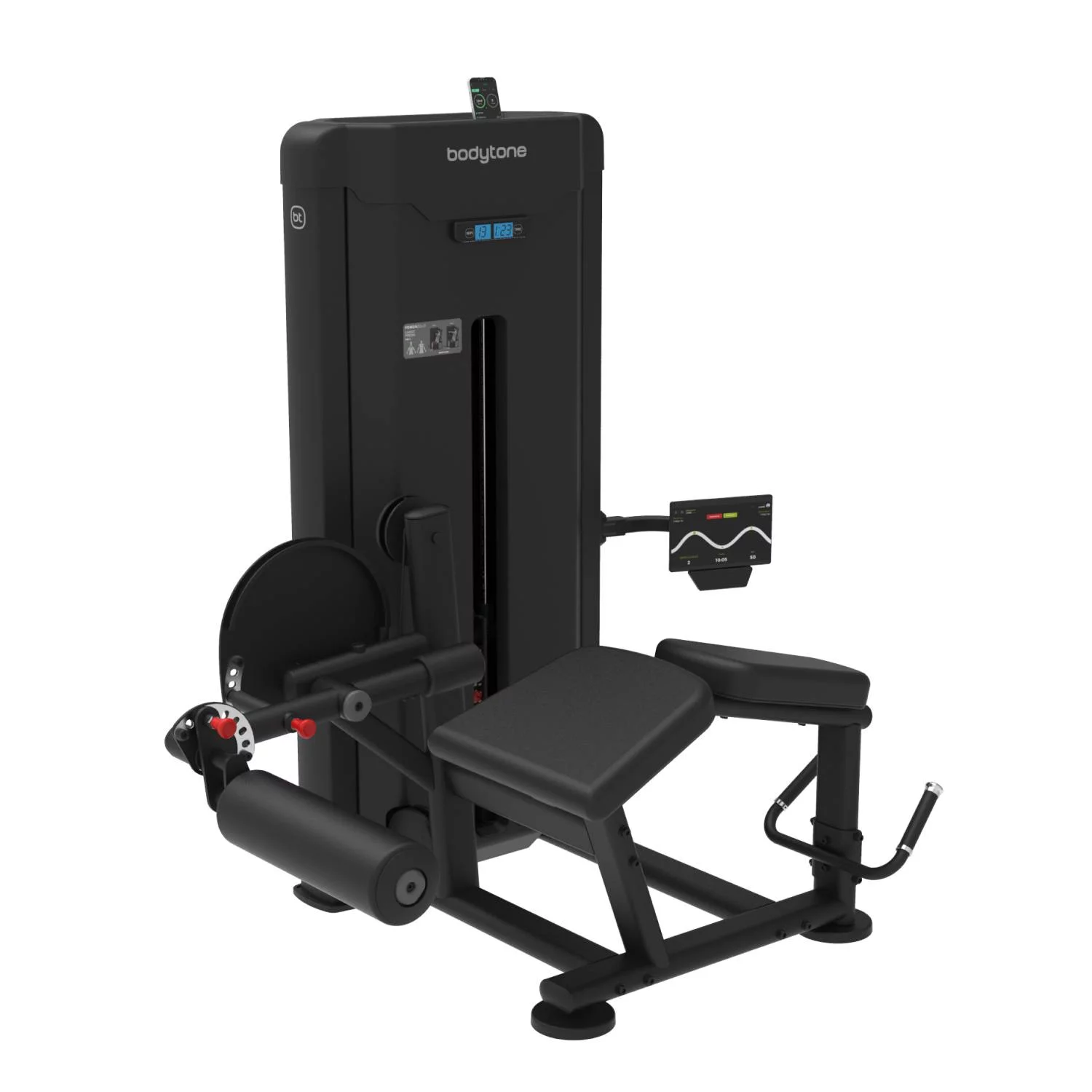
In short: the hamstring curl machine (leg curl) isolates the hamstrings – biceps femoris, semitendinosus and semimembranosus – which the squat only recruits indirectly. It corrects the imbalance with the quadriceps, lowers the risk of muscle strains, and improves running, jumping and sprinting performance.
What is a hamstring curl machine?
The hamstring curl machine is the reference tool for strengthening the muscles at the back of the thigh, commonly known as the hamstrings. These muscles run from the hip to below the knee and are responsible for knee flexion and hip extension. Strengthening them improves knee stability, reduces the risk of injury and raises performance across a wide range of physical activities. On a commercial gym floor, it is one of the few stations that trains the posterior chain of the leg under full control, without the technical prerequisites of a free-weight movement.
For an operator, that matters twice over: the station is immediately usable by a beginner after a short induction, and it is equally relevant to an experienced athlete working on strength endurance. Few machines cover such a wide span of members.
Why train the hamstrings?
Hamstring strength is particularly important for athletes and strength-training members, because these muscles are involved in a very large number of movements. During a squat, for example, the hamstrings work together with the quadriceps to stabilise and support the knee through the descent and the drive back up. Weak hamstrings lead to muscular imbalance and increase the risk of injury, especially at the knee.
Strengthening the hamstrings brings clear benefits for both performance and injury prevention:
- Better knee stability and improved joint protection.
- Injury prevention through a better muscular balance with the quadriceps.
- Improved performance on key movements such as the squat, the sprint and the jump.
- Posture and lower back better supported in everyday life.
The advantages of the hamstring curl machine
First of all, it isolates the hamstrings specifically, giving these muscles targeted attention. That means more efficient muscle development and better coordination between muscle groups. The machine also provides additional support and stability, so the member can train safely with full control over the range of motion. Mechanically, the machine applies resistance to knee flexion while keeping the legs aligned, which loads the hamstrings directly.
- Targeted isolation of the hamstrings for precise work.
- Safety and stability: the machine guides the movement and limits the risk of a technical error under load.
- Control of the range of motion and of the resistance, for gradual progression.
- Suitable for every level, from the first-time member to the competitive athlete.
Our selectorised strength machines cover exactly this need: a weight stack, a pin, and a station that a member can set up alone in a few seconds.
How to use the hamstring curl machine
The exercise consists of flexing the legs slowly against the resistance, then returning under control to the starting position. Once the basic technique is mastered, the resistance can be increased to keep progressing and building muscle. The usual recommendation is 8 to 12 repetitions per set, for 2 to 3 sets per session. Rest periods between sets need to be long enough for the muscles to recover.
The right number of sets and repetitions
Using an appropriate load is essential both to avoid injury and to obtain results. Beyond the hamstrings themselves, the movement also involves the glutes and the surrounding leg muscles. This contributes to the overall strength and endurance of the lower limbs, and to the general shape and tone of the thighs.
Which muscles are involved?
The hamstring curl machine does not replace the other leg exercises. A balanced programme should include a variety of movements – squats, lunges, deadlifts and leg curls – so that every muscle of the lower limb is trained proportionally. In a club, that usually translates into a leg zone built around a press, a leg extension station and a leg curl station, whether seated or lying.
A complete and balanced leg workout
Strengthening the legs improves posture, helps prevent lower back pain and increases joint stability. Before any strength session, a proper warm-up prepares the muscles and joints for the effort: dynamic stretching, a short cardiovascular warm-up such as skipping or easy running, and specific leg preparation such as bodyweight leg curls or lunges.
In short, the hamstring curl machine is an effective way to strengthen the muscles at the back of the thigh, improving knee stability and reducing the risk of injury. It works best as part of a complete training programme that also includes other leg exercises, so that muscle development stays balanced. Always warm up properly, and adapt the resistance and the number of repetitions to the fitness level and the goals of each member.
Seated or lying: which station for your gym?
Both formats are effective and they are complementary rather than interchangeable. The lying leg curl gives a better stretch at the end of the movement; the seated version is more comfortable for the lower back and easier to get in and out of, which makes it a good fit for hotel gyms, rehabilitation centres and mixed-membership clubs. Where floor space allows, installing both is the optimal solution. Two references illustrate the two formats: the Gold SPG015 prone leg curl and the Power Line seated leg curl.
FAQ: hamstring curl machine
How often per week should the hamstring curl machine be used?
For most members, 1 to 2 sessions a week are enough, leaving at least 48 hours of recovery between two sessions targeting the hamstrings to support muscle growth.
Does the hamstring curl machine work the glutes?
Yes. Alongside the hamstrings, the movement involves the glutes and contributes to the overall strengthening of the lower limbs, particularly during the hip extension phase.
Beginner: what load should you start with?
Start with a light load that allows 8 to 12 repetitions with clean technique, then increase the resistance progressively once the movement is mastered.
Why use a hamstring curl machine?
To isolate the hamstrings, balance the quadriceps to hamstring ratio (60/40 is the reference figure used here), prevent injuries such as strains and tendinopathies, and improve lower-limb power.
Seated or lying leg curl: which is better?
Both are effective. Lying leg curl: a better stretch at the end of the movement. Seated leg curl: more comfortable for the lower back. Alternating between the two is the optimal approach.
How many sets and repetitions?
3 to 4 sets of 10 to 15 repetitions, 1 to 2 times a week. Moderate to heavy load depending on the objective, hypertrophy or strength endurance.
Equipping your leg zone
Whether you are fitting out a new gym floor, renewing a leg zone or adding a station to an existing club, the choice between a seated and a lying leg curl depends on your membership, your available surface and the rest of your equipment. Send us your floor plan and your requirements through our quotation request page and we will come back with a costed proposal for your leg zone.