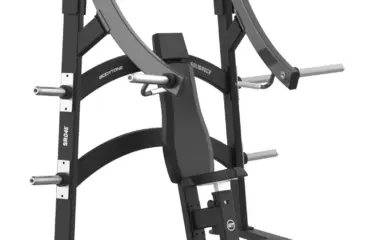
Guided Load Strength Machines: The Complete Guide

Guided load strength machines are the backbone of a commercial gym floor. Built for safety and throughput, they work for the member on their first induction and for the experienced lifter loading heavy. This article looks at what defines the category, what it delivers on a busy floor, and how to get the setup right.
What is a guided load machine?
A guided load machine is a strength station where the resistance travels along rails, guide rods or a fixed lever path instead of moving freely in space. The user follows a determined trajectory, which makes the movement controlled and repeatable and cuts the injury risk that comes from a load going where it should not.
The core benefit is stability. Unlike free weights, these stations remove the need to stabilise the load, so the effort goes into the working muscle rather than into balance. On a commercial floor that translates into a station that is safe to use unsupervised and still productive under heavy loading.
Why specify guided load stations
Safety on an unsupervised floor
The main reason operators specify guided load is risk. Because the path is set by the rails, users are far less exposed to injuries caused by poor posture or a loss of balance. That matters most for members who have not yet built solid technique, and it is a real consideration for any site where staff cannot supervise every station at every hour.
Exercise coverage
Guided load stations cover a wide range of work. Chest, shoulders, back, legs and arms are all addressed within the category, which is what lets a compact floor deliver a complete programme without an oversized free weight area. The professional Smith machine is the clearest example: a single station covering everything from the squat to the bench press.
What defines a well built station
Adjustment range
The ability to set the start height and the range of motion is a major asset. Good adjustment lets each user fit the exercise to their own body dimensions and training goal, which is what makes one station serve a mixed membership rather than only the average build.
Load selection
Most guided load stations use a selectorised weight stack, which makes progression easy to follow and lets a member run drop sets or a descending pyramid without leaving the machine. Where heavier loading or a different resistance curve is wanted, plate loaded machines cover the same movements with discs on the lever arms.
Using the stations correctly
To get the benefit and keep the risk down, three habits are worth building into your induction and onto the instruction plates:
- Adjust the seat and supports properly. Seats, foot plates and start positions should be set to the user before the first repetition.
- Start light. Learn the movement before loading it.
- Prioritise technique. Clean execution beats the number on the stack, especially early on.
Typical exercises
- Guided squat: quadriceps, glutes and hamstrings.
- Guided bench press: chest, triceps and front deltoids.
- Seated low pulley row: lats, rhomboids and biceps.
Specifying for a commercial site
Full size gym floors
Equipment for a gym floor is built to be used continuously and to take heavy loads over long opening hours. Robustness and ease of servicing are what make a station economical over its life, which is why operators keep coming back to the same professional lines. Indoor equipment for any commercial site must be class S under EN ISO 20957-1: that is the professional class, and nothing lighter is designed for continuous multi-user duty.
Compact professional installations
Hotels, residences, corporate facilities and clubs with a small footprint use compact versions of the same stations. They are smaller than the full size machines but built to the same class S requirement, and multi-function configurations let a single unit cover a complete programme where floor area is the limiting factor.
Frequently asked questions
What are the main advantages of guided load machines?
Greater safety, straightforward use and broad exercise coverage. The control added by the rails reduces injury risk, particularly for less experienced members, and a wide range of movements can be run while changing loads easily.
How do I choose a station for a small commercial space?
Favour a compact, easily adjustable station that fits the available area, and check the multi-function configurations: one unit covering several movements gives the best return where space is short. Keep the class S requirement whatever the size of the site.
Which exercises can be run on a guided load machine?
Guided squats, bench press, lat pulldown and seated row among others. Together they cover all the major muscle groups and make it straightforward to build a complete, balanced session.
Are guided load machines suitable for beginners?
Yes. The directed movement lets a new member concentrate on technique without having to balance the load, and easy adjustment with selectorised weights supports gradual progression.
Building your strength floor
Light In Fitness has supplied professional strength and cardio equipment to gyms, clubs, hotels and rehabilitation centres since 2013. Send us your floor plan and the programme you want to run, and we will specify the guided load line-up around it: request a quote.