How to Equip a Trail Obstacle Course
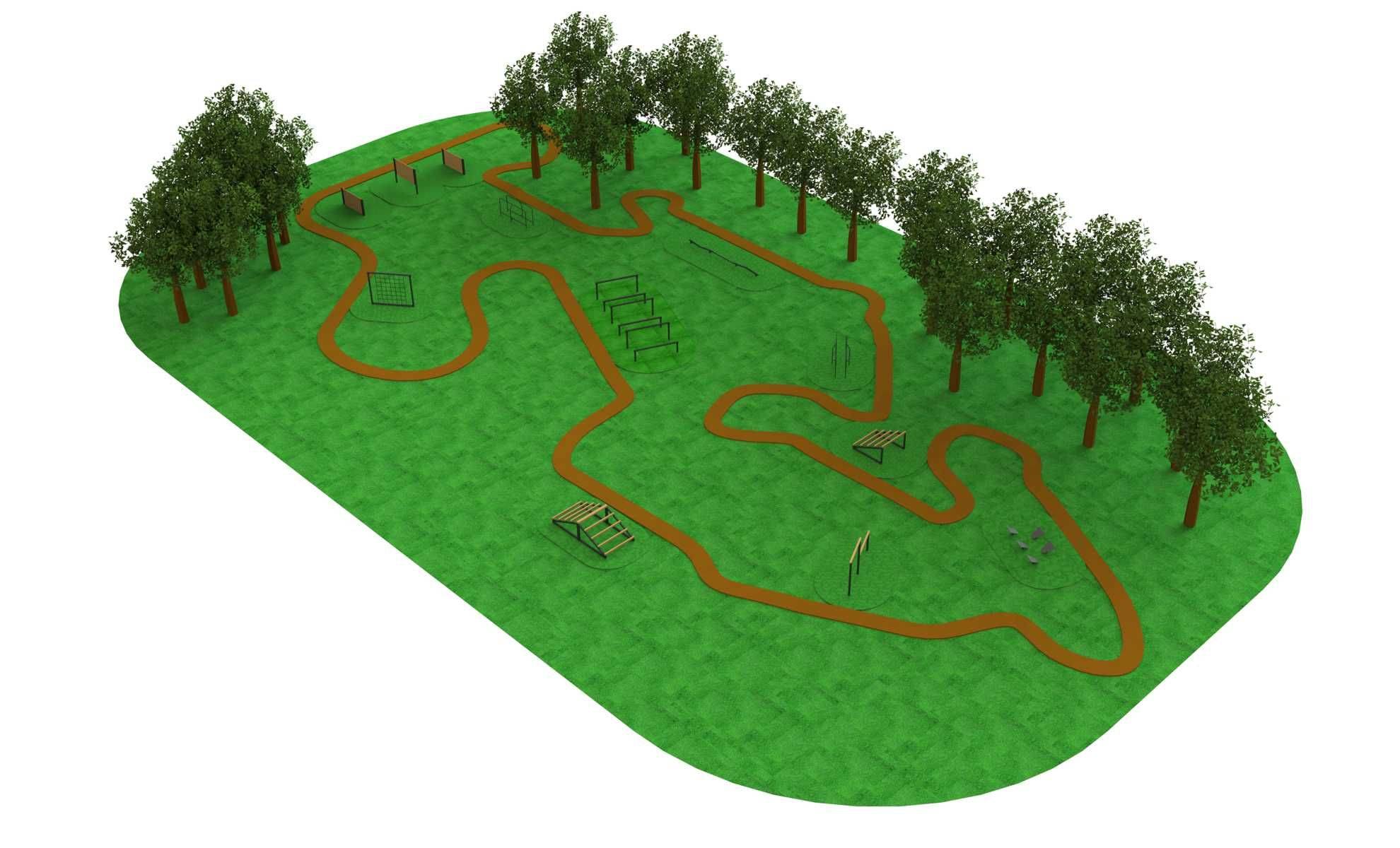
Equipping a trail obstacle course means working from the specific character of the event. Trail running takes place in a natural environment, on varied terrain: footpaths, mountain tracks and forest ground. Adding obstacles gives that discipline another dimension, testing endurance, agility and team spirit rather than pace alone. For an organiser, a landowner, a local authority or an outdoor centre, the equipment decisions taken at the start determine both the quality of the race and its safety record.
Choosing a varied set of obstacles
The first requirement is a genuine variety of obstacles suited to trail terrain. That range can include walls to climb, hurdles to clear, nets to cross, hanging sections to pull along, muddy stretches to wade through, jumps and tunnels to crawl under. Variety is what keeps a field of very different athletes engaged from the first obstacle to the last.
Safety comes before creativity. Structures must be solid, correctly anchored and compliant with the applicable safety standards. Permanently installed outdoor equipment for adults falls under EN 16630, which sets out requirements and test methods for fixed outdoor fitness installations. If children are among the intended users, the equipment is assessed under EN 1176-1 and the impact-absorbing surfacing under EN 1177; these two are separate standards and must not be substituted for one another, and EN 16630 never applies to equipment intended for children.
Our obstacle trail modules are built for permanent outdoor installation, and a complete route can be assembled from them alongside the structures in our OCR obstacle course range.
Siting the obstacles along the route
The placement of the obstacles has to be thought through, taking account of how the sequence unfolds so that the course offers a genuinely interesting challenge. Two identical walls placed a hundred metres apart produce a queue; the same two walls separated by a technical descent produce a race.
It can be worth playing on the difficulty of the obstacles by siting them at strategic points on the route, such as steep climbs or descents, where fatigue changes what a competitor is capable of. The counterpart is that those positions demand more marshalling and clearer escape routes.
A warped wall is the classic example: it works as a spectator focal point, and it needs a run-up, a landing area and a supervised queue, all of which have to be designed into the route rather than added on the day.
Signage and event logistics
The position of each obstacle should be clearly marked with numbered markers or signboards, so competitors can orient themselves and know what is coming. Clear marking is also what allows marshals to describe a location precisely when something goes wrong.
Logistics is the other half of the project. Organisers need an online entry system for participants and a race calendar giving the dates and locations of each event. Depending on the country and the status of the event, competitors may also be required to provide medical clearance confirming they are fit to take part; check the requirements that apply under the national rules and the federation governing your event, as they differ from one market to the next.
Feed stations and participant comfort
Refuelling during the race is essential if competitors are to stay hydrated and keep their energy up. Feed stations should be installed along the route offering water, energy drinks and snacks. Toilets close to the feed stations are equally important for the comfort of the field, and their absence is one of the most common complaints after a first edition.
Creating the atmosphere
For the event to succeed, a festive and welcoming atmosphere matters as much as the obstacles. Participants can be encouraged to come in fancy dress, which adds a note of fun and good humour to the race. Entertainment and activities before and after the race keep spectators occupied and give competitors a reason to stay, relax and sign up again next year.
Frequently asked questions
Can a trail obstacle course be left permanently installed?
Yes, provided the equipment is designed for permanent outdoor use, correctly founded and inspected on a regular cycle. That is the difference between race-day props and installed structures, and it is also what allows a site to be used for training between events.
What surfacing is needed under the obstacles?
It depends on the free height of fall and the user group. Natural ground is acceptable in many configurations, but any obstacle with a significant fall height needs a surfacing solution assessed against the applicable standard.
Can the same route serve adults and children?
Not with the same equipment. Adult and children equipment are governed by different standards, so a mixed site is designed as two zones, each with its own equipment and its own surfacing.
Building your course
Equipping a trail obstacle course means bringing together obstacle variety, structural safety, event logistics, refuelling and atmosphere. With planning and a little creativity, the result is a distinctive, demanding route that attracts athletes looking for both a challenge and a good day out.
Send us the site plan, the terrain profile and the user group you are designing for, and we will propose a route with costed modules, foundations and surfacing. Request a quote and our team will work through the layout with you.
Réalisations documentées
- Parcours ninja sur mesure, Rennes – îlot des Hautes-Ourmes
- Double mur ninja extérieur, Sallanches – Haute-Savoie