Does Strength Training Shrink Your Breasts? The Evidence

Breast size sits at the centre of a lot of hesitation about strength training, and it is one of the questions coaching teams in commercial facilities are asked most often. Contrary to some received ideas, training can influence breast volume, but only through a mechanism worth explaining precisely, because the popular version of it is wrong.
This article is written for operators and coaching teams: what the evidence supports, what it does not, and how to answer a member who asks. Getting this right is a retention issue, since a member who believes training will cost them their figure simply does not join.
What the breast is made of
The breast consists mainly of adipose and glandular tissue, along with the underlying muscles, principally the pectorals. That composition is the whole explanation. Training loads the muscle underneath; it does not load the fat and glandular tissue above it.
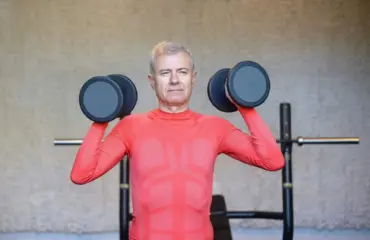
When a woman starts an intensive strength programme including varied exercises such as the bench press, squats and pull-ups, she recruits the upper-body muscle groups and the pectorals in particular. Those exercises strengthen and tone the muscle. They can also contribute to a reduction in body fat, especially when combined with a balanced diet and regular cardio work.
Metabolism and fat loss
Strength programmes are often built to burn a maximum of calories. By improving the metabolism through strength training, the body burns calories during the effort and also at rest, and body fat falls as a result. Weight loss, properly understood, is a combination of reduced fat and developed muscle mass.
So when women train with exercises such as squats or lunges, they work the thighs, glutes and abdominal muscles in depth. Over time, the fat loss becomes noticeable at the chest as well, because adipose tissue is reduced not only around the hips and stomach but across the torso.
Why breast volume can fall
Strength training in itself does not act directly on the breasts. Certain consequences of training, combined with a calorie deficit or a change in body composition, can lead to a reduction in breast volume. The documented factors are these:
- The adipose tissue of the breast can decrease when overall fat mass is lost. A diet plus cardio or physical activity strategy can produce body fat loss, including in the breast.
- In a 2010 study of post-menopausal women, one year of activity reduced the amount of non-dense adipose tissue in the breast, but the reduction appeared correlated with overall body fat loss rather than with the exercise as such.
- Sources report highly variable proportions of fat in the breast, from 7 to 56 per cent of total volume depending on the individual.
- In other words, if enough body fat is lost through diet and exercise, breast volume can follow it down, but the extent depends heavily on how much of the breast is fat, on individual biology and on how fat is distributed.
This is why some women see their chest reduce after a diet or intensive training, even though strength work alone has nothing to do with it.
Why the belief persists, and why it is inaccurate
- Much of the fear comes from the observation that some muscular women appear to have smaller breasts. That is usually the result of overall fat loss through dieting, cardio or a cutting phase, not of strength training as such.
- Articles examining the effect of sport on the breast frequently point out the absence of a direct effect: strength work in itself has no action on breast tissue.
- Scientific work confirms that breast tissue cannot be targeted for reduction through chest exercises. Spot reduction is an invalidated concept.
- Breast size depends on highly individual factors: the proportion of fat in the breast, overall fat distribution, genetics, hormones and age. Any generalisation is therefore unsafe.
What the studies actually measured
| Study or source | Participants | Notable result |
|---|---|---|
| Self-reported breast size, exercise habits and BREAST-Q (2023) | 1,987 women, of whom 56 had undergone breast reduction | Women with larger breasts take part less in intensive exercise, through discomfort or self-consciousness. |
| Effects of adiposity and exercise on breast tissue and breast cancer risk (2021) | 100 women (mastectomy or cancer risk reduction) | Less exercise and more body fat correlated with inflammation of breast adipose tissue. |
| Post-menopausal women, one year of aerobic activity (2010) | Not stated in the source | Significant reduction in breast adipose tissue, correlated with overall fat loss. |
| Pre-operative diet and volume reduction | 5 women, mean loss 10.2 kg | Breast volume reduction of about 19 per cent, averaging 300 mL, on breasts initially between 1,100 and 2,500 mL. |
Two cautions belong with that table. The only quantified volume figure comes from a five-participant pre-operative sample, which is far too small to generalise into a percentage anyone should expect. And the 2023 finding runs in the opposite direction to the popular fear: it is large breasts that reduce participation in intensive exercise, not intensive exercise that reduces breasts. That has a direct operational consequence, discussed below.
Why members are rarely told any of this
- Myths and beliefs. Marketing, fitness influencers and the cliche that muscular women have small breasts amplify the idea of a direct link between strength training and breast reduction, when the real mechanism is overall fat loss.
- Very large individual variation. Some women carry a lot of fat in the breast, others very little, so the effect differs enormously between individuals. It is not uniform and therefore hard to predict.
- Few clear studies and little coverage. Scientific work addresses body composition, health and cancer risk, but rarely the aesthetic effect of training or dieting on the breast. Clear, accessible information is missing as a result.
- Discomfort in raising it. Women who lose breast volume after a diet or a training programme often do not raise it, or assume it is normal, which limits the accounts available and the collective awareness.
What this means for a facility
The 2023 finding is the actionable one for operators. If women with larger breasts train less intensively because of discomfort, the barrier is environmental as much as physical: privacy of the strength area, layout that does not force members to work facing a busy circulation route, and equipment that supports the torso rather than exposing it. A strength zone laid out with that in mind converts a segment of the membership that currently confines itself to the cardio equipment.
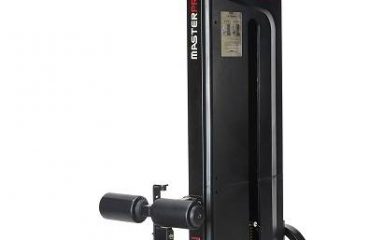
Supported, seated stations are the practical answer here. Chest-supported rows and the seated pulling patterns available on selectorised machines allow full-effort training with the torso braced, which removes a real deterrent. The rest of the professional strength range follows the same logic: the easier a station is to use without self-consciousness, the more of your membership actually uses it.
Frequently asked questions
Can chest exercises reduce breast size directly?
No. Spot reduction is an invalidated concept, and breast tissue cannot be targeted for reduction through chest exercises.
Will a member who lifts weights lose breast volume?
Not from lifting as such. Volume can fall if overall body fat falls, and how much depends on the proportion of fat in the breast, which varies widely between individuals.
Is there a percentage a member should expect?
No reliable one. The only quantified figure available comes from a five-participant sample and should not be presented to a member as a prediction.
Conclusion
Strength training, practised with a structured and balanced plan, is an effective way to tone the body, firm up the muscles and lose fat, including at the chest. Where that produces a reduction in breast size, it is fat loss doing it, not the training of the muscle, and it says nothing about anyone. The honest answer to give a member is that the effect is real but indirect, highly individual and impossible to predict, and that anyone who wants a programme matched to their goals and their build should work with a qualified coach.
If you are laying out or reconfiguring a strength area with these participation barriers in mind, we can help you specify it. Request a quote.