The Deadlift: Technique, Variations and How to Equip the Area
The deadlift is one of the most complete and most functional movements available in a gym, and it is also the movement that dictates more of a strength floor design than any other. It decides where the platform goes, what flooring is under it, which barbells you buy and how much clear space you have to leave around it. This guide covers both halves of that question: how the lift is performed correctly, and what a facility has to provide so that it can be performed correctly.
It is written for operators, coaches and buyers equipping a club, a cross-training box, a university facility, a rehabilitation centre or a corporate gym. Members will attempt this lift whether or not the room was designed for it. The purpose of the room design is to make the correct version of the lift the easy one.
What the deadlift is
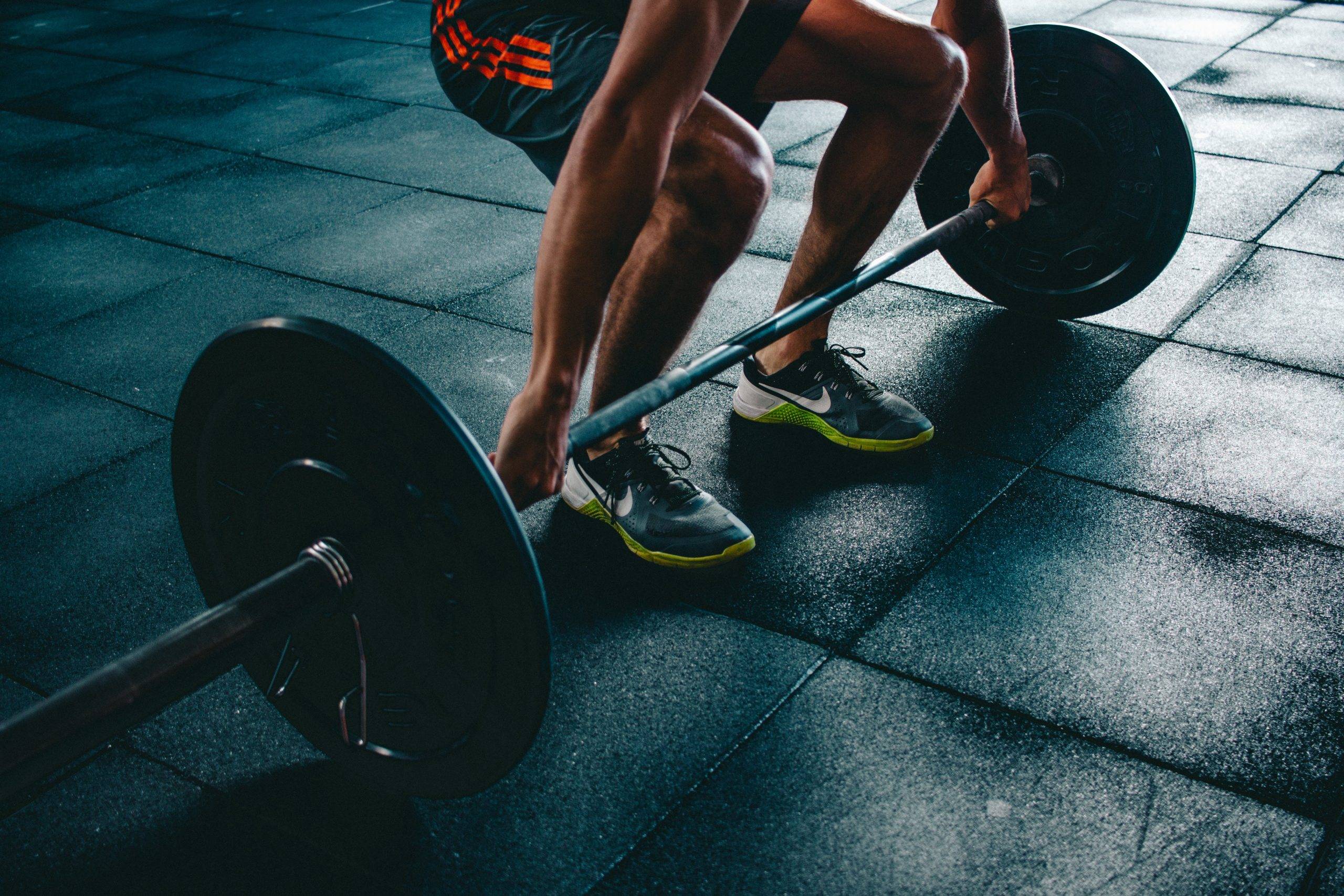
The deadlift is a strength exercise in which a loaded barbell is lifted from the floor to a standing position. It is among the most functional movements a person can perform, because it recruits several muscle groups at the same time and reproduces an action people carry out in ordinary life.
The lift principally engages the muscles of the legs, including the quadriceps, the glutes and the hamstrings. The muscles of the back, including the latissimus dorsi and the spinal erectors, work to maintain position throughout. The abdominal muscles are recruited to stabilise the trunk and hold a neutral spine.
It can be performed in several variations: the conventional deadlift with the bar in front of the legs, the sumo deadlift with a wider stance, or the Romanian deadlift with an emphasis on the hip hinge. Each variation shifts the emphasis slightly between muscle groups, which is what allows a coach to programme variety without changing exercise.
Why it belongs in a commercial facility
The deadlift offers a great deal for both strength development and general conditioning.
1. Whole-body development. Because it recruits several muscle groups simultaneously, it builds strength and muscle in the legs, the glutes, the back and the trunk from a single movement, which is an efficient use of both training time and floor space.
2. Functional strength. The movement mirrors everyday actions such as lifting a heavy object from the ground. Strengthening the muscles involved improves a member ability to perform physical tasks outside the gym, which is the outcome most general-population members actually want.
3. Stabiliser recruitment. Holding position through the lift requires genuine trunk stability, which strengthens the deep stabilising musculature of the abdomen and back.
4. Injury prevention. By strengthening the muscles of the back and legs, the deadlift can help protect those areas. It improves joint stability and reinforces good positioning, which lowers risk during other activities. Taught properly and loaded sensibly, it is a risk-reducing exercise; taught badly or loaded carelessly, it is not, and that distinction is a staffing and layout question as much as a coaching one.
The muscles worked
Quadriceps. The muscles at the front of the thigh, responsible for extending the knee as the bar leaves the floor.
Glutes. Activated during hip extension, and the primary driver of the top half of the lift.
Hamstrings. The muscles at the back of the thigh. In the deadlift they act as hip extensors alongside the glutes, and they control the descent of the bar. Their knee-flexing function is not what they contribute here, which is why the Romanian variation, performed with the knees only slightly bent, loads them so distinctly.
Back. The latissimus dorsi and the spinal erectors work isometrically to hold position and stabilise the spine throughout.
Abdominals. They stabilise the trunk, maintain a neutral spine and prevent excessive movement of the lower back.
Performing the lift correctly
1. Set up at the bar. Feet about shoulder width, toes turned slightly out. The bar sits over the mid-foot, close to the shins, with the arms straight and the hands gripping in pronation.
2. Bend the knees. Keeping the back flat, bend the knees to lower the hips and take a firm grip on the bar. The starting position resembles a partial squat, with the hips higher than in a squat and the shoulders slightly ahead of the bar.
3. Lift. Driving through the legs and contracting the glutes, lift the bar from the floor with the back held flat. Drive the hips forward as you come up.
4. Lock out. Once standing, lock the hips by contracting the glutes and bringing the pelvis through. The body should be fully upright, not leaning back.
5. Return the bar. To lower, hinge at the hips and bend the knees slightly while keeping the back flat. Lower the bar under control until it reaches the floor.
Common errors to avoid
1. Rounding the back. The most common fault. It places excessive load on the spine and raises injury risk. A neutral spine has to be maintained throughout the movement.
2. Loading too heavily. Excessive load compromises position and raises risk. Start with a weight appropriate to current strength and progress gradually.
3. Not using the legs. The deadlift is driven substantially by the legs. Use them to initiate the lift rather than relying on the back alone.
4. Letting the bar drift away from the body. Keep the bar as close to the body as possible throughout. This reduces stress on the lower back and improves stability.
Variations
Conventional deadlift. The most common form, with the bar in front of the legs and a pronated grip.
Sumo deadlift. Feet set considerably wider than in the conventional lift, with the hands gripping the bar inside the legs. It shortens the range of motion and changes the demand on the hips.
Romanian deadlift. This variation places the emphasis on the hamstrings. The movement is driven by a pronounced hip hinge with the knees only slightly bent, and the bar does not usually return to the floor between repetitions.
Single-leg deadlift. Requires good balance and stability. Performed on one leg at a time, it increases the demand on the legs and glutes and is useful for correcting side-to-side differences.
Programming
The deadlift can be built into different programmes depending on the objective.
Strength. Where the main goal is maximal strength, the lift can be programmed twice a week, at 3 to 5 sets of 3 to 6 repetitions with heavy loads.
Hypertrophy. To develop muscle mass, once a week is a common frequency, at 3 to 4 sets of 8 to 12 repetitions with moderate loads.
General conditioning. The lift can also feature in a conditioning programme, combined with cardiovascular work, using longer sets with light to moderate loads and strict attention to position as fatigue accumulates.
Equipping the deadlift area
None of the above works without the right floor. A deadlift area is a specification in its own right, and it is usually the part of a fit-out that gets decided too late.
The platform
A lifting platform gives the bar a defined landing area, protects the structural floor and contains the noise and vibration of a dropped bar. It also does something less obvious but more valuable: it tells everyone in the room where this lift happens, which keeps the traffic route clear and keeps other members out of the bar path. Purpose-built lifting platforms come sized for the discipline rather than improvised from loose tiles.
Flooring around it
Around and under the platform, the flooring specification is different from the rest of the floor. It has to absorb impact, protect the slab, and cope with plates being dropped rather than merely walked on. Dedicated weightlifting rubber tiles exist for that duty and should not be substituted with general-purpose gym tiles. Where the area sits above an occupied floor, acoustic underlay belongs in the same conversation.
Bars and plates
The bar matters more here than on almost any other station. Check the tensile rating, the sleeve rotation and the knurl, and check that the bar is rated for the loads and the dropping the area will see. Olympic barbells intended for commercial use are specified quite differently from a general-purpose bar, and pairing them with bumper plates rather than iron plates is what makes a drop survivable for both the bar and the floor.
Space and supervision
Leave clear space around the platform on all sides, keep it out of the main circulation route, and place it where a member of staff can see it. Indoor equipment for supervised commercial use falls under EN ISO 20957-1 class S, and the racks, platforms and storage around the area should be specified to the same standard as the machines on the rest of the floor.
Frequently asked questions
Does a commercial gym need a dedicated deadlift platform?
If members will lift from the floor, yes. Without a defined area the load goes onto the structural slab, the noise goes into the rest of the building and the bar path crosses the walkway. A platform solves all three at once and is far cheaper than repairing a slab.
How much space should be allowed?
Allow the platform footprint plus clear space on every side for the lifter, the bar and anyone loading plates, and keep that zone outside the main circulation route. The exact dimensions come from the platform reference and the room, so this is settled on a layout drawing rather than from a rule of thumb.
Bumper plates or iron plates?
Bumper plates for any area where the bar may be dropped from height. Iron plates transmit the impact into the bar and the floor and are appropriate for controlled lowering only. Specify the plate type at the same time as the flooring, because the two decisions depend on each other.
Should beginners be taught the deadlift?
Yes, with instruction. Learn the technique from a qualified professional before loading heavily, start with light weights while the pattern is being established, warm up properly before each session, and stop if a movement produces pain rather than effort. For a facility, that translates into an induction that covers the lift and staff who are on the floor when it is being performed.
Building the area
The deadlift rewards a facility that plans for it: a platform, the right flooring, bars and plates rated for the job, and enough clear space that the lift can be performed properly. Specify those four together rather than one at a time. Detailed quotations covering platforms, flooring, bars and layout are available for any professional project.