Which Street Workout Cage Brand Should You Choose? 2026 Comparison Framework
Une cage de street workout se juge d'abord sur la nuance d'acier et le traitement de surface, pas sur le nombre d'agrès. L'acier peint se dégrade en quelques années en extérieur, l'acier galvanisé tient la plupart des sites, l'inox 316L s'impose en bord de mer ou en atmosphère chlorée. La conformité à la norme EN 16630 est le second filtre.
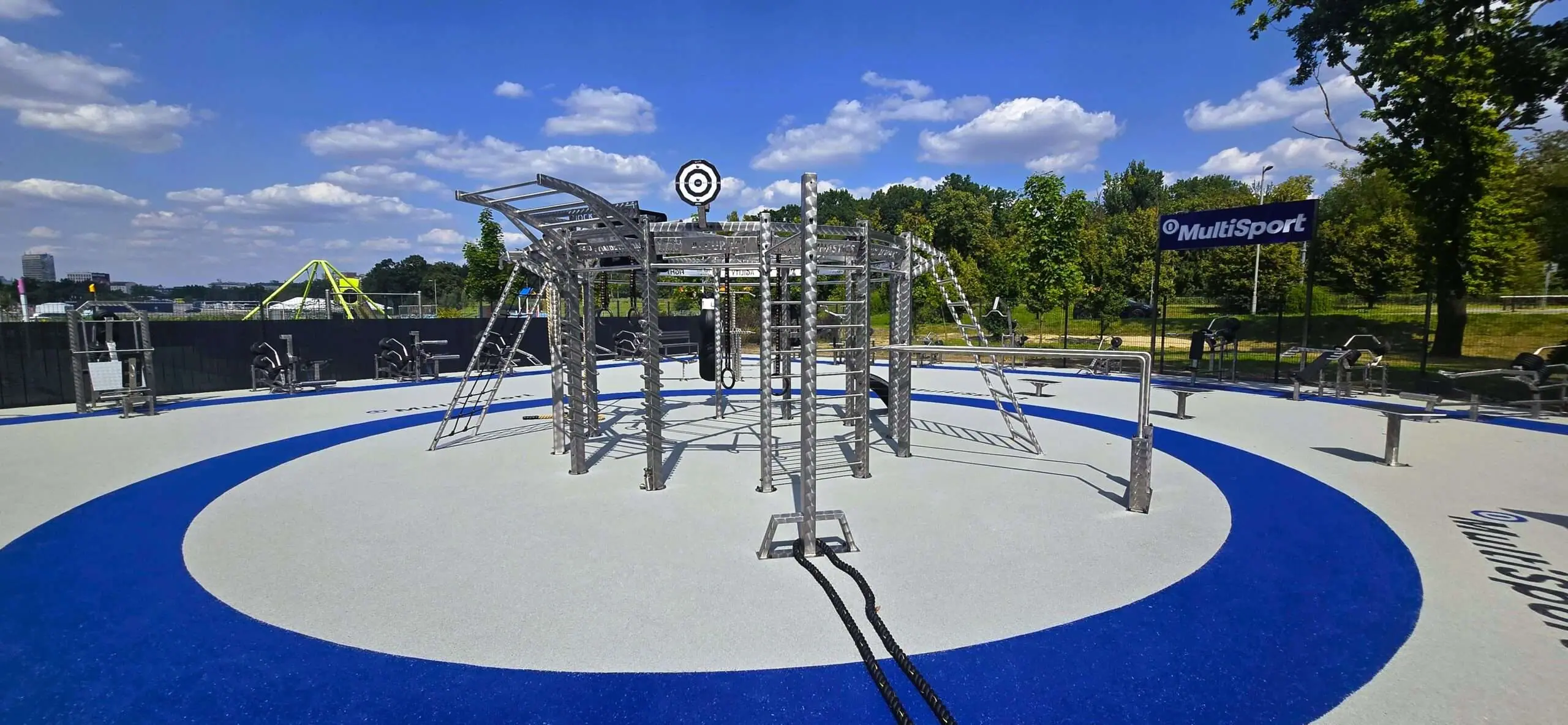
Choosing a street workout cage brand comes down to five verifiable facts: the exact steel and surface treatment used, EN 16630 certification with a delivered certificate, the degree of modularity, the scope of project support, and the total cost over 15 years rather than the purchase price. The outdoor calisthenics market has grown fast — councils, campsites, hotels and CrossFit boxes are all investing — and suppliers range from budget painted-steel importers to manufacturers of marine-grade stainless structures. This guide gives you an objective comparison framework and an honest view of where Light In Fitness sits in it.
The seven criteria that actually separate manufacturers
- Primary material: painted steel, hot-dip galvanised steel or stainless steel (304/316L). This is the number-one durability factor outdoors.
- EN 16630 conformity: the reference standard for permanently installed outdoor fitness equipment — is a certificate actually delivered with the structure?
- Modularity: can the structure be configured to your site, extended later, or is it a fixed catalogue item?
- Price position: judged against realistic service life, not in isolation.
- Manufacturing: European or imported, and the quality of welds and finishes.
- Project support: site study with safety-zone calculation, delivery, installation, after-sales service.
- Realistic outdoor lifespan without major renovation — which follows the material more than the brand.
The market landscape in 2026
Rather than rank competitors on claims we cannot verify, here is how the main supplier categories on the European market position themselves — all statements below reflect publicly available manufacturer information:
- Light In Fitness (France): designs and manufactures street workout cages in 304 and 316L stainless steel as a complete range — a rarity on the market — alongside hot-dip galvanised versions and combined stainless/galvanised configurations. Fully custom layouts, EN 16630 documentation supplied, site study with safety-zone calculation, delivery and installation from its base in Tours.
- Kompan (Denmark): a global leader in playgrounds and urban outdoor equipment with a well-established outdoor fitness range, strong design language and a structured public-sector sales organisation. Configurations are largely catalogue-based.
- Herkules Fitness (Germany): a German outdoor fitness specialist building galvanised, powder-coated modular structures, with notably thorough technical documentation on outdoor fitness standards and safety.
- Deportes Urbanos (Spain): a Spanish manufacturer of certified street workout modules at competitive price points, popular with municipalities working to tight budgets.
- Disportex (France): a budget-oriented supplier of outdoor stations and cages with fast availability, aimed at private buyers and small projects.
For a direct one-to-one comparison with a calisthenics specialist, see Light In Fitness vs Kenguru Pro.
Material determines lifespan — whatever the logo says
Outdoor lifespan tracks the material and treatment far more than the brand name:
| Material / treatment | Typical outdoor lifespan | Coastal / saline environment | Maintenance profile |
|---|---|---|---|
| Painted or epoxy-coated steel | 5–8 years | 3–4 years | Regular touch-ups; corrosion at chips and welds |
| Hot-dip galvanised steel (often powder-coated) | 10–15 years | 5–8 years | Coating touch-ups after 8–10 years |
| Stainless steel 304 / 316L | 25+ years | 25+ years (316L) | Occasional washing only |
The steel grades and their trade-offs are detailed in our guide to street workout steel grades.
The 15-year cost model: the figure that changes the decision
Purchase price is a fraction of total cost. A realistic projection for an 8–10 station outdoor cage, by material tier (project estimates excluding VAT):
| Cost item over 15 years | Stainless steel cage | Galvanised steel cage | Budget painted-steel cage |
|---|---|---|---|
| Initial purchase | 18,000 EUR | 12,000 EUR | 5,000 EUR |
| Replacements | 0 EUR | 12,000 EUR (×1) | 10,000 EUR (×2) |
| Cumulative maintenance | 500 EUR | 3,000 EUR | 2,000 EUR |
| Downtime / site closure | 0 days | ~30 days cumulative | ~60 days cumulative |
| 15-YEAR TOTAL | 18,500 EUR | 27,000 EUR | 17,000 EUR |
The budget tier looks competitive on paper — but if EN 16630 conformity is not documented, the operator carries the legal exposure in the event of an accident. Factoring in that risk, plus two site closures for replacement, stainless steel is the most rational 15-year choice for any public or professional installation.
Which type of supplier for which project
- Council or public park: a manufacturer providing EN 16630 certificates, safety-zone drawings and installation — in stainless steel if the budget allows, galvanised otherwise.
- CrossFit box with an outdoor zone: a modular manufacturer able to match the indoor rig and the outdoor extension in one project.
- Upmarket campsite or hotel: stainless steel 316L — constant aesthetics, no visible maintenance in front of guests.
- Small municipal budget: a certified galvanised structure from a European manufacturer, planned for upgrade at first replacement.
- Seafront installation: 316L stainless steel is the only durable option — galvanised coatings degrade in 3–4 years in saline air. Browse our stainless steel street workout cages.
- Temporary project (under 5 years): a budget structure can be acceptable — with replacement priced in from the start.
Six questions to put to every manufacturer
- Do you deliver an EN 16630 conformity certificate with the structure?
- What exact steel is used — grade, wall thickness, surface treatment?
- What structural warranty do you offer on the frame (not merely on the paint)?
- Do you provide a site study with safety zones and critical fall height calculations?
- Is impact-absorbing surfacing included, or sourced separately?
- What is the realistic outdoor lifespan without major renovation — and on what evidence?
Any manufacturer worth shortlisting answers all six in writing. Evasive answers on the certificate or the steel grade are the clearest red flag in this market.
Frequently asked questions
Is EN 16630 certification legally required?
EN 16630 is the recognised European safety standard for permanently installed outdoor fitness equipment. For public installations, conformity is in practice indispensable: it is what courts, insurers and inspection bodies reference after an incident, and most public tenders require it explicitly.
Why do so few manufacturers offer stainless steel?
Cost and fabrication complexity: 304/316L stainless requires TIG welding expertise and costs significantly more as raw material. Most volume manufacturers standardise on galvanised steel; stainless remains a specialist offering.
Is a galvanised cage a bad choice?
Not at all — hot-dip galvanised structures are the sensible mid-tier for inland sites with normal budgets, delivering 10–15 years of service. The mistake is putting galvanised or painted steel in coastal environments, or buying uncertified budget structures for public use.
Can I mix stainless and galvanised in one structure?
Yes — combined configurations put stainless on the high-contact, high-corrosion elements (bars, handles) and galvanised steel on the main frame, optimising the cost-to-durability ratio.
Get a free comparative study
Light In Fitness prepares free comparative studies matched to your environment and budget, including a layout plan with EN 16630 safety zones. Request your personalised quote.
Réalisations documentées
- Cage street workout ultime, Carcassonne – armée française
- Cage street workout ultime, Tahiti – armée française, Polynésie
- Cage SP Max, centre EPIDE de Combrée – établissement public d’insertion
- Cage SP Max, lycée Saint-Bénigne de Dijon – établissement scolaire
Sources et références
- NF EN 16630 – modules fixes d’entraînement physique de plein air : exigences de sécurité et méthodes d’essai (AFNOR)
- Code du sport, article L322-2 – garanties d’hygiène et de sécurité des établissements d’activités physiques et sportives (Légifrance)
À lire aussi sur le même thème
- Comparing gym flooring suppliers: technology, classifications and real cost
- Leasing or buying professional gym equipment: how to decide
- Commercial treadmills: Bodytone Nexion T80T compared with Technogym club ranges
- Class S vs Class H Gym Equipment: Real Lifespan and Cost (Why "Semi-Pro" Does Not Exist)