Professional Cross Trainers: How to Specify Cardio Equipment That Lasts
Un elliptique professionnel de cardio-training se juge sur la longueur de foulée, la masse d'inertie et la robustesse des roulements. Ces paramètres conditionnent la fluidité du mouvement et la durée de vie en usage collectif. Light In Fitness distribue ces gammes avec livraison, montage et SAV.
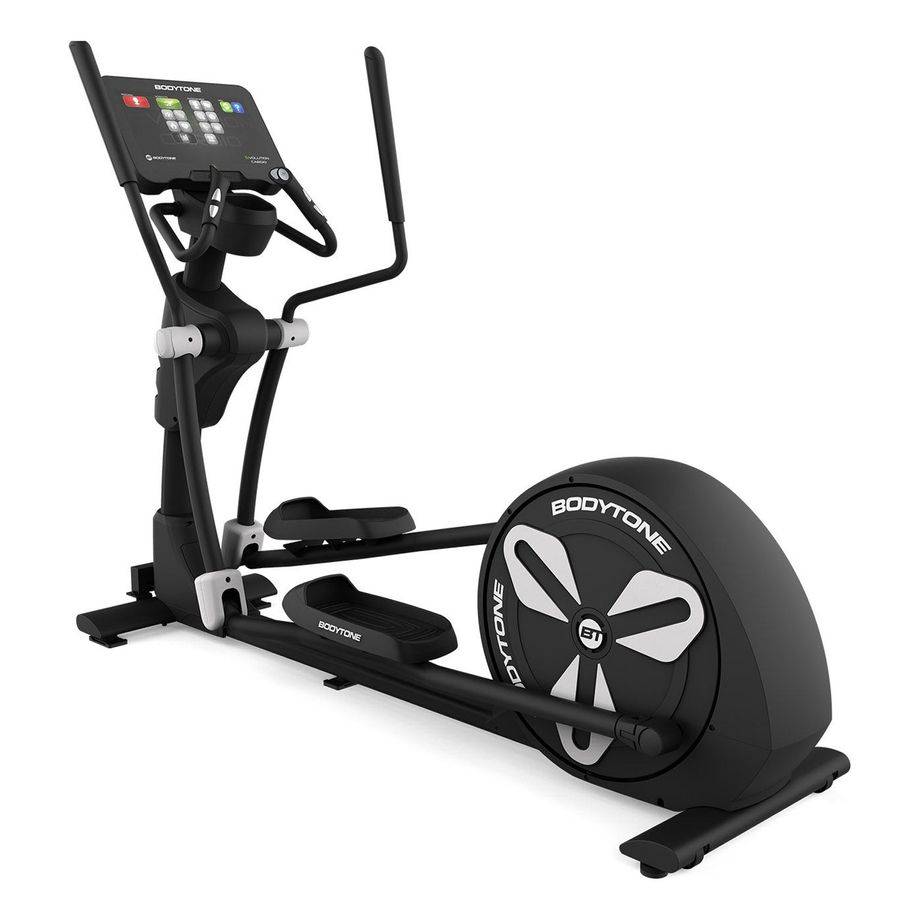
The cross trainer is one of the few cardio machines that earns its floor space in almost every kind of facility: commercial gyms, hotel fitness rooms, corporate wellness suites, municipal sports centres, rehabilitation units and residential amenity spaces. It delivers a low-impact, full-body session that suits a very wide range of members, and it does so without the joint loading of a treadmill. That universality is exactly why the specification matters: a machine that is used from opening to closing, by members of every level, is judged on stride quality, inertia and bearing life, not on the number of programmes printed on the box.
Why cross trainers work so well in shared facilities
A cross trainer drives the legs and the arms in one continuous, closed-chain movement. Calves, quadriceps, hamstrings, glutes, core and upper body all contribute, and the cardiovascular demand can be scaled from gentle recovery work to hard interval training simply by changing resistance and cadence. Because the feet never leave the pedals, impact is minimal. For operators, that translates into a machine that suits deconditioned beginners, older members, athletes on recovery days and clients returning from lower-limb injury, all on the same unit. Few pieces of equipment have that breadth.
What separates a commercial machine from a light-use one
Any cross trainer feels acceptable for ten minutes in a showroom. The difference appears at three thousand hours. Commercial cardio equipment for indoor use must be professional equipment to EN ISO 20957-1 class S, which is the class intended for supervised, unrestricted-access facilities. Class S covers frame strength, stability, entrapment and the durability expected of a machine in continuous service. Do not accept a machine specified only to a lower use class, and be wary of any supplier who cannot state the class on the datasheet.
The three specifications that actually decide durability
A professional cross trainer is judged on stride length, flywheel inertia and the quality of its bearings. These three parameters govern how fluid the movement feels and how long the machine survives collective use.
Stride length
Stride length determines whether the movement matches the user or forces the user to match the machine. Too short and tall members shuffle; too long and shorter members over-reach and lose contact with the handles. In a facility serving a mixed population, stride length is the single most important comfort specification, and machines with an adjustable stride justify their extra cost in mixed-demographic sites.
Flywheel inertia
Inertia is what makes the ellipse feel smooth rather than notchy. A heavier, well-balanced flywheel carries the user through the top and bottom of the stroke and removes the dead spots that make cheap machines feel like pedalling through sand. It also allows fine resistance control at low cadence, which matters for rehabilitation and for beginner programming.
Bearings and drive
Bearings are the component that fails first on under-specified machines, and they fail as noise, play and eventually as an unusable unit. Sealed, correctly sized bearings on the crank and on the articulated arms are what keep a machine quiet and tight after several years of daily use. Ask what bearings are fitted and whether they are field-replaceable.
Resistance and braking
Modern professional cross trainers use electronically controlled magnetic braking, which gives precise, repeatable resistance across a wide range of levels and needs no consumable friction parts. Multiple resistance levels and structured programmes matter less than the linearity of the resistance curve: a machine whose levels bunch together at the top of the range is frustrating for fitter members. Where the machine has to work without a mains socket, self-generating models remove the cabling constraint entirely and simplify layout.
Consoles and connectivity
Touchscreen consoles with entertainment and connectivity have become an expectation rather than a differentiator in commercial gyms, hotels and residential amenity rooms. Streaming, heart-rate connectivity and integration with member apps genuinely increase session length and retention. For operators, the practical questions are different from the marketing ones: how is the console updated, what happens to the machine if the network drops, can usage data be exported, and how much does a replacement console cost out of warranty. A simple, robust console with a long parts availability window often beats a spectacular one that is obsolete in three years.
Footprint, layout and installation
Cross trainers need clearance behind and above. The user stands on the pedals, so the effective height of the machine is the pedal height plus the user, which is the detail most often missed in rooms with limited ceiling height. Plan circulation between machines, plan the power supply if the console needs one, and specify the floor: a cardio zone should be laid on flooring chosen for point loading and acoustic performance, not on the same surface as the free-weight area. Our cardio equipment range is designed to be planned as a zone rather than machine by machine.
Choosing the right range
Specification should follow the traffic. A hotel with a small fitness room and moderate use has different needs from a 24-hour club running a machine sixteen hours a day. Our professional cross trainers cover the range from front-drive club machines to heavy-duty units for high-traffic floors, and the Lexco cross trainers line is a common choice where a long service life and simple maintenance are the priority.
Total cost of ownership, not purchase price
The real cost of a cardio machine is the purchase price plus the maintenance, the spare parts, the downtime and the replacement date. An under-specified machine bought on price is typically replaced twice in the life of a properly specified one, and every failure is a machine out of service on a busy floor. Ask about warranty terms for commercial use, parts availability, the cost of the common wear items and whether local service is available. Those answers usually separate two machines that look identical on paper.
Frequently asked questions
How many cross trainers should a gym floor have?
It depends on membership, peak occupancy and the rest of the cardio mix. As a planning approach, size the cardio zone from your busiest hour rather than your average, and keep the mix balanced across treadmills, bikes, rowers and cross trainers. We can model this from your floor plan and member numbers.
Is a cross trainer suitable for rehabilitation settings?
Its low-impact movement pattern makes it a common choice in rehabilitation and senior-focused programmes, always under the supervision of the clinical team responsible for the protocol. Machines with adjustable stride and fine low-level resistance control are the most useful in that context.
What maintenance does a commercial cross trainer need?
Daily cleaning, periodic inspection of pedal arms, handles and fixings, and a scheduled service that covers bearings, drive belt and console firmware. Cardio machines fail quietly long before they fail loudly; a documented maintenance schedule is what keeps them on the floor.
Can machines be supplied in a specific finish?
Upholstery and frame finish options vary by range. Tell us your brand requirements at the specification stage, as finish options can affect lead time.
Specifying your cardio zone
The right cross trainer is the one matched to your traffic, your member profile and your room, built to class S for professional indoor use, and backed by parts and service you can actually get. Send us your floor plan, your opening hours and your member numbers, and our technical team will build a costed cardio specification with you. Request a quote and we will come back with machine selection, layout and flooring in a single proposal.