How to Choose a Boxing or MMA Club and the Kit to Start Safely
Choosing a club that offers MMA, kickboxing or any of the other combat disciplines can feel overwhelming, particularly for a beginner. Apply a few clear criteria, and invest in the right protective kit, and you can train safely while building genuine physical condition. This guide covers what to look for in a club, the equipment a beginner actually needs, and the training habits that keep injuries out of the first year. It is also, read the other way round, a checklist of what a combat sports club has to provide if it wants to keep the members it recruits.
1. Choosing your boxing or MMA club
Look for qualified, certified coaches
Before joining a boxing or MMA club, check that the coaches hold recognised qualifications. Clubs affiliated to the national boxing or martial arts federation in your country generally work with certified coaches who can guide you properly. A good coach takes you through the warm-up and teaches the fundamentals, punching, kicking and ring work, in a deliberate order rather than throwing you into a session on day one.
Inspect the equipment and the facilities
A serious club has a properly equipped gym behind the timetable. Look for punch bags, punching balls, gloves and protective equipment such as mouthguards and groin guards, and check there is a ring or cage suited to the disciplines the club actually teaches.
The floor matters as much as the equipment. Striking work needs a surface that absorbs impact without being unstable underfoot; ground work needs proper matting. A club that trains grappling on thin foam is one where the injuries come from the floor rather than the opponent. Our tatami mats and floor-level MMA cages cover the two areas where clubs most often compromise.
Consider the classes on offer
Clubs offer a range of disciplines: boxing, kickboxing, Muay Thai and, in many clubs, women-only sessions. Choose one whose classes match your level, whether beginner, intermediate or competitive, and where you can take a trial session first to judge whether the environment suits you before committing to a membership.
2. The kit you need to start
Invest in a proper pair of gloves
Training without unnecessary injury risk starts with good equipment, and it starts with gloves. Buy a quality pair sized to your hand and your bodyweight. They should give real support and enough padding to protect the hands and joints during bag work and partner work. This is the one item where buying cheap costs more, because the injury it fails to prevent takes months to heal.
Additional protection for sparring
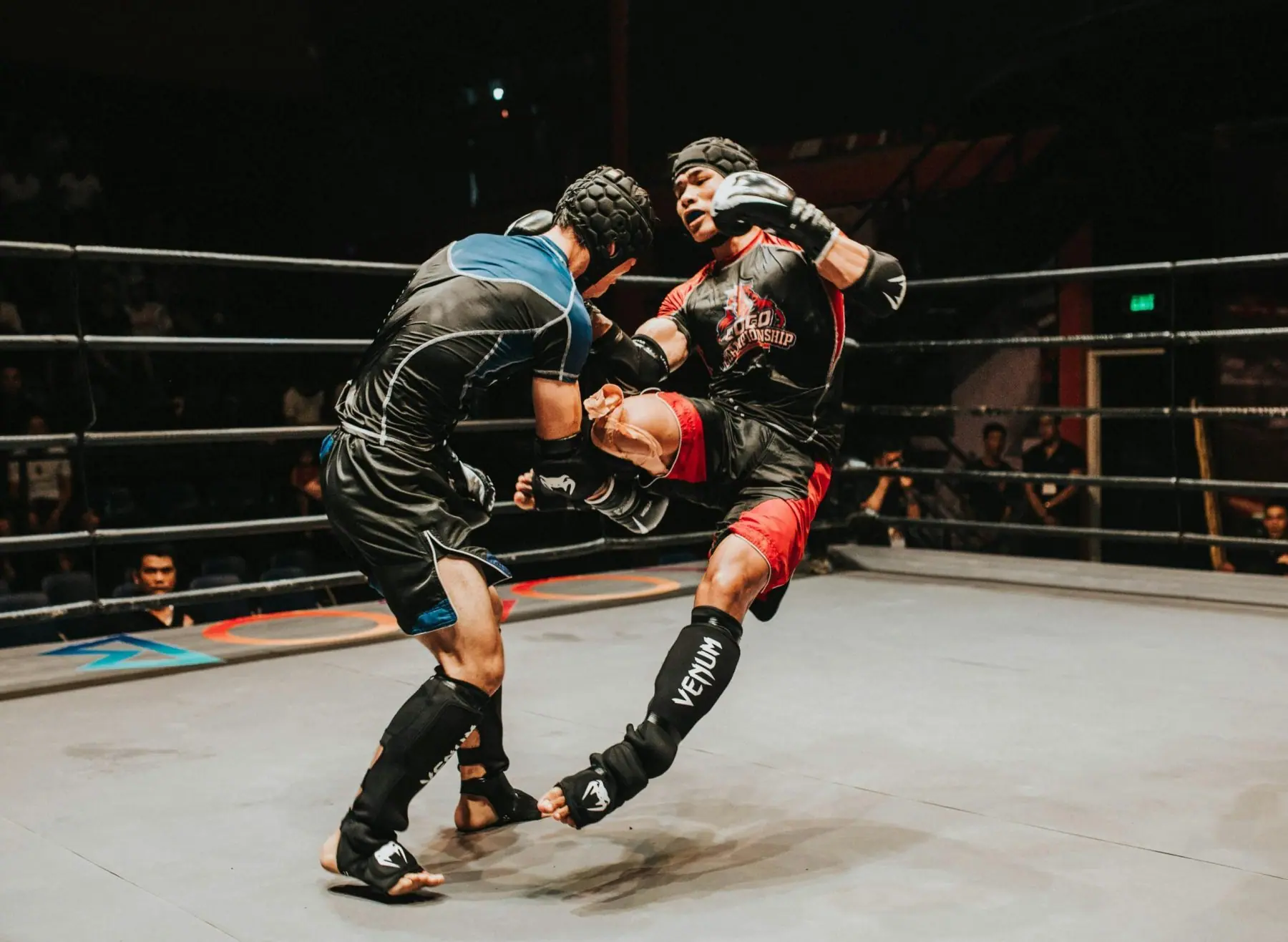
When you are ready to spar, extra protection becomes essential. Shin guards protect against low kicks, headgear protects the head, and a well-fitting mouthguard is required in most sparring and competitive contexts, so treat it as non-optional. Hand wraps under the gloves support the wrists and prevent a large share of the injuries beginners pick up.
Brazilian jiu-jitsu and wrestling classes
For ground work, ear protection of the wrestling headgear type is strongly recommended. In grappling, repeated friction, compression and snagging quickly cause cartilage haematoma, the origin of the well-known cauliflower ear. It is a preventable condition and the protection is inexpensive.
Conditioning and strength equipment
Beyond gloves, conditioning underpins everything else. Skipping ropes, bag mitts and strength equipment all help develop the power and endurance that combat sport demands. Clubs that offer a conditioning area alongside the mat keep members through the periods when they cannot spar.
3. Training and safety
Warm up and stretch
Warming up properly before every session, including stretching, is essential to minimising injury risk. A good warm-up prepares the muscles and joints for the harder work that follows, whether that means punches or kicks.
Train with partners at a similar level
When you begin sparring, work with partners at a similar level, and only occasionally with more experienced training partners in specific sessions. This reduces injury risk and makes the training enjoyable. Techniques such as footwork and combinations should be learned progressively under a coach’s supervision, not picked up in hard rounds.
Look after the basics
Combat sport is demanding. Good nutrition, adequate hydration and real rest matter as much as the training itself. Looking after general physical condition is what makes a better fighter, whether the discipline is Muay Thai, savate or MMA.
What this means if you run the club
Everything above is a purchasing brief seen from the member’s side. A club that wants to retain beginners needs coaching qualifications it can point to, a floor that suits both striking and grappling, bag provision that does not create a queue at peak hours, and a cage or ring appropriate to what it teaches.
Bag hanging is the item most often improvised, and it is the one that damages buildings. A dedicated punch bag rail puts the load into a designed structure rather than into a ceiling joist, and it lets you move bags to suit class sizes.
Frequently asked questions
What should a beginner buy first?
Gloves and hand wraps, in that order, and a mouthguard before any contact work. Everything else can wait until you know which discipline you are staying with.
How do you check a coach’s qualifications?
Ask which federation the club is affiliated to and what certification the coaches hold. A club with recognised qualifications will answer without hesitation.
What flooring does a combat sports club need?
Grappling needs tatami or roll-out matting with genuine impact absorption. Striking areas need a stable, shock-absorbing surface. The two requirements differ, and clubs that run both usually zone the room rather than compromise on one surface throughout.
Cage or ring?
It depends on the disciplines taught and on whether the club hosts competition. Floor-level cages suit training rooms with limited height; podium versions suit clubs that stage events. Both need the floor specification underneath to be right.
Equipping a combat sports club
Choosing a good club and the right kit is the foundation of starting in combat sport safely. From the operator’s side, the same list is a specification: qualified coaching, the right floor, the right bag provision and a cage or ring that matches the programme.
Light In Fitness has supplied professional sports equipment to clubs, gyms, sports halls and public facilities since 2013, including matting, cages, bag rails and conditioning equipment. Request a quote and our team will come back to you with a specification built around your room and your programme.