How to Choose an Obstacle Course
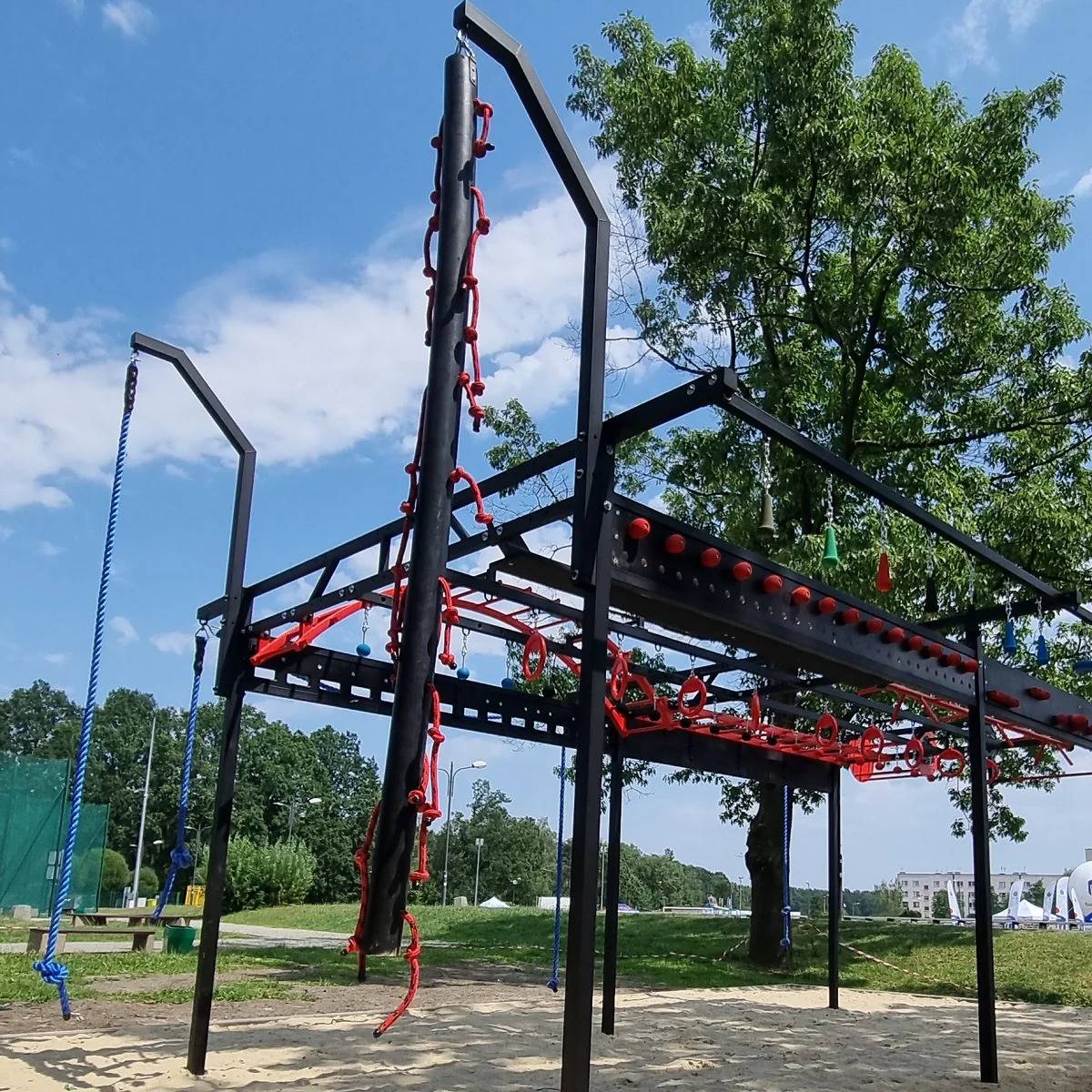
In short: an obstacle course is sized around three things: the audience it serves, the surface area available and the level of difficulty you are aiming for. The structural decisions are the ground anchoring of the obstacles, the nature of the impact-attenuating surface underneath and the progression between modules. Light In Fitness manufactures its Ninja and OCR courses under its own brand.
Choosing an obstacle course is a rewarding exercise, whether you are a competitor looking for the right race or an operator planning a permanent installation. With a wide range of obstacle events and course layouts available, the decision is rarely obvious. A handful of criteria, however, settle most of it. The first is the fitness level and the skills of the people who will use the course.
Some obstacle courses are designed for experienced athletes, while others suit beginners far better. Someone new to obstacle racing is better served by accessible, fun-format events before moving on to demanding ones. The same logic applies to a permanent course: an installation aimed at a general public needs modules that a beginner can clear, otherwise a large part of the target audience simply stops using it. The second criterion is the type of effort you want the course to reward.
Runners tend to look for a format that combines running with obstacles, as the Spartan Race series does. Swimmers gravitate towards water obstacles or swimming legs. Check the events on offer at each site so that they match the interests and the ability of the people you are catering for.
The setting matters as much as the modules
The environment in which the course is laid out is another decisive factor. Some events take place in scenic locations such as mountains, forests or outdoor activity centres, which makes for a more rewarding and more demanding experience. Others are organised in sports halls or on flat ground, where accessibility is the priority. Choose the setting that motivates the users you are targeting rather than the one that photographs best.
For a permanent installation the same question is answered by the site itself. A sloping wooded plot supports a very different course from a flat surfaced area next to a sports hall, and the ground anchoring of each obstacle has to be designed for the ground you actually have. Our outdoor Ninja structures are configured module by module for this reason.
Safety is a specification, not an afterthought
Safety is a decisive criterion when choosing an obstacle course. For an event, make sure the organiser takes every necessary measure to protect participants, check whether medical clearance is required before entry, and favour events staffed by volunteers trained to look after the athletes on the course.
For a permanent installation, the equivalent questions are structural. The impact-attenuating surface under and around each module is dimensioned according to the fall height of that module, which means the surfacing is decided obstacle by obstacle and not as a single blanket specification for the whole area. The anchoring of the structures into the ground is the second point, and it is the one that most often drives the civil works part of the budget.
Progression and group use
Team spirit and shared effort are important considerations. Some formats put the emphasis on mutual help and collective achievement, and if the objective is to build cohesion between friends, colleagues or club members, a course that rewards cooperation is the one to choose.
On a permanent course, progression between modules matters as much as their number. A badly graded course becomes unusable for part of its intended public: the first difficult obstacle stops the weaker users, and the rest of the installation goes unused. Grading the sequence from the easiest module upwards is what keeps a mixed group moving through the whole course. Where the same site has to serve several levels at once, a combined layout such as our outdoor parkour and CrossFit parks lets each group train on the section that suits it.
Materials for a permanent outdoor course
Galvanised steel covers the majority of installations. Stainless steel 316L becomes the right choice on coastal sites, where the salt-laden atmosphere attacks standard coatings. This is a site-driven decision, not a quality upgrade: specifying galvanised steel a few hundred metres from the sea costs more in maintenance than the stainless option saves at purchase.
Because our Ninja and OCR courses are manufactured under our own brand, the modules are adapted to the configuration of the site instead of forcing the site to accommodate a fixed catalogue. A complete competition-format rig such as the outdoor Ninja Warrior OCR rig illustrates the scale a permanent installation can reach.
Frequently asked questions about obstacle courses
How is an obstacle course sized?
According to the audience it serves, the surface area available and the level of difficulty you are aiming for. The progression between modules counts for as much as their number: a badly graded course becomes unusable for part of its intended public.
Which materials suit an outdoor course?
Galvanised steel covers the majority of installations. Stainless steel 316L is the right answer on coastal sites, where the salt-laden atmosphere attacks standard coatings. The impact-attenuating surface is dimensioned according to the fall height of each module.
Does Light In Fitness manufacture its own courses?
Yes. The Ninja and OCR courses are manufactured under the Light In Fitness brand, which makes it possible to adapt the modules to the configuration of the site rather than working around a fixed catalogue.
Getting your course specified
Choosing an obstacle course comes down to fitness level, the type of effort rewarded, the setting, safety and the way the course is graded. Take the time to compare the options, look at how existing installations are used, and ask the questions that the brochures do not answer. Send us the dimensions of your site, the audience you want to serve and the ground conditions, and we will come back with a module layout and a costed proposal: request a quote.
Réalisations documentées
- Parcours ninja sur mesure, Rennes – îlot des Hautes-Ourmes
- Double mur ninja extérieur, Sallanches – Haute-Savoie