Buying a Pump Track for Your Municipality
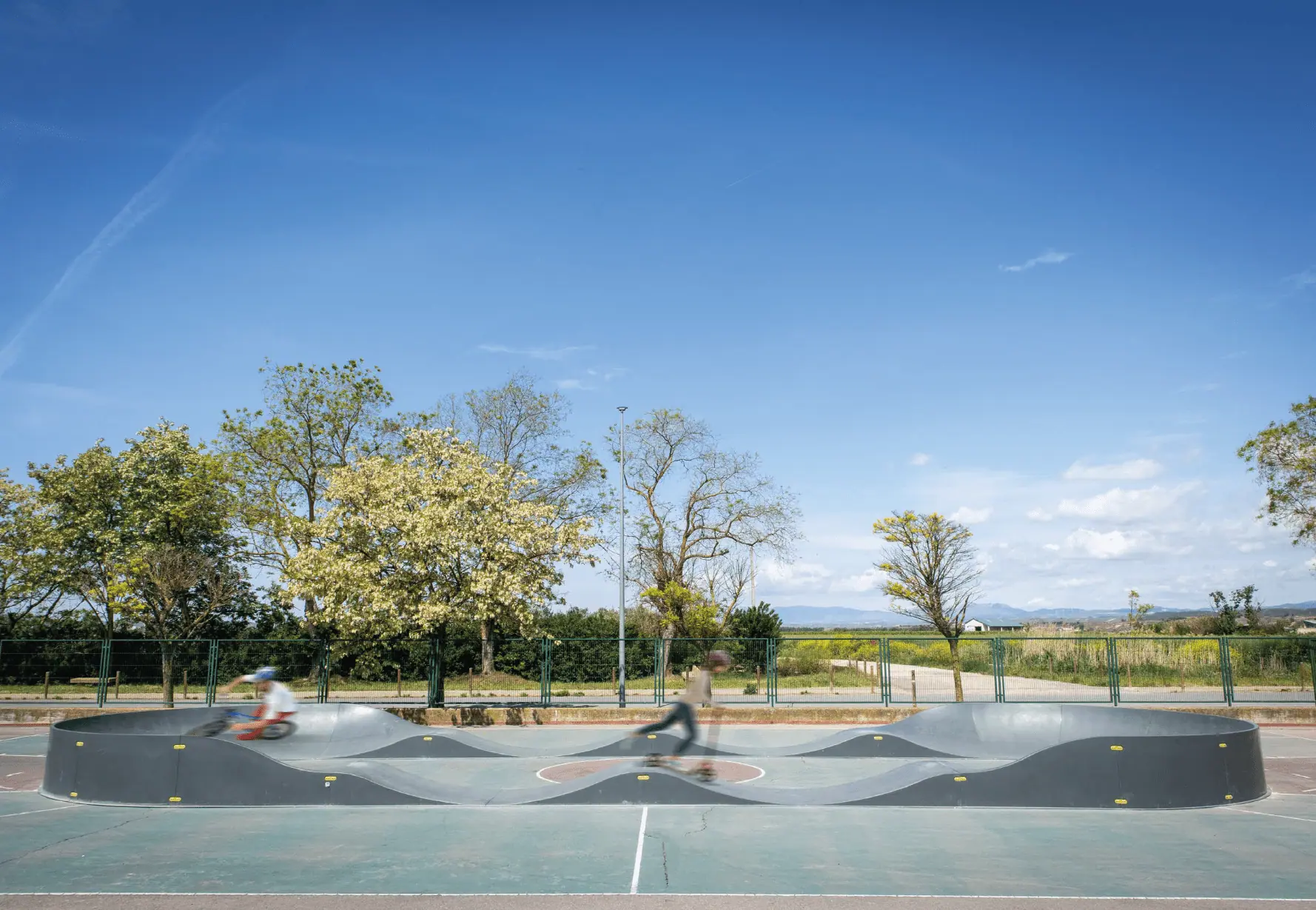
A pump track has become one of the most cost-effective pieces of sports infrastructure a local authority can commission. It gives a dynamic, genuinely popular space to mountain bikers, BMX riders, skateboarders and scooter users, and it fills up on its own without a booking system, a supervisor or a changing room. If your council is considering buying one, this guide walks through the stages of the project, from the first public meeting to long-term upkeep.
Why a pump track
It gets people moving
Pump tracks bring residents outside and keep them active, young and less young alike. The circuit is designed to be ridden without pedalling, which makes it accessible to complete beginners on the first afternoon and keeps experienced riders busy for years.
It builds social cohesion
These facilities turn into gathering points very quickly. People meet there, ride together, watch, talk. For a district with little informal public space, that alone justifies the line in the budget.
It attracts visitors
A well-designed track draws riders from neighbouring towns, which supports local tourism and the businesses around the site. Several municipalities programme events and local competitions on the same layout.
How to buy a pump track for your town
1. Assess what the community actually needs
Before anything else, understand what residents expect. Public meetings, a short survey through the town website, and a conversation with the local cycling and skate clubs will tell you whether you are specifying a family loop or a technical circuit.
2. Choose the right site
Location decides whether the track is used. Look for accessible public land, safe to reach on foot or by bike, close to residential areas and visible enough for informal supervision. Check drainage and ground conditions early, because they drive the cost of the groundworks.
3. Budget and funding
Costs vary widely with size and layout. Build a detailed budget covering design, groundworks, the track itself, signage and maintenance. Then explore the funding routes open to you: public grants, private partnerships and community fundraising all work, and the mix depends on your national and regional framework.
4. Select a qualified supplier
Choose a company that specialises in pump tracks rather than a general groundworks contractor. Ask for references you can visit, and for confirmation in writing that the equipment and the installation comply with the regulations applicable to public sports and leisure facilities in your country. Our modular ranges are listed under pump tracks, from a compact 32 linear metre circuit up to a 90 linear metre layout for a flagship site.
The construction stages
1. Design
Work with a designer on a layout that matches what the community asked for and makes the most of the available plot. Riding lines, sight lines, entry and exit points and the position of spectators all belong in the drawing.
2. Ground preparation
Make sure the ground is properly prepared before the build starts: levelling, drainage and landscaping. This is the stage that quietly decides how the track behaves after three winters.
3. Construction
Building takes several weeks depending on the complexity of the track. Keep the safety and quality obligations of the contract explicit, and plan the site inspections in advance rather than at handover.
4. Opening
Run an opening event. It celebrates the facility, introduces the ground rules to the first users, and it is the cheapest communication your project will ever get.
Maintenance and management
Routine maintenance
Regular maintenance keeps the track safe and extends its life: surface repairs, vegetation control, clearing debris, checking the edges and the signage. Write the inspection routine into the operating plan from day one and give it a named owner.
Community management
Involve users in looking after the site. Volunteer groups and local associations are effective at overseeing day-to-day use, reporting damage early and keeping the tone right on the track.
Frequently asked questions
What does a pump track cost?
It depends on the length and the complexity of the layout. In our modular catalogue the range currently runs from 36,500.00 EUR excluding VAT for a 32 linear metre circuit to 92,755.00 EUR excluding VAT for a 90 linear metre layout, before groundworks and installation.
How long does a pump track last?
With regular maintenance, a pump track lasts many years, commonly between 10 and 20.
Are pump tracks safe for children?
Yes. They are designed for users of all ages, children included, provided the posted rules are followed and helmets are worn. Signage at the entrance and a clearly separated beginners line make a measurable difference.
Who maintains it once it is open?
Usually the technical services of the municipality, supported by a volunteer group. Agree the split before the opening, not after the first repair is needed.
Taking your project forward
Commissioning a pump track is a modest investment that changes how a town uses its public space: more physical activity, stronger social cohesion, and visitors from further afield. Send us the plot dimensions, the ground conditions and the profile of the users you want to serve, and we will propose a layout and a costed package. Request a quote and our team will come back to you with a proposal.