Where to Buy a Chest Press Machine for Your Gym
Une machine à pectoraux existe en deux géométries : la poussée, dite chest press, et l'écarté, dit pec deck. La première associe pectoraux et triceps, la seconde isole les pectoraux en adduction. Un plateau complet propose les deux, les mouvements n'étant pas substituables.
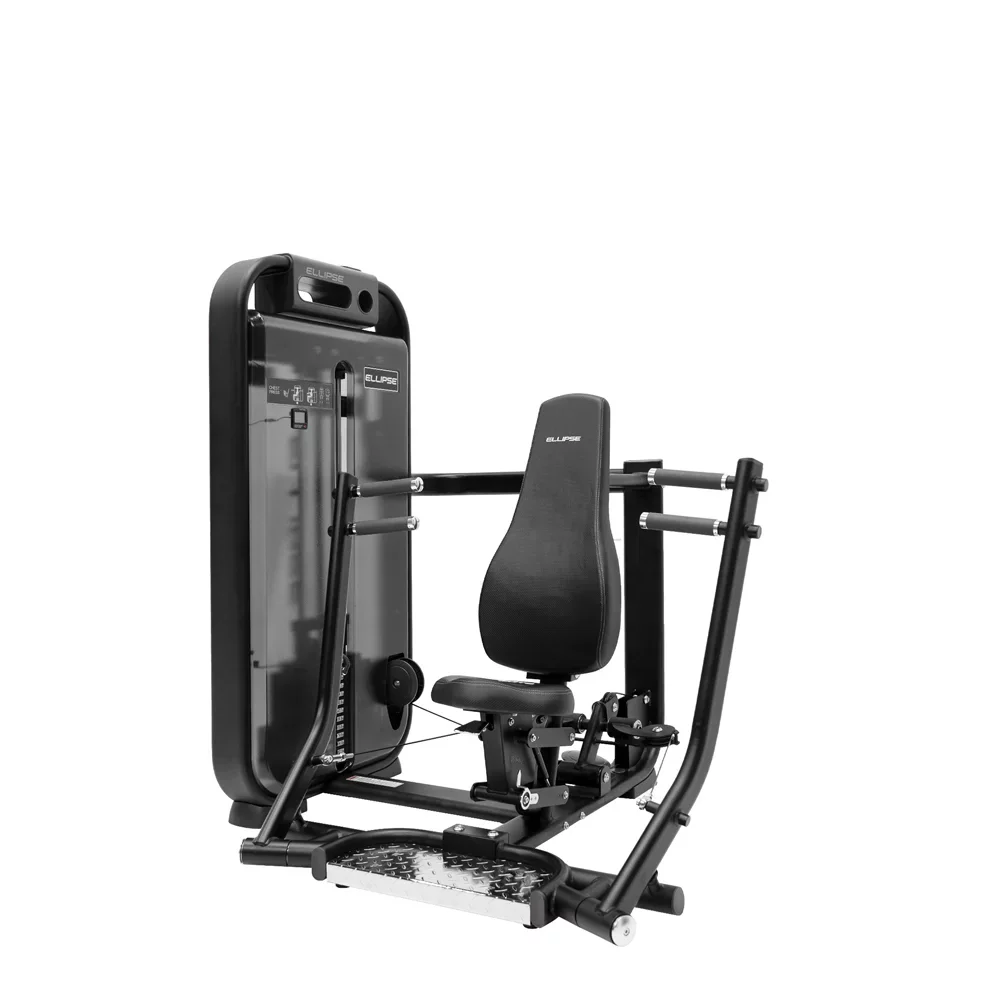
A chest machine comes in two geometries: the press, known as the chest press, and the fly, known as the pec deck. The first works the pectorals together with the triceps and the front deltoid; the second isolates the pectorals in adduction. A complete strength floor carries both, because the two movements are not interchangeable. The question for a gym operator is less where to buy a chest machine than which geometry, which load system and which build standard the room actually needs.
Chest press or pec deck: two different jobs
The chest press is a compound pushing movement on a guided path. It lets members handle heavier loads safely without a spotter, which is why it anchors the pushing station of almost every commercial floor. The pec deck keeps the elbow angle fixed and brings the arms together in front of the body, isolating the pectorals through adduction. Operators who install only one of the two end up with a floor where members either cannot load heavily or cannot isolate at all.
Converging press machines sit between the two: the handles travel inward as they travel forward, which reproduces part of the fly pattern inside a pressing movement. They are a strong choice where floor space allows only one chest station.
Selectorised or plate-loaded
Selectorised machines change load with a pin, which keeps circuit times short and suits mixed-ability memberships, hotel gyms and corporate facilities. Plate-loaded machines load with Olympic plates, give a different resistance feel and are the usual choice in strength-focused gyms and athletic preparation rooms. Selectorised units cost more per station but need far less floor discipline; plate-loaded units need plate trees and a tidier operation.
What to check before you buy
- Build standard: for indoor commercial use, specify equipment built to EN ISO 20957-1 class S. Anything below that class is not rated for the duty cycle of a staffed facility.
- Adjustment range: seat height and back-pad positions decide whether the machine fits a 1.55 m and a 1.95 m member without a tool. Count the increments, not the marketing copy.
- Load increments: small increments matter more than a high maximum load on a floor with a mixed membership; add-on weights of 2.5 kg are worth asking about.
- Footprint and access: measure the machine plus the entry and exit path. A pec deck with rear-entry seating needs clearance behind it that the catalogue drawing does not always show.
- Upholstery and wear parts: pads, cables, pulleys and bearings are what you will replace. Ask for the parts list and the lead time on it before you sign, not after.
Where to buy
Buying through a specialist supplier rather than a general retailer changes what you get alongside the machine: layout advice, a documented parts chain and equipment specified for professional duty from the start. Light In Fitness has equipped gyms, clubs, hotels, local authorities, schools, armed forces and rehabilitation centres since 2013, across selectorised, plate-loaded and converging chest stations.
Frequently asked questions
Chest press or pec deck: which should I install first?
The chest press, if you can install only one. It covers the heavier compound work that members come to a gym to do, and it is the safer station to use unsupervised.
Are guided machines only for beginners?
No. Guided machines let any member load heavily without a spotter and keep the movement path consistent, which is exactly what makes them useful in supervised strength work and in rehabilitation settings.
How many chest stations does a commercial floor need?
It depends on peak-hour flow rather than on total membership. A common starting point is one pressing station and one fly station per pushing zone, then a second press once queuing appears at peak.
Browse the chest press machine range and the wider selectorised strength machines, or request a quote for a complete chest station.