100 m2 gym fit-out: the step-by-step timeline from lease to opening
Équiper 100 m² avec 15 000 EUR excl. VAT suppose de concentrer le budget sur le sol sportif, les charges libres et deux à trois postes cardio. Les machines guidées, plus coûteuses par poste, s'ajoutent ensuite par tranches. Cette répartition permet d'ouvrir avec un plateau cohérent plutôt qu'avec un parc incomplet sur tous les postes.
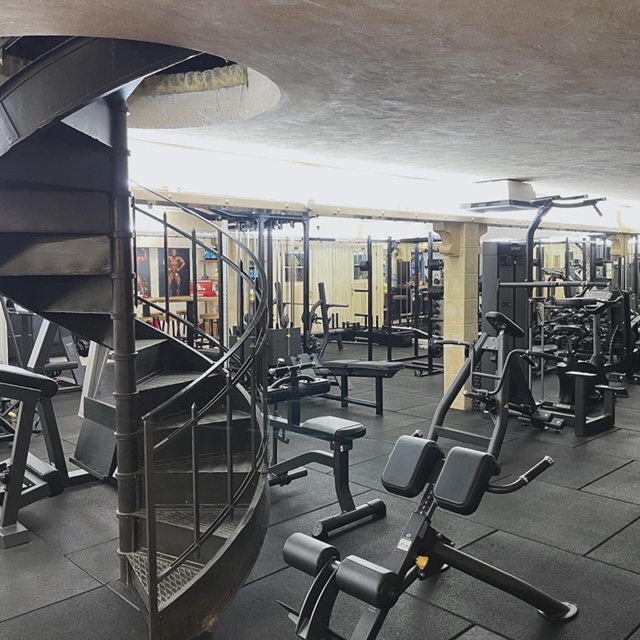
Fitting out a 100 m2 gym takes 10 to 16 weeks from signed lease to first session, and the sequence matters more than the speed: business model first, floor plan second, flooring third, equipment fourth, compliance file last. Skip a step or run them in the wrong order and you pay for it twice — in remedial work and in lost opening revenue. This guide lays out the step-by-step timeline we apply to 100 m2 projects, with realistic budget checkpoints at each phase.
Step 0 (before any spending): decide which project you are actually running
The single most important decision happens before the first quote. On 100 m2 there are two fundamentally different projects:
- A coaching studio — personal training or small groups of 4-6 people, around eight working stations. Equipment budget: roughly 15,000 EUR excluding VAT, as detailed in our 15,000-euro budget breakdown.
- An open-access members’ gym — 150 to 300 members expect doubled cardio, a line of selectorised machines, a second rack and flooring across the full surface. Equipment budget: roughly 68,000 to 95,000 EUR excluding VAT.
The density rule decides for you: allow 7 to 10 m2 per active station. 100 m2 of usable space means about ten stations minimum to be credible in open access. If the budget cannot cover them, open a smaller, well-equipped space instead of a half-empty 100 m2.
The 16-week master timeline
| Phase | Weeks | What happens | Budget share |
|---|---|---|---|
| 1. Audit and 3D layout | 1-2 | Site survey, substrate check, zoning plan, station count | Often free with a turnkey supplier |
| 2. Building works | 3-8 | Electrics, ventilation, changing rooms, safety signage | Commonly 50-80 % of the equipment budget |
| 3. Flooring order and installation | 6-9 | Zone-by-zone thickness, laid before any machine arrives | 8-12 % |
| 4. Equipment order | 4-10 | 6-8 week lead times on professional lines; order early | 70-80 % |
| 5. Delivery, assembly, anchoring | 10-12 | Rig anchoring, machine levelling, cable routing | 5-8 % |
| 6. Commissioning and compliance file | 12-14 | Conformity certificates, house rules, insurance, staff training | Administrative |
| 7. Soft opening | 14-16 | Test sessions, adjustments, snagging list | Contingency ~5 % |
Phase by phase: what to lock in and when
Weeks 1-2 — Audit and layout
Measure precisely, check the slab and ceiling height, and draw the zoning before choosing a single machine: cardio, free weights, functional zone and stretching each have different flooring, clearance and power needs. Our 100 m2 strength floor zoning guide covers the layout logic in detail.
Weeks 3-8 — Building works
Electricity for cardio lines, ventilation sized for occupancy, changing rooms and accessibility. This is the phase most first-time operators under-budget: works commonly represent 50 to 80 % of the equipment budget and are not optional in publicly accessible premises.
Weeks 6-9 — Flooring before machines
The floor always goes in before the equipment. Zone the thickness rather than covering everything uniformly: 6-10 mm under cardio, 20-30 mm under free weights, 30-40 mm under lifting platforms. Covering 100 m2 in 20 mm tiles alone represents around 2,600 EUR excluding VAT — zoning 60 m2 of working surface can bring that closer to 1,300 EUR.
Weeks 4-10 — Equipment ordering and lead times
Professional equipment runs on 6-8 week lead times; order in week 4 at the latest so delivery lands after the floor. Class matters more than brand: EN ISO 20957-1:2024 defines usage classes — H for home, S for commercial, I for intensive institutional use — and any space receiving the public needs class S minimum. Buying fewer stations in the right class always beats more stations in class H. A complete station-by-station shopping list is in our 100 m2 gym equipment list.
Weeks 10-12 — Installation
Delivery, upper-floor handling, rack and rig anchoring, machine levelling. Budget these lines from day one — around 1,000 to 2,500 EUR on a studio project — rather than discovering them at the end.
Weeks 12-16 — Compliance, training, soft opening
Archive conformity certificates and data sheets, display house rules and emergency contacts, extend the liability policy, train staff on maintenance basics, then run one or two weeks of test sessions before full opening.
The four mistakes that blow up timelines and budgets
- Buying domestic equipment to stay on budget. Class H machines fail under professional use even at modest traffic — breakdowns, degraded image, liability exposure.
- Squeezing circulation to fit one more station. Allow 5-7 m2 per cardio station and 8-14 m2 per free-weights station including clearances.
- Treating the floor as the adjustment variable. It is the line that protects everything else — building, machines, acoustic neighbours.
- Ordering equipment before the works schedule is fixed. Machines stored on a building site get damaged; machines delivered late push the opening.
Financing the project
- Equipment leasing or long-term rental — the most common route: preserves cash and aligns cost with revenue over 36-60 months.
- Professional credit — negotiated with a solid business plan.
- Public grants — mainly relevant for municipal or non-profit projects.
Contractors, separate suppliers or turnkey: who runs the schedule?
The 16-week timeline assumes someone actually coordinates it. Three ways to organise that:
- Self-managed with separate suppliers. Cheapest on paper; in practice the operator becomes the project manager, and the classic failure mode is the interface: the floor layer waits on the electrician, the equipment arrives before the floor, and every delay cascades. Budget genuine personal time for it.
- General contractor for works + equipment supplier. Works well when the two share a written schedule with the flooring date as the hinge: everything before it belongs to the contractor, everything after to the supplier.
- Turnkey fitness supplier. One party owns the plan, the flooring, the equipment and the installation dates. The works remain with your builder, but the sequencing risk on everything sport-specific transfers to a partner who does it weekly. On 100 m2 projects this is usually where the 16 weeks becomes 12.
Whichever route you choose, put three dates in writing before signing anything: floor-ready date, equipment delivery week and soft-opening day. Every supplier commitment should hang off those three anchors.
Frequently asked questions
How long does it take to open a 100 m2 gym?
Ten to sixteen weeks from signed lease, driven mainly by building works (up to 6 weeks) and equipment lead times (6-8 weeks). Running phases in parallel — ordering equipment while works progress — is what keeps the schedule under four months.
What budget should I plan for 100 m2?
Around 15,000 EUR excluding VAT equips a coaching studio properly; an open-access members’ gym on the same surface needs 68,000-95,000 EUR excluding VAT for equipment, plus building works commonly worth 50-80 % of the equipment budget.
How many stations fit in 100 m2?
About ten active stations at the standard density of 7-10 m2 per station, circulation included. A coaching studio works comfortably with eight; open access needs the full ten or more to avoid peak-hour queues.
Should the floor really be laid before the equipment arrives?
Yes, always. Laying tiles around installed machines multiplies cutting work, leaves unprotected zones under the heaviest loads, and usually voids the flatness tolerances machine warranties assume.
Get a fit-out plan and timeline for your project
Light In Fitness has delivered more than 500 turnkey projects since 2013: audit, 3D plan, zone-by-zone flooring, class S equipment, installation and after-sales — one contact from first visit to opening day. See the full commercial gym fit-out guide or request a free quotation within 24 working hours.