Bodyweight Training: Everything You Need to Equip a Calisthenics Zone
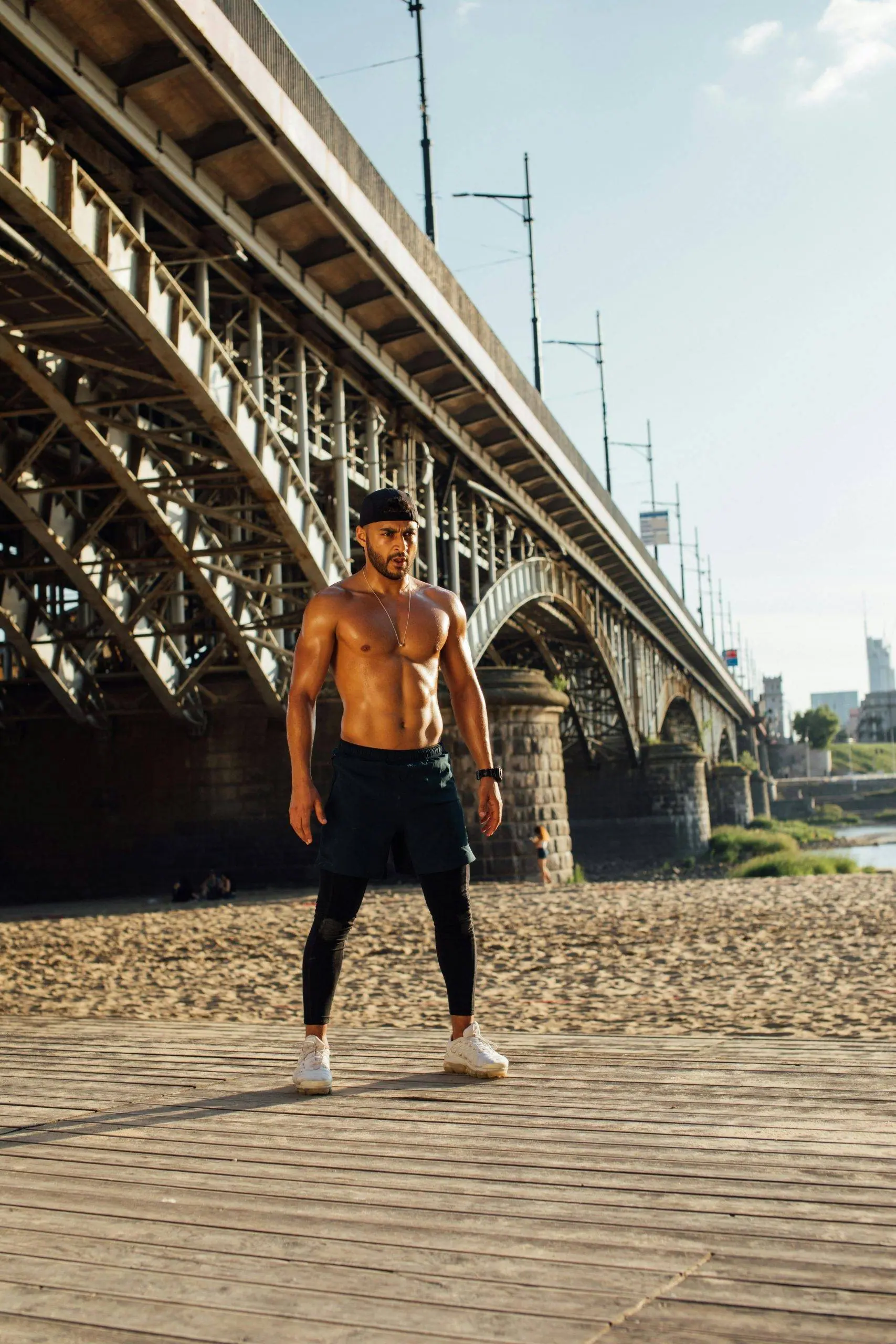
Bodyweight training uses the mass of the body itself as the resistance. For an individual that means it can be done almost anywhere with almost nothing. For an operator it means something quite different: a method that attracts a large, young and highly regular user group needs bars, rigs, floor and clearance, and getting those wrong is the reason a lot of calisthenics zones end up unused. This article covers the method, then what it demands from a facility.
What bodyweight training is
Bodyweight training, also known as calisthenics, develops strength using the natural movements of the body rather than external loads. Instead of adding plates, the user changes the leverage: the angle of the body, the position of the hands and feet, the number of points of support. Resistance is adjusted by geometry, not by a stack.
That distinction is what makes it work in a facility with a mixed population. The same bar serves a beginner doing inverted rows at a shallow angle and an advanced athlete doing a front lever, and neither needs a spotter or a weight change to move between them.
Why operators are building for it
Five properties of the method matter commercially.
- Low equipment cost per user. A single well-designed structure serves a large number of people, with no consumable parts and no plates to replace.
- Functional strength. The movements are close to everyday and sporting actions, which makes progress visible outside the gym and keeps beginners engaged.
- Mobility and coordination. Compound bodyweight movements demand stability and control, and they develop balance alongside strength.
- Scalability. Every movement has a regression and a progression, so one zone serves the deconditioned member and the advanced athlete without any change of hardware.
- Whole-body loading. The method distributes work across the body, which tends to reduce the imbalances that isolated machine work can create.
The commercial consequence is that a calisthenics zone is one of the highest-participation, lowest-maintenance areas an operator can build, indoors or outdoors.
The movements and the hardware each one needs
Push-ups target the chest, shoulders and triceps. They need floor, a stable non-slip surface and, for progressions, parallettes or low bars.
Squats load the legs and glutes. They need clear floor and enough overhead room for the jump progressions that follow.
Lunges develop the legs and glutes one side at a time and are one of the easiest movements to coach to a general population. Again the requirement is clear, level floor.
Planks and core holds need mats and floor space, and they are the single most space-hungry movement family in a group session because everybody is on the ground at once.
Pull-ups load the back, arms and shoulders, and they are the movement that decides the whole zone. They need a rigid bar at the right height, with a genuine dead-hang clearance below and enough space around it for swing. Where a facility serves beginners, resistance bands and a low bar for inverted rows are what make the movement accessible from day one.
Once you list the movements that way, the equipment brief writes itself: bars at several heights, parallel and low bars, anchor points for bands and rings, mats, and clear floor. Our street workout rigs and calisthenics and street workout cages ranges are built around exactly that list, and the indoor equivalent sits in the functional training rigs range.
Specifying the zone
Three decisions determine whether the zone works.
Bar heights. A single bar height serves a single population. A usable structure has a high bar for hanging work, a mid bar for muscle-ups and dips, and a low bar for inverted rows and beginner progressions. This is the cheapest way to widen the user base you already have.
Clearance. Users hang, swing and rotate. Plan clearance above the bar, below it and around it, and keep the circulation route outside that envelope rather than through it.
Surface. Indoors, the zone needs flooring that absorbs drops from a bar and stays grippy under sweat. Outdoors, an adult calisthenics installation is covered by EN 16630, and where the free height of fall requires it, surfacing tested to EN 1177 applies. Where the structure is intended for children rather than adults, EN 1176-1 governs the equipment and EN 1177 the surfacing; the two families are not interchangeable.
Frequently asked questions
What are the advantages over machine-based strength training?
No specialised equipment per movement, use almost anywhere, a focus on functional patterns, and balanced whole-body development. Machines still have their place, particularly where guided load paths are needed, but for a facility the two are complements rather than rivals.
How often should members train this way?
Frequency depends on goals and conditioning. Two to three sessions a week is a common starting frame, with enough rest between sessions for recovery.
Can bodyweight training build muscle?
Yes, provided the resistance is sufficient to stimulate adaptation and the difficulty progresses over time. This is exactly why the bar heights and progression options in the zone matter: without them, users plateau and the zone empties.
Does it replace loaded strength training?
It is an effective alternative where loaded equipment is not available, and a strong complement where it is. For specific strength or hypertrophy targets, external load remains necessary, which is why most facilities run both.
Indoors or outdoors?
Both work, and they attract different users. An outdoor street workout park is open, free at the point of use and highly visible; an indoor rig is available in all weather and integrates with your class timetable. Sites that install both usually find the two feed each other.
Designing your zone
Light In Fitness manufactures and supplies street workout structures, calisthenics cages and functional rigs for clubs, public authorities, campsites, schools and residential sites. Send us the area you have, the user profile and whether the zone is indoor or outdoor, and we will come back with a structure and a layout. Request a quote to work from your own site.