The Best Chest Exercises on Machine and Bench: Top 10
Chest training is the part of the strength floor everybody uses and almost nobody programmes well. Members default to one movement, one angle and one piece of equipment, then wonder why progress stops. For an operator, the same problem shows up as a queue at the flat bench while three other stations stand empty.
This guide sets out the ten chest exercises worth building a floor around: what each one trains, how it is performed, the mistakes that show up most often, and what equipment it requires. It is written for coaches and operators who have to make a chest zone work for a mixed membership, not for a single body.
Why chest training needs several angles
The pectoralis major has fibres running in different directions, and no single pressing angle recruits all of them equally. Flat pressing, incline pressing, decline pressing and isolation work each emphasise a different part of the muscle, and the stabilisers around the shoulder are loaded differently by a barbell, a dumbbell and a guided machine.
That is the argument for a chest zone with more than a bench in it. It is also the argument for guided machines on a shared floor: they let an untrained member work the same muscle safely while the free-weight stations stay available for those who can use them.
1. Barbell bench press
The reference movement for the chest, and the one everything else is measured against.
Muscles worked: pectoralis major, pectoralis minor, serratus anterior, anterior deltoid, triceps brachii.
Execution: lie on a flat bench with the feet firmly planted. Take a pronated grip slightly wider than shoulder width. Inhale as the bar is lowered to the chest, exhale as it is pressed back up.
Common mistakes: hips and shoulder blades badly positioned on the bench, elbows locked out hard at the top, and holding the breath through the rep.
Equipment note: on a commercial floor this station needs a bench rated for professional use, a rack and, ideally, a spotter position. It is also the station most likely to queue, which is a layout problem before it is an equipment problem.
2. Flat dumbbell press
An excellent alternative to the barbell, with a greater range of motion and more stabiliser involvement.
Muscles worked: pectoralis major, pectoralis minor, serratus anterior, anterior deltoid, triceps.
Execution: lie on a flat bench, feet on the floor. Hold the dumbbells in a pronated grip and lower them slowly towards the chest, then exhale as they are pressed back up.
Common mistakes: not lowering the dumbbells far enough to load the chest, locking the elbows, and poor breathing.
Equipment note: this movement is why dumbbell provision and bench provision have to be planned together. A rack of dumbbells with only two benches in front of it will always bottleneck.
3. Incline dumbbell press
The movement for the upper chest, and the one most often skipped.
Muscles worked: clavicular head of the pectoralis major, anterior deltoid, triceps.
Execution: set the bench between 45 and 60 degrees. Take a pronated grip on the dumbbells, inhale as they are lowered towards the chest, then press them up as you exhale.
Common mistakes: poor body position on the bench, and loads too heavy to keep the movement clean, which simply turns the exercise into a shoulder press.
Equipment note: this needs an adjustable bench, not a fixed incline one. The range of adjustment is what lets one bench serve several exercises and several body sizes.
4. Seated machine chest press
The safest way to load the chest heavily without a spotter, and the single most valuable station on a shared floor.
Muscles worked: pectoralis major, triceps, anterior deltoid.
Execution: sit on the machine and adjust the handles to chest height. Inhale as the elbows travel back and the chest is stretched, exhale as the handles are pressed away.
Common mistakes: seat height set wrong, so the press path sits above or below the chest, and an eccentric phase rushed through.
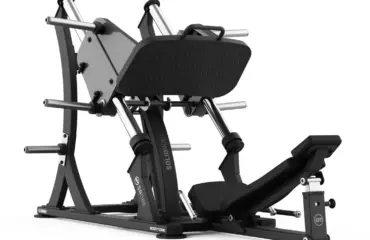
Equipment note: seat adjustment range is the specification that matters here, because it decides how many of your members the machine actually fits. See the chest press machine range for the configurations available.
5. Dips
A bodyweight movement that loads the lower chest and the triceps heavily.
Muscles worked: pectoralis major, lower fibres in particular, triceps, anterior deltoid.
Execution: take the parallel bars with the arms extended. Lower the torso until the shoulders pass below the elbows, then exhale on the way back up.
Common mistakes: elbows flaring badly, and too little forward torso lean, which shifts the work onto the triceps rather than the chest.
Equipment note: a dip station or a rig-mounted dip attachment covers this. It is inexpensive floor space that takes a lot of traffic.
6. Dumbbell pull-over
A versatile movement that works the chest alongside the lats and triceps.
Muscles worked: pectoralis major, latissimus dorsi, triceps, serratus anterior.
Execution: lie on a bench with the feet planted. Hold a single dumbbell with both hands, arms extended above the chest. Inhale as it is lowered behind the head, then bring it back to the start.
Common mistakes: moving too fast, which raises the injury risk at the point where the shoulder is most extended.
7. Flat dumbbell fly
An isolation movement that stretches the chest fibres and is usually used for definition work rather than heavy loading.
Muscles worked: pectoralis major, sternal and clavicular portions.
Execution: lie on a flat bench with a dumbbell in each hand. With the elbows slightly bent, inhale as the arms open out to the sides, then exhale as the dumbbells are brought back together above the chest.
Common mistakes: loads too heavy, which shortens the range of motion and raises the injury risk at the bottom of the movement.
8. Pec deck
Isolation for the chest without loading the triceps, which makes it a natural finisher at the end of a session.
Muscles worked: pectoralis major, with the anterior deltoid assisting.
Execution: sit on the machine and set the handles to shoulder height. Open the arms slowly as you inhale, then bring them forward as you exhale.
Common mistakes: machine set up wrong, and an eccentric phase taken too fast.
Equipment note: because it isolates without needing a spotter or a heavy load, the pec deck is one of the stations beginners use first. Its adjustment range and its placement matter more than its maximum load.
9. Decline dumbbell press
Targets the lower chest specifically and balances out a programme built mostly on flat and incline work.
Muscles worked: pectoralis major, lower fibres in particular, triceps, anterior deltoid.
Execution: lie on a decline bench with the feet secured. Take a closed grip on the dumbbells. Inhale as they are lowered towards the chest, then press them up as you exhale.
Common mistakes: a poor grip on the dumbbells, which is where injuries happen on this movement in particular.
10. Bodyweight chest work on a dip station
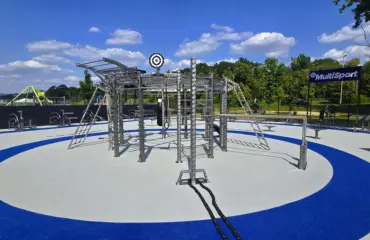
Not every member will use a barbell, and not every session needs one. Bodyweight pressing on a dip station or a calisthenics rig gives a complete chest stimulus with no load to manage, which makes it the movement to programme for beginners, for busy periods when the benches are occupied, and for outdoor or unsupervised areas.
Muscles worked: pectoralis major, triceps.
Execution: hands on the parallel bars, lower until the arms reach roughly a right angle, then press back up while keeping tension in the chest.
Equipment note: a street workout rig or a dip station covers this for a fraction of the cost of a bench station, and it takes traffic that would otherwise queue.
Equipping a chest zone
Ten exercises do not require ten machines. What they require is coverage of four things: a flat and adjustable bench provision with enough benches to match the dumbbell rack, a guided pressing station, an isolation station, and somewhere to do bodyweight work.
Get that right and the zone flows. Get it wrong, usually by buying one more bench instead of one guided station, and you create the queue that members complain about.
Two specification points are worth stating plainly. Indoor equipment in a supervised commercial or public facility falls under EN ISO 20957-1 class S, the class written for professional use with unrestricted access. And dense rubber flooring under the free-weight area is not optional: it protects the slab, cuts noise into adjacent rooms and stops benches and racks moving under load.
Browse the professional weight bench range and the professional dumbbell range to see how bench and dumbbell provision are matched to each other.
Frequently asked questions
How many chest stations does a commercial floor need?
That depends on your peak-hour attendance and your membership profile, so it should be sized against your own figures rather than a rule of thumb. The usual error is too many benches and too few guided stations.
Machine or free weights for chest?
Both. Guided machines let untrained members load the chest safely without a spotter; free weights give range of motion and stabiliser work to those who can use them. A floor with only one of the two serves half its members.
Which bench angle for the upper chest?
An incline between 45 and 60 degrees, which is why the bench needs to be adjustable rather than fixed.
Which standard applies to indoor strength equipment?
EN ISO 20957-1 class S. Ask for the declaration of conformity in writing before ordering.
Planning your strength floor
Tell us the surface area, the expected traffic and the profile of your members, and we will come back with a zone plan, an equipment list and a costed proposal: request a quote.
Light In Fitness has equipped professional sites since 2013, from clubs and hotels to municipal facilities, schools and rehabilitation centres.