Adductor and abductor machine: specifying the Power Line for a commercial gym
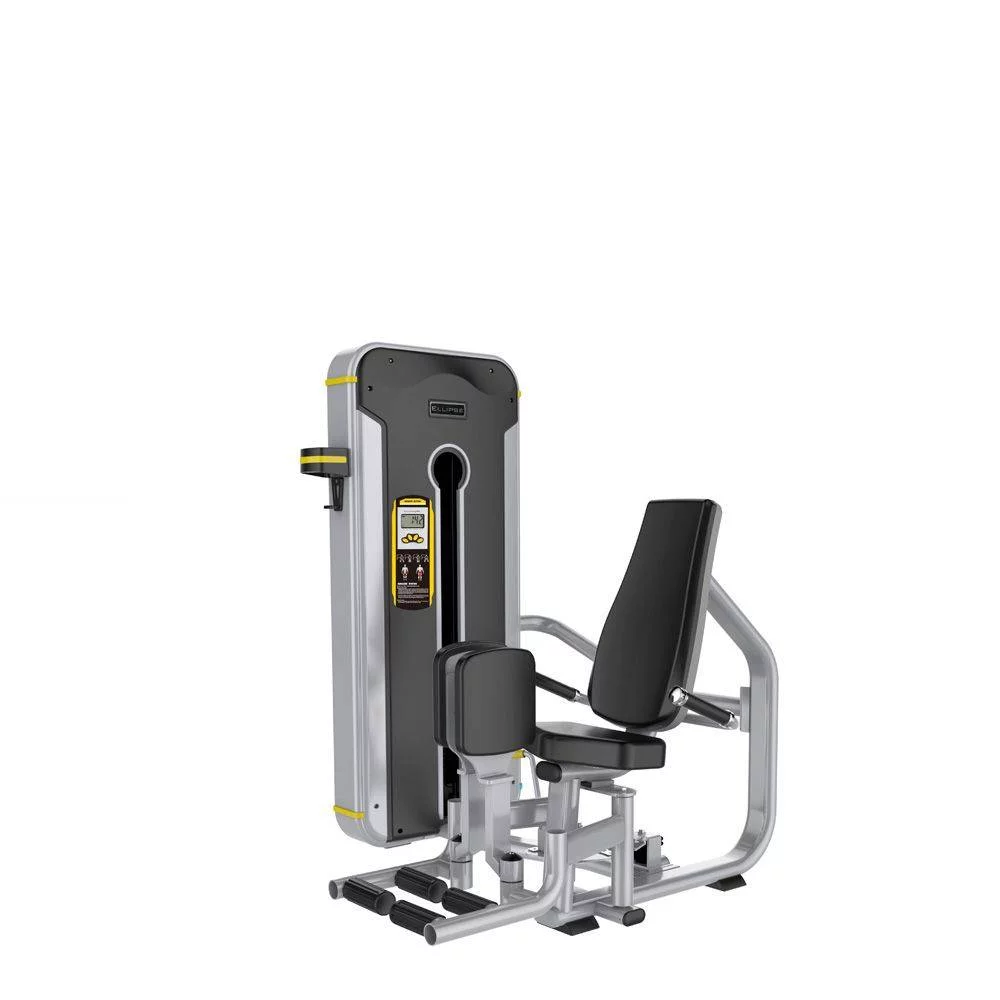
The adductor and abductor station is one of the highest occupancy machines in a commercial gym and one of the least demanding in floor space. It trains the inner and outer thigh through a guided, low skill movement that a member can perform correctly on a first session, which is why it appears in almost every circuit layout from municipal sports halls to hotel fitness rooms. This guide sets out what a professional buyer should look at before specifying one, using the Power Line adductor and abductor machine as the reference model.
What the station does and why operators install it
The machine loads the hip adductors on the closing movement and the hip abductors, notably gluteus medius and minimus, on the opening movement. Both are stabilising groups that squat and press stations load only indirectly. For an operator, three arguments usually decide the purchase.
Throughput comes first. The path is guided, the range is short and setup takes seconds, so the station turns over quickly at peak hours instead of blocking a circuit. Accessibility comes second: seated, supported, with no free weight to handle, it suits deconditioned members, older users and reconditioning programmes without adding supervision cost. Footprint comes third. Two exercises come out of a single frame, which matters once a floor plan is already committed to cardio decks and pressing stations.
Power Line adductor and abductor: the specification that matters
The Power Line unit is a selectorised machine: resistance is set on an integrated weight stack with a selector pin rather than by loading plates. That is the decisive feature for commercial use, because it takes plate handling off the floor and lets a user change load between sets without leaving the seat. The cable runs on high strength nylon pulleys, the accepted norm for a station cycled several hundred times a week.
Pad and seat geometry is adjustable, so the frame accommodates different body sizes and training levels rather than imposing one fixed position. Correct adjustment is not cosmetic. It decides whether travel stays smooth through the full range and whether load actually reaches the intended muscle group.
| Point to check | What to require |
|---|---|
| Resistance system | Integrated selectorised weight stack, pin selection |
| Pulleys | High strength nylon, guided cable path |
| Adjustment | Adjustable pads and seating for different body types and levels |
| Movements | Adduction and abduction from a single frame |
| Standard to specify | EN ISO 20957-1 class S |
| Price | 2,450.00 EUR excluding VAT |
One point is worth being firm about at tender stage. Indoor equipment installed in a facility open to members has to be specified to EN ISO 20957-1 class S. Class S is the professional class. Class I is a professional class designed for inclusive access, not a higher intensity tier above class S, and a supplier offering class H or describing a frame as semi professional is quoting for a different market than yours.
Getting results out of the station
Three habits separate a station that produces progress from one that becomes a rest stop between sets.
Set the pads before selecting the load, not after. The starting width determines the working range, and a range set too wide on the abduction movement pushes members into positions they cannot control. Progress the stack in small increments and keep the tempo controlled in both directions: the eccentric phase, the return under tension, is where a guided station earns its place. And treat it as a complement rather than a programme. Adduction and abduction work sits alongside compound lower body training and cardio conditioning, not instead of it.
For staff, the useful intervention is a thirty second setup demonstration on induction. Members who are shown the pad adjustment once keep using the machine correctly; members who are not tend to leave it on whatever the previous user selected.
Where it sits in a floor plan
In a commercial gym the station belongs in the selectorised circuit, adjacent to leg extension and leg curl, so that a lower body sequence can be completed without crossing the room. In a hotel or residential fitness room, where the equipment list is short and unsupervised use is the norm, it is one of the few lower body stations that can be installed without a member of staff on the floor. In a municipal facility running mixed publics, its value is that it can be used safely by beginners and by older members on the same session plan as regular users.
Plan for cleaning access around the pads and leave enough clearance on the moving side for the arms to travel without a user in the neighbouring station being clipped.
Frequently asked questions
Is one machine enough for both movements?
Yes. The Power Line frame delivers adduction and abduction from the same station, which is precisely why it is specified where floor area is constrained.
Does it suit beginners and unsupervised facilities?
It is one of the more forgiving stations in a selectorised range: the user is seated and supported, the path is guided and there is no free weight to control. It still needs correct pad adjustment and a load appropriate to the user, and every commercial installation should carry clear instruction signage.
What standard should appear in the quotation?
EN ISO 20957-1 class S for indoor equipment in commercial or supervised use. Ask for the declaration at tender stage rather than after delivery.
How much does the Power Line adductor and abductor machine cost?
2,450.00 EUR excluding VAT. Project pricing depends on the rest of the configuration, on delivery and on installation.
Specify your strength floor
Send us your floor plan and the publics you serve, and our technical team returns a station by station configuration with a detailed quotation. See the Power Line adductor and abductor machine, browse the full Power Line selectorised range and the wider strength training machines catalogue, then request a quotation.