Why Invest in a Wooden Outdoor Fitness Trail for Your Park
Un parcours santé en bois s'intègre visuellement à un parc, mais impose un contrôle régulier de l'état du bois et des fixations. Les essences traitées classe 4 résistent au contact permanent avec le sol. Le choix entre bois et métal se fait sur l'entretien acceptable par le gestionnaire.

Wooden outdoor fitness trails are becoming a fixture of public parks and community spaces, because they deliver visible health and wellbeing benefits for a modest capital outlay. This article sets out why a wooden fitness trail is a sound investment for municipalities, park managers and community organisations – and where the real costs sit over the life of the installation.
The financial case for a wooden fitness trail
Durability and service life
Wooden fitness trails are built from robust timber, treated to withstand weather and heavy public use. Use class 4 treated species are rated for permanent ground contact, which is exactly the exposure a trail station sees. That durability translates into a long service life and fewer replacement cycles across the asset register.
Attracting a broad range of users
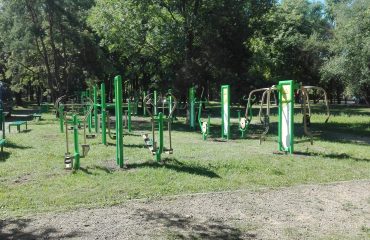
A wooden fitness trail in a park draws a mixed public, from families to recreational athletes. Footfall in the space rises, which is what ultimately justifies the initial investment and feeds back into the vitality of the neighbourhood. Timber also blends visually into a planted park setting in a way that painted steel does not, which frequently matters where the site sits within a protected or landscaped area.
Maintenance costs – and what they actually involve
Upkeep is light: regular cleaning and periodic structural checks are enough to keep a trail in good order. Wood does, however, call for a genuine inspection routine – the condition of the timber and of the fixings has to be checked at set intervals. The choice between timber and steel comes down to the level of maintenance the site manager is willing and resourced to carry out. Where that appetite is low, the wider outdoor fitness trail range includes metal alternatives.
What users get out of it
Varied, complete training
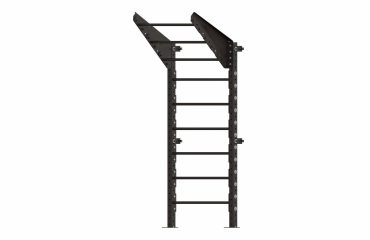
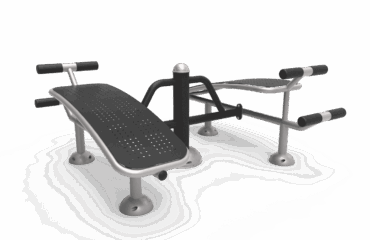
A wooden trail supports a wide spread of exercises, from stretching through to strength and cardio work. That versatility lets users put together a complete session scaled to their own fitness level, station by station along the route. Individual fitness trail stations can be specified separately to fill gaps in an existing circuit.
Accessibility and inclusion
A well-planned trail is open to everyone, whatever their age or fitness level. It encourages inclusive physical activity, letting each user train to their own capacity in a natural setting. Where the brief calls for genuine barrier-free provision, dedicated accessible outdoor gym equipment should be specified rather than assumed.
Building community
Wooden fitness trails encourage social interaction. They quickly become meeting points where residents gather, help each other and share what they are working on, which strengthens the social fabric of the area in a way few pieces of public infrastructure manage.
Regulatory framework
Permanently installed outdoor fitness equipment for adults in publicly accessible spaces falls under EN 16630. Specify to that standard and confirm the inspection regime with your supplier before the site is handed over; national provisions on public open space apply on top of it and vary by country.
Frequently asked questions
How long does a wooden fitness trail last?
With use class 4 treated timber, correct installation and a maintained inspection routine, the structures are designed for many years of public service. Service life depends heavily on the site, the exposure and the upkeep actually performed.
Wood or metal – which should we choose?
Timber integrates better visually into a park and is often preferred on landscaped sites. Metal reduces the inspection burden. Decide on the basis of the maintenance your team can realistically sustain.
Can a trail be extended later?
Yes. Trails are specified station by station, so a circuit can be phased across successive budget years.
Planning your project
Investing in a wooden fitness trail is a sound decision for any authority or organisation looking to offer versatile, durable training provision outdoors. Send us the site, the surface area available and the user profile you are planning for, and we will come back with a station-by-station layout and costing: request a quote.