Strength Machines vs Free Weights: The Professional Case
Every equipment plan eventually comes down to the same arbitration: how much of the floor goes to guided strength machines, and how much to dumbbells and free weights. The two are not rivals so much as different tools, but professional machines carry a set of advantages that matter a great deal when the room is busy and only one member of staff is on the floor.
Guided load means targeted, supervised work
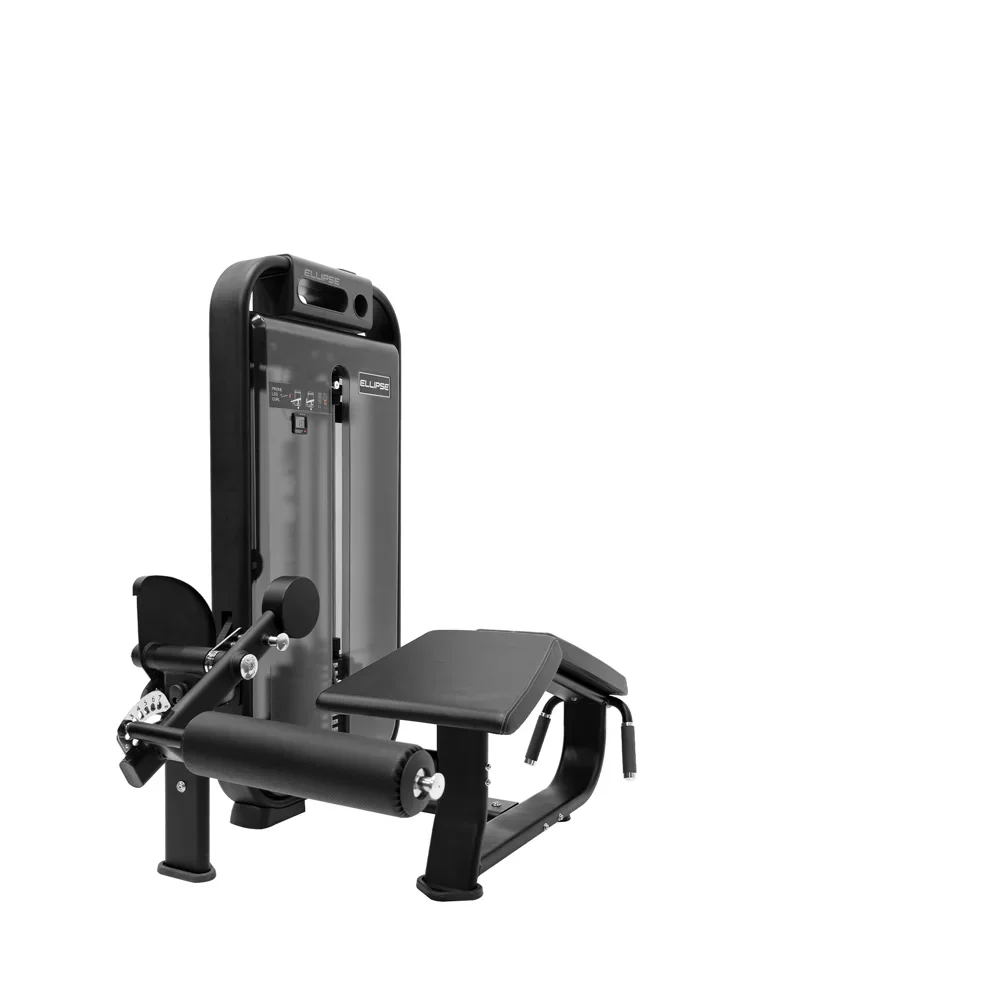
A professional strength machine is designed to load one muscle group at a time. The guided load path keeps the movement on rails, so the user can concentrate on the muscle being trained rather than on stabilising the weight. A chest press machine targets the pectorals; a lat pulldown or assisted pull-up station works the lats and the biceps. With free weights, the same exercise also demands technique, balance and, in most cases, a spotter.
The safest entry point for beginners
Machines are the obvious starting point for a member who has never trained. The adjustable settings – seat height, back pad, range limiters, handle position – let the station be fitted to each user’s build, and the handles hold the body in a correct posture through the movement, which reduces the risk of injury. That matters commercially as much as technically: a beginner who feels safe comes back.
Variety on a limited footprint
Multi-station gyms let several muscle groups be trained on a single frame. One station can cover arms, legs, abdominals and back, which is why they are so often chosen for hotel fitness rooms, residential gyms and any site where floor area is the binding constraint. High and low pulleys on the same frame cover both upper-body and lower-body work without the user leaving the station.
Where free weights still win
Dumbbells and Olympic barbells belong in the same room, not in a different debate. They add variety, they let an experienced user go heavier than a selectorised stack allows, and they train the stabilising muscles that a guided path deliberately takes out of the equation. Plate-loaded machines sit between the two: a guided path, loaded with Olympic discs, for users who want machine safety with free-weight loading.
Comfort, durability and the class that matters
Professional machines are built with firm, supportive upholstery for the back and joints, because a member who is uncomfortable stops mid-set. Underneath the padding, indoor equipment for a professional site should be built and certified to EN ISO 20957-1 class S, the class intended for supervised commercial use. Class I is the professional class covering inclusive, accessible use – it is not a higher intensity grade than class S.
Building the mix
Most commercial rooms end up with three blocks: selectorised machines for guided, beginner-friendly work, plate-loaded machines for heavier targeted loading, and dumbbells with Olympic barbells for the compound movements. The proportions follow your membership, not a formula.
Frequently asked questions
Are machines only for beginners?
No. Beginners benefit most from the guided path, but experienced users rely on machines to isolate a muscle group, to train around an injury, or to push a set safely without a spotter.
Do machines replace free weights?
They do not. Free weights recruit the stabilising muscles and allow loading patterns no machine reproduces. A complete room offers both.
How many stations does a gym need?
That depends on your floor area, your peak attendance and the mix of memberships you sell. It is a layout question rather than a catalogue question, and it is worth answering before ordering.
Can one machine really train the whole body?
A multi-station gym covers arms, legs, abdominals and back on one frame, which is enough for a hotel or residential facility. A commercial gym with peak-hour queues needs separate stations so that several members can train at once.
Specify the right mix
Send us your floor plan, your surface area and the profile of your users, and we will come back with a station-by-station layout and a costed proposal: request a quote.
Réalisations documentées
- Functional Rig inox – installations sur trois continents
- iGreenMill, tapis de course extérieur – installations sur trois continents