Rear Delt Fly with Dumbbells: Technique and Coaching
The rear delt fly with dumbbells is the movement that trains the posterior deltoid and the upper back – the half of the shoulder that pressing work never reaches. On a commercial floor it is the cheapest correction available for the rounded-shoulder posture that comes from a training programme dominated by pushing, and it needs nothing more than a pair of dumbbells and a bench.
Which muscles it trains
The prime mover is the posterior head of the deltoid. Working with it are the rhomboids, the middle and lower trapezius, and the infraspinatus and teres minor of the rotator cuff. That group is what holds the shoulder blade in position and keeps the shoulder joint centred, which is why the movement matters well beyond appearance: members whose posterior shoulder is undertrained relative to their pressing volume are the ones who turn up with shoulder complaints.
How to perform it
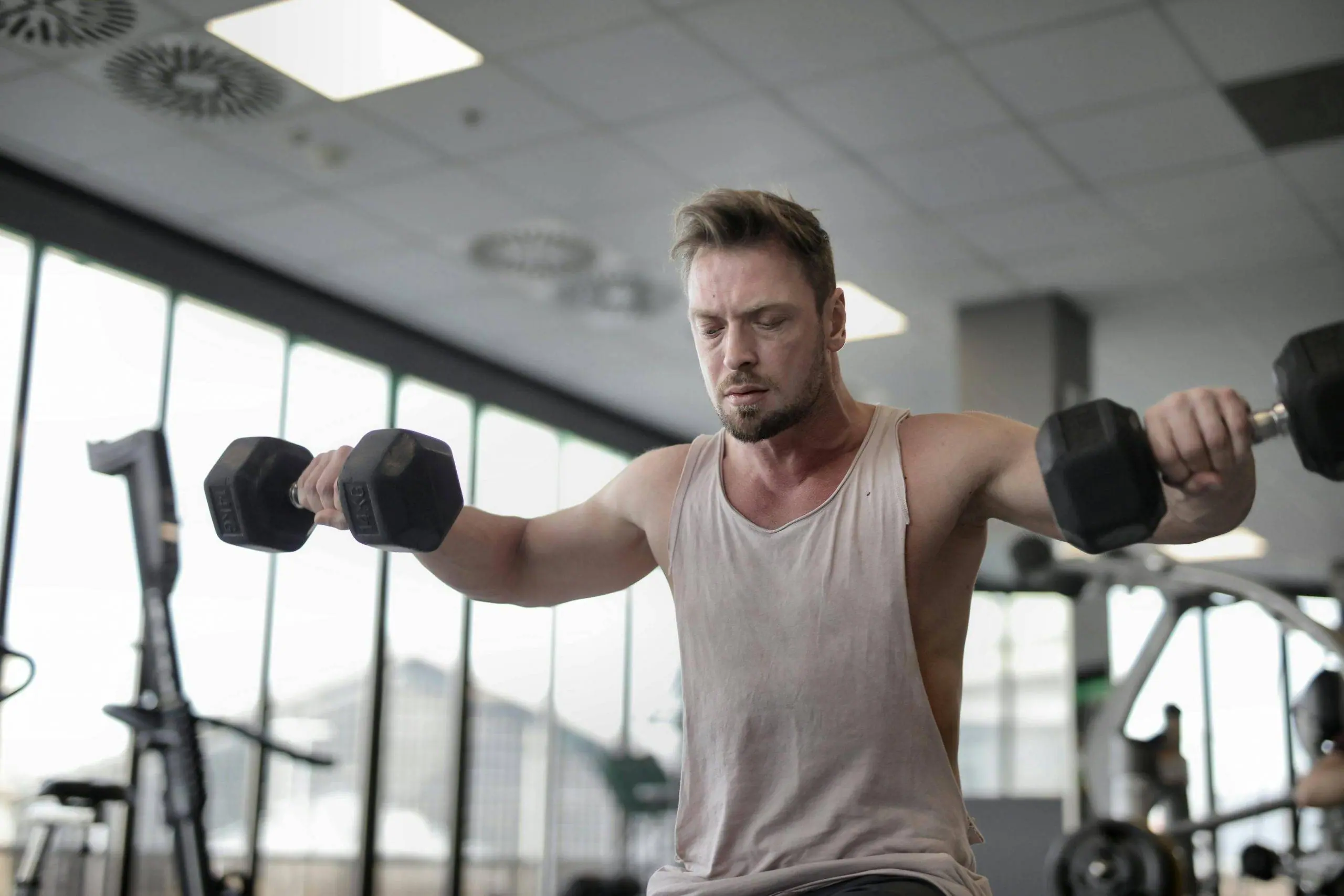
Hinge forward from the hips with a flat back, chest towards the floor, knees slightly bent. Alternatively, lie chest-down on an incline bench set at around 45 degrees, which removes the lower back from the equation entirely and is the better option for most members on a public floor.
Hold a dumbbell in each hand with a neutral grip and the elbows slightly bent – fixed at that angle for the whole set. Raise the arms out to the sides until they reach shoulder height, leading with the elbows rather than the hands. Pause briefly at the top, then lower under control to the start.
The most useful cue is to think about pulling the elbows apart rather than lifting the weights. Members who think about the dumbbells recruit the trapezius and the lats and leave the posterior deltoid almost untouched.
The four faults worth correcting
- Too much weight. This is the origin of every other fault on the movement. The posterior deltoid is a small muscle; the load that trains it looks embarrassingly light next to a press, and that is correct.
- Swinging the torso. Using the hips to throw the weights up removes the tension from the target muscle entirely. If the trunk moves, the load is wrong.
- Shrugging. Letting the shoulders rise towards the ears hands the work to the upper trapezius. Keep the shoulder blades down throughout.
- Rounding the lower back. In the bent-over version, a rounded back under load is a genuine risk. The incline-bench version removes it, which is why it is the safer variation to teach.
Variations worth having on the floor
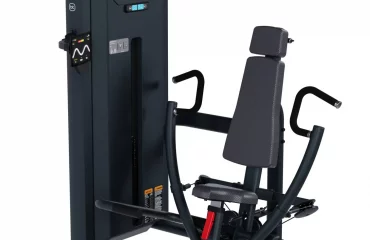
The chest-supported version on an incline bench is the default for a public floor: it removes the lower back, fixes the torso angle and makes the movement almost impossible to cheat. The seated bent-over version, performed sitting on the end of a flat bench with the chest towards the thighs, is a useful alternative when incline benches are occupied. A reverse pec deck covers the same pattern with a guided path, which is why many facilities run both: the machine for high-turnover use, the dumbbells for the coaching and the range of motion.
Programming it
The rear delt fly belongs in the pulling part of a session, or at the end of a pushing session as a balancing movement. Two to four sets in a higher repetition range works for most members, because the load that keeps the movement clean is light by definition. For members whose programme is dominated by pressing, adding rear delt volume is one of the highest-value adjustments a coach can make, and it costs nothing in equipment.
What you need on the floor
A dumbbell range with small increments matters more here than a high top weight – a jump from 6 kg to 10 kg is too coarse for a muscle this size, and members will simply pick the heavier pair and swing it. Pair the dumbbells with adjustable incline benches, and the station is complete.
Frequently asked questions
Which muscles does the rear delt fly work?
Primarily the posterior deltoid, assisted by the rhomboids, the middle and lower trapezius and the external rotators of the rotator cuff.
How heavy should the dumbbells be?
Light enough that the torso stays still and the shoulders stay down for every repetition. If either moves, the load is too heavy – this is the movement where members most consistently over-load.
Bent-over or chest-supported?
Chest-supported on an incline bench, for most members. It removes the lower back from the movement and makes the fault pattern much harder to fall into.
Does a reverse pec deck replace it?
It covers the same pattern with a guided path and higher turnover, which makes it valuable on a busy floor. The dumbbell version keeps a freer range of motion and trains the stabilisers more, so a complete floor carries both.
Browse the professional fitness accessories and the weight benches, or request a quote for a complete free-weight area.
Réalisations documentées
- Functional Rig inox – installations sur trois continents
- iGreenMill, tapis de course extérieur – installations sur trois continents