How to Choose Dumbbells for a Commercial Gym
Choosing the dumbbells for a training floor is a decisive step for any operator equipping a free-weight area. Whether you are fitting out a new gym, refreshing a hotel fitness room or specifying a club’s studio equipment, several criteria decide whether the set will serve your members well and survive the traffic.
1. Types of dumbbell
There are several types on the market.
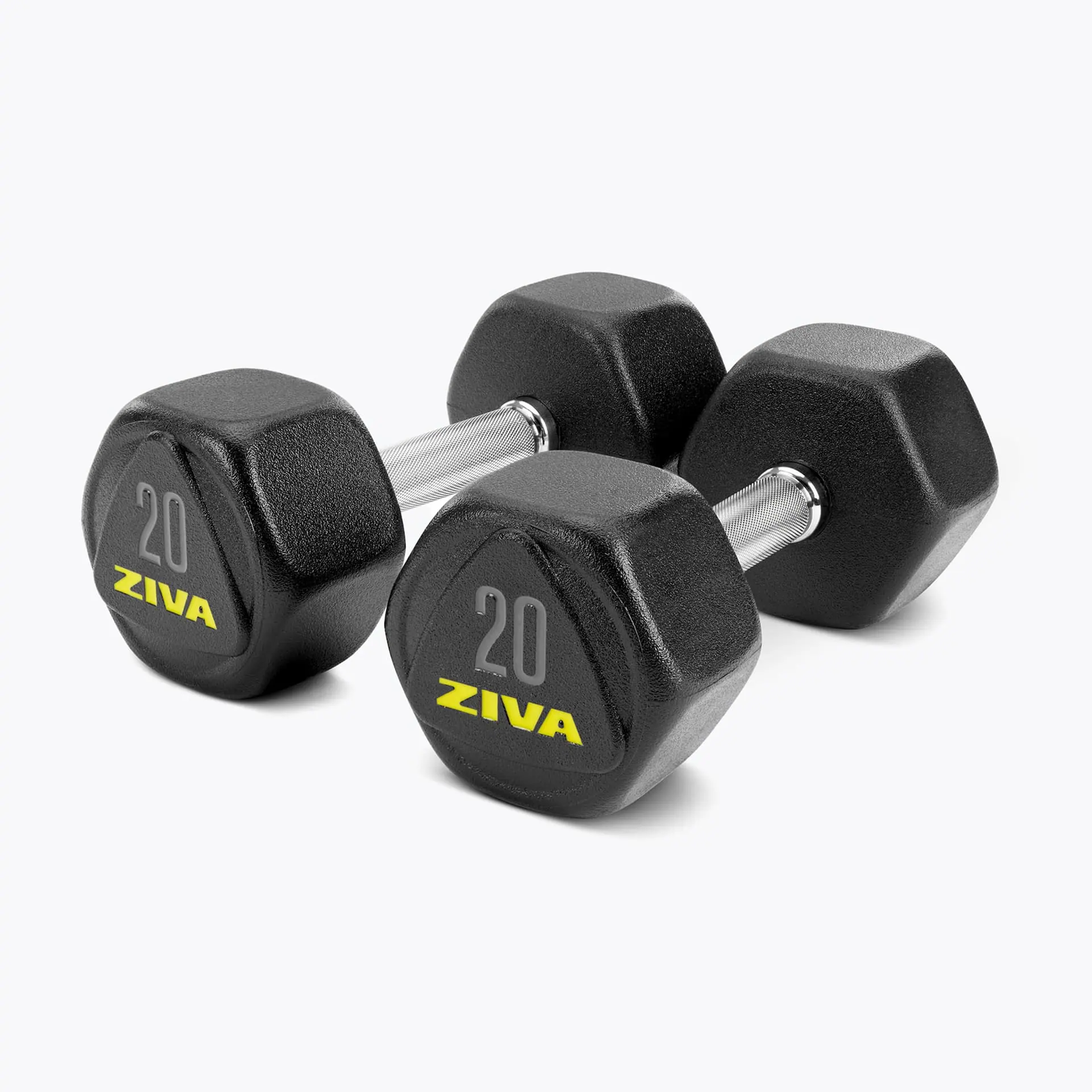
- Fixed dumbbells, often cast iron, are the backbone of a commercial free-weight area. They suit a wide range of work, from the dumbbell bench press to biceps curls, and they need no handling between sets.
- Adjustable dumbbells are a versatile and economical option. They let the load be changed to match the user and the programme, which makes them useful for progressive work without filling the floor with several pairs. On a busy supervised floor, they are usually a complement to a fixed set rather than a replacement for it, because every load change costs time.
2. Weight brackets
The choice of weights is a decisive factor.
- For beginners, lighter dumbbells from 2 to 10 kilos are recommended, so that the basic technique can be learned and injuries avoided. These weights suit muscle groups such as the triceps, the biceps and the abdominals.
- For advanced users, dumbbells from 10 to 30 kilos are needed for more demanding work such as squats or deadlifts. Choosing the right weight lets the user work effectively without overloading the muscle.
On a commercial floor, the practical question is the increment between pairs across that span, and how many pairs of each you hold. Duplicating the mid-range brackets, where demand concentrates, usually matters more than extending the top of the rack.
3. Materials
The material drives both durability and comfort.
- Neoprene-coated dumbbells grip well and are comfortable in the hand, which makes them a good fit for group class studios and conditioning circuits where the loads are lighter and the dumbbell is held for long sets.
- Rubber-coated and cast iron dumbbells are more robust and better suited to intensive use on the gym floor. They stand up better to impact and often carry a non-slip finish, which is what you want for work requiring a secure grip.
The professional dumbbell range sets out the finishes and the weight increments available for a commercial set.
4. Handles
The handle governs how comfortable a dumbbell is to use.
- Ergonomic handles, usually knurled or padded, give a better grip and reduce the risk of injury to the hands and joints during intensive work.
- Adjustable handles also allow the dumbbell to be matched to individual hand size, which raises comfort over a session.
5. Target muscle groups
Choosing dumbbells around the muscle groups you want to serve is essential.
- For upper-body work, chest and back included, a bench paired with dumbbells is an excellent combination. The professional weight benches range covers the flat, incline and adjustable models normally specified alongside a dumbbell rack.
- For abdominal work, basic exercises such as weighted crunches with a single dumbbell get more out of the same session.
6. Storage and floor footprint
Where floor area is tight, adjustable dumbbells and a folding bench save space, but the deciding factor on a commercial floor is the rack.
- Ease of storage matters, particularly on a constrained floor plan. A well-organised free-weight area keeps the equipment visible and the circulation clear, which is what keeps members coming back to it rather than avoiding it.
7. Compatibility with the rest of the equipment
Your dumbbells have to work with the rest of your strength kit.
- Dumbbells used alongside a pull-up bar, a multi-station or selectorised machines open up a much wider range of exercises. That lets several muscle groups be trained and supports balanced development across the membership. The wider professional fitness accessories range covers the bars, plates and functional kit that complete a free-weight zone.
Frequently asked questions
Fixed or adjustable dumbbells for a commercial floor?
Fixed dumbbells for the main free-weight area, because no time is lost changing the load between sets and the equipment survives being dropped. Adjustable dumbbells make sense in studios and satellite rooms where floor area is the binding constraint.
Which weight range should a gym stock?
That depends on your membership profile. A set covering the beginner bracket and the intermediate bracket serves most floors, with the mid-range pairs duplicated because that is where demand concentrates. The exact spread is a floor-plan question worth resolving with your supplier.
Rubber or cast iron?
Rubber-coated dumbbells protect both the floor and the dumbbell when dropped, and they are quieter, which matters in a room with neighbours above or below. Bare cast iron is more compact for the same load and takes wear well, but it is harder on the floor covering.
Conclusion
In short, choosing dumbbells means weighing several criteria at once: the weight range, the type, the material and the grip. Whether your members are beginners or advanced, a set matched to their objectives lets them progress and gets results out of the space. A good choice of dumbbells, combined with varied work such as pull-ups, squats and rows, improves overall conditioning and supports the goals your members came in with, whether that is hypertrophy, toning or general strength.
Take the time to assess what your floor actually needs before deciding. If you want a set sized against your floor plan and your membership, request a quote and our team will put a configuration together.