Professional Leg Press Machine: Everything You Need to Know
In brief: the leg press loads the quadriceps, hamstrings and glutes with the back supported against a backrest. It allows heavy loading while limiting the stress on the spine, which makes it suitable for beginners and for rehabilitation alike. Range of motion is set before load is added, not after.
If you are equipping a strength floor and need a station that develops the legs for every profile of user, the professional leg press is the equipment that does it. This article sets out what the machine is, what it delivers, how it should be used and what results members can expect from it. Whether your users are competitive athletes or people starting out, this station lets them strengthen the thigh muscles effectively and safely.
What is a professional leg press?
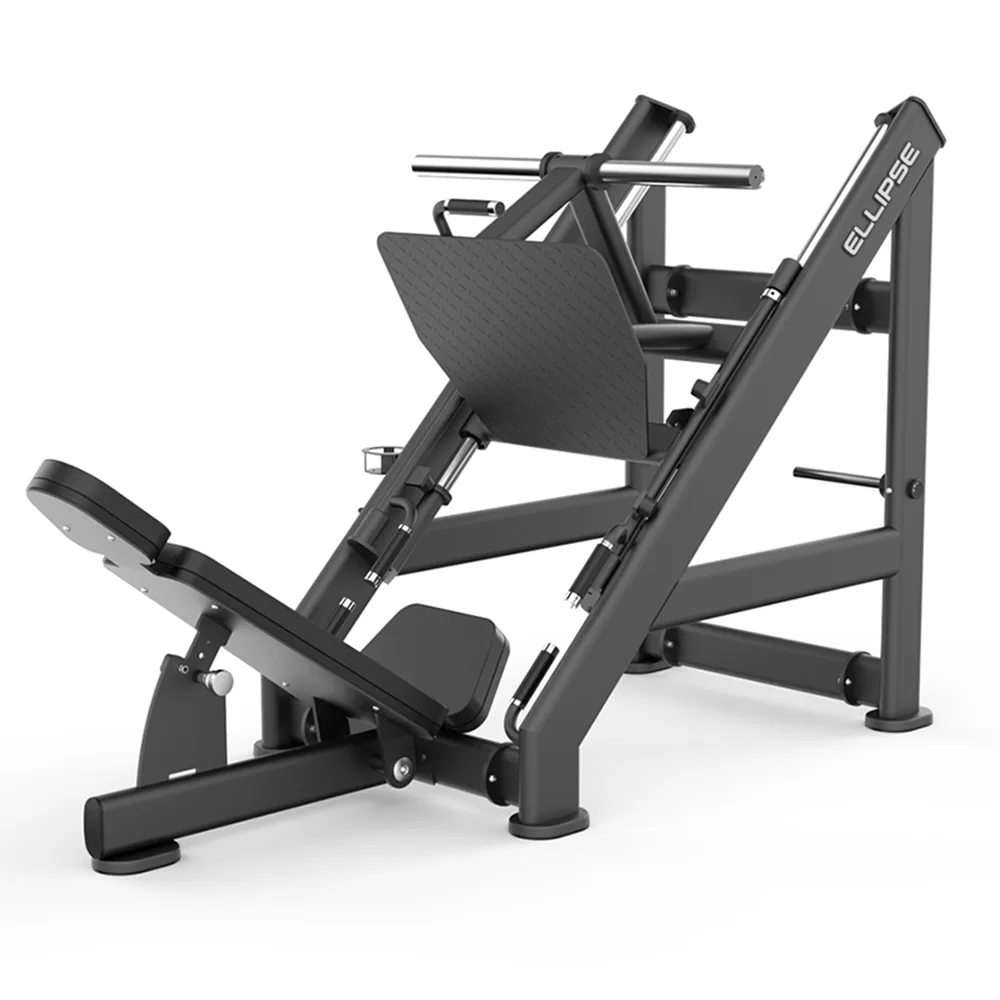
The professional leg press is a piece of fitness equipment designed specifically to load the muscles of the thigh. It consists of a seat, an inclined backrest and a platform on which the user places their feet. Using the strength of the legs, the user pushes the platform away, which loads mainly the quadriceps, the muscles at the front of the thigh.
The machine is found in gyms, fitness centres, clubs, rehabilitation facilities and sports institutions. It is particularly valued by athletes and strength trainees for how directly it loads the thigh, and by supervised settings for how much control it gives over trunk position.
Two configurations dominate. The vertical leg press uses gravity directly and takes up little floor area; the 45-degree incline press gives a longer stroke and is the format most members recognise. Both appear in our vertical leg press range, and both are plate loaded, which puts them alongside the rest of our plate-loaded machines.
The benefits of a professional leg press
Using a professional leg press brings advantages that are both functional and visible. The main ones are these:
- Targeted strengthening – the leg press loads the thigh muscles specifically, the quadriceps in particular. Used regularly, it strengthens and tones the thigh in a way that is difficult to achieve as directly with any other station.
- Improved sporting performance – strong, powerful thighs are essential in many sports, from running to high jump and cycling. Strengthening them on this machine improves performance in those disciplines.
- Injury prevention – well-developed thigh muscles contribute to the stability and protection of the knee joint. Strengthening them reduces the risk of injuries associated with sporting activity.
- Muscle mass – where the goal is to build mass in the legs, the leg press is the right station. Combined with regular training and appropriate nutrition, it develops fuller, stronger thighs.
- Comfort and safety – professional leg presses are built to offer maximum comfort and safety during training. They generally have an ergonomic seat and an adjustment system that adapts to the user, which allows the exercise to be performed in an optimal position with no risk of injury.
How to use a professional leg press
Before using the machine it is important to understand how it works and what good practice looks like. These are the steps to follow for effective and safe use:
- Setting the machine – before starting, adjust the seat and backrest to the user height and build. Check that the feet are correctly placed on the platform and that the knees track in line with the feet.
- Starting position – sit on the seat with the back flat against the backrest and the feet flat on the platform. Take hold of the handles on each side of the seat to stabilise the trunk.
- Performing the movement – push the platform away using the strength of the legs, extending the knees fully but without locking them out. Control the return, bringing the platform slowly back. Repeat for the required repetitions.
- Breathing – breathe in as the platform comes down and out as it is pushed away. Controlled breathing helps maintain posture and makes the exercise more effective.
- Sets and repetitions – these depend on conditioning and objectives. Start with sets of 8 to 12 repetitions and increase load or repetitions progressively as the user improves.
- Warm-up and stretching – before using the machine, warm up with a few mobility and stretching exercises. This prepares the muscles and helps avoid injury.
On a commercial floor, the point that most often goes wrong is the first one. Range of motion is set before load is added: a member who loads the machine and then discovers the seat is in the wrong position will simply shorten the movement rather than stop and readjust.
Results to expect
Used regularly, a professional leg press produces significant results in the legs. These are the outcomes members can reasonably expect:
- Muscle development – stronger, better-toned thighs, with the quadriceps more visible and a more balanced lower body.
- Power and explosiveness – the exercises performed on this machine are well suited to developing power in the thigh, which shows up in sprinting, jumping and cycling.
- Stability and balance – strengthening the thigh improves stability and balance, which benefits many sports and everyday activity alike.
- Injury prevention – well-conditioned thighs protect the knee joint and reduce the risk of injury during sport.
- Confidence – visible progress in strength and appearance builds confidence, and a member who can see progress is a member who renews.
Frequently asked questions
What is the difference between a professional leg press and a standard one?
A professional leg press is distinguished by its build quality, robustness and service life. It is designed for intensive use in gyms and generally offers more adjustments and more options for tailoring the exercise to the user.
How often should the leg press be used?
Frequency depends on objectives and conditioning. In general, two to three sessions a week give good results.
Is the leg press suitable for beginners?
Yes. It suits beginners well, provided they start with light loads and master the movement before increasing the weight. The supported back is exactly what makes it accessible.
Which exercises complement the leg press?
To develop the legs completely, add squats, lunges, leg extensions and deadlifts to the programme.
Can it be used with knee problems?
Anyone with knee problems should consult a health professional before using the machine. They can advise on the exercises suited to that condition and help prevent further injury.
How long should a leg press session last?
That depends on conditioning and objectives. In general, a session of 30 to 45 minutes is enough to load the thigh muscles effectively.
Specifying a leg press for your facility
The professional leg press is a core station for developing the legs. Used regularly it delivers real results in muscle development, power, stability and injury prevention, for competitive athletes and general members alike. Users should consult a health professional before starting any training programme and follow good practice to stay safe and effective.
For an operator, the questions that matter before buying are the footprint, the loading height, the minimum usable load and the range of adjustment, because those decide how many of your members can actually use the station. Tell us your surface area and your user profile and we will size it for you. Request a quote and our technical team will come back with a configuration.