The Professional Health and Sport Facility: A Guide for Operators
Une structure sport-santé professionnelle organise la pratique encadrée de l'activité physique à des fins de santé, pour des publics souvent éloignés de la pratique sportive. Elle se distingue d'une salle de fitness par son encadrement, ses protocoles et son matériel accessible. L'activité physique régulière agit sur la santé physique comme sur la santé mentale.
In short: a professional health and sport facility organises supervised physical activity for health purposes, most often for people who are far from regular sport. What separates it from a fitness club is not the equipment brand but the supervision, the protocols and the accessibility of the machines.
What a health and sport facility actually is
The phrase is used loosely, and that is the first thing an operator has to correct in their own brief. A health and sport facility is not a gym with a softer timetable. It is a structure whose purpose is to deliver physical activity as part of a health pathway: participants are referred or self-refer with a health objective, a qualified professional assesses them, and the sessions follow a written protocol with a defined progression and a defined end point.
Three consequences follow immediately. Supervision ratios are tighter than on a commercial gym floor. Equipment has to be usable by people with limited mobility, limited confidence or both. And the facility has to be able to document what a participant did, because the referring professional will ask.
The audiences a health and sport facility serves
The catchment is broader than most business plans assume, and it rarely overlaps with a fitness club membership. It includes adults returning to activity after a long sedentary period, older people working on balance and functional autonomy, participants in cardiac or metabolic rehabilitation programmes, people managing chronic conditions under medical follow-up, and employees referred through an occupational health scheme.
Each of those groups arrives with a different tolerance for effort and a different relationship to the room itself. A machine that intimidates a first-time user is a machine that will not be used, whatever its specification. This is why layout and legibility matter as much as the mechanical quality of the equipment.
Why physical activity belongs in a health pathway
The physical case is well established, and it is not the only one. Regular activity is associated with better mood and lower perceived stress, and participants routinely describe the mental benefit before the physical one. For a facility, that reported benefit is what drives attendance: people come back to a session that makes them feel better, not to a session that they have been told is good for them.
The same mechanism explains why activity has become part of workplace health programmes. Better sleep, better stress tolerance and better concentration are the outcomes employers are buying, and they translate into fewer health-related absences. Discipline, persistence and time management are habits that participants build in the sessions and carry into the rest of their week, which is why adherence to a structured programme tends to hold better than adherence to unsupervised exercise.
None of this replaces medical care. A health and sport facility works alongside the health professionals who refer to it, and its value comes from that relationship rather than from any claim it makes on its own.
Equipping the facility: accessibility comes first
Specification starts from the least able user you intend to accept, not from the most able. In practice that means low step-over heights, seats that can be reached without a transfer, load increments small enough to be meaningful at the bottom of the range, clear and legible adjustment markings, and handles that can be gripped by someone with reduced hand strength.
Indoor equipment must be built and certified to EN ISO 20957-1 class S, the studio class for supervised professional use. Class I designates professional equipment designed for inclusive access; it is a separate scope, and it is exactly the scope a health and sport facility should be asking about. It is not a higher intensity grade sitting above class S, and a supplier who presents it that way has misread the standard.
On the cardio side, low starting speeds, wide decks, long handrails and clear consoles matter more than peak performance figures. Our professional cardio equipment range covers the seated and supported formats that suit deconditioned users. For strength work, guided machines with small increments cover most of the programme, with free weights reserved for participants who have progressed to them.
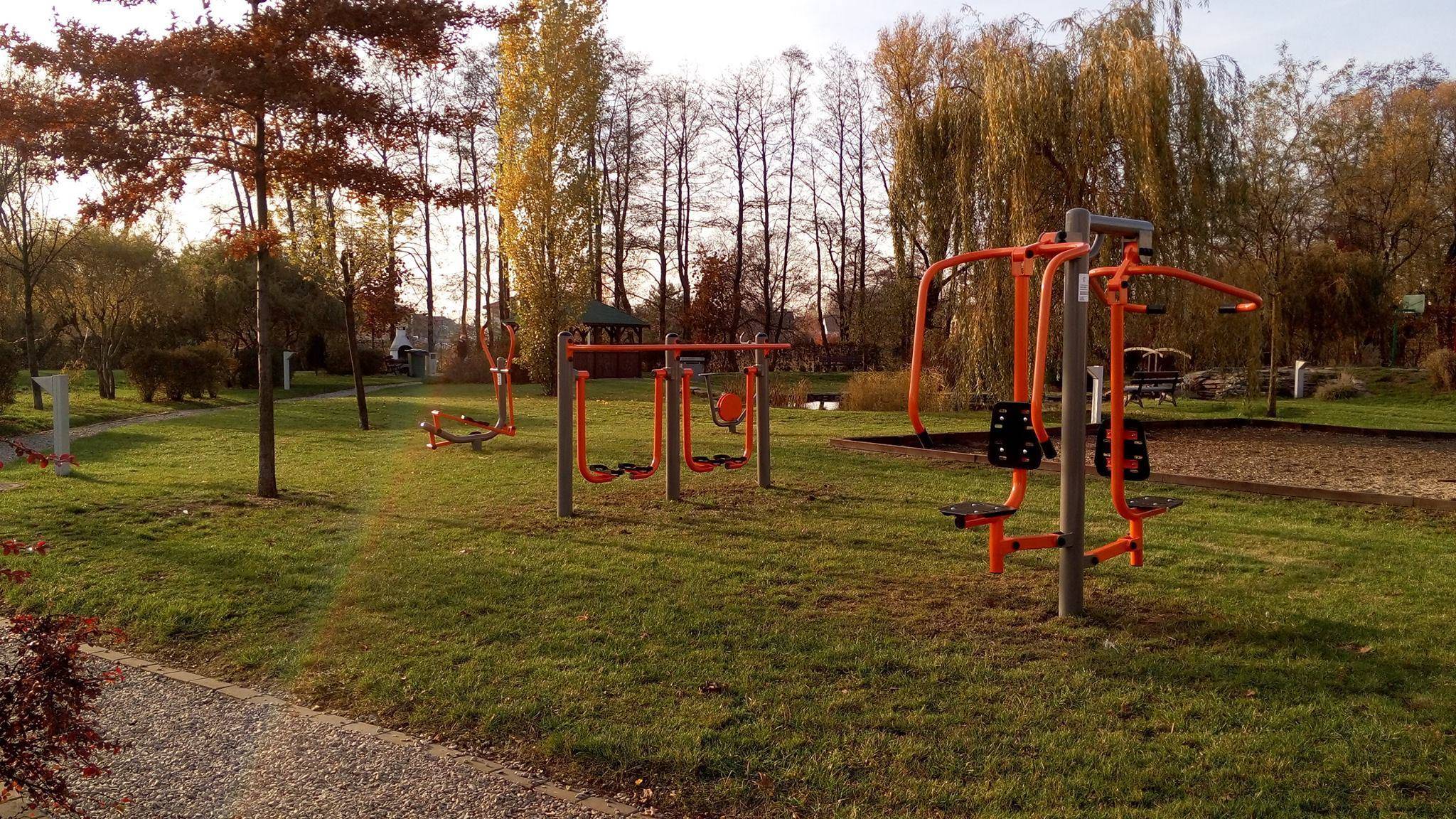
Outdoor provision extends the offer and costs far less per user than indoor floor area. Rehabilitation outdoor fitness equipment and an accessible outdoor gym designed for wheelchair users let a facility run sessions in the open air and serve a wider local population, including people who will not walk into an indoor gym at all. Outdoor adult equipment falls under EN 16630; where a site also carries children’s play equipment, that is governed by EN 1176-1 with impact attenuating surfacing to EN 1177, and the two families must never be mixed on the same structure.
Layout, zoning and the first impression
The room does a large part of the work. Wide circulation lanes, natural light where possible, a clear route from the door to the first station, and no dense wall of machines facing a newcomer. Group space matters: many participants engage far more readily in a small supervised group than alone on a floor, and the group format is also the more efficient use of staff time.
Plan a quiet area for assessment and for the conversations that go with it. Plan storage, because mats, small weights and functional accessories accumulate and a cluttered floor is a trip hazard in a room whose users are precisely those most at risk from one.
Running it so that it lasts
Set measurable objectives for each participant and record progress against them, because that record is what sustains the referral relationship. Build the timetable around the staff you actually have rather than the staff you hope to recruit. Schedule maintenance formally: equipment used daily by supervised groups wears differently from equipment used sporadically, and a machine out of service in a small facility removes a whole programme, not just a station.
Finally, be realistic about progression. Participants who enjoy the sessions keep coming; participants held to a rigid programme they cannot follow drop out. A facility that plans for flexibility retains people over years rather than weeks.
Frequently asked questions
How does a health and sport facility differ from a fitness club?
By its supervision, its written protocols and its accessible equipment. Participants follow an individual pathway with a defined objective rather than buying open access to a floor.
What equipment class should a health and sport facility specify?
EN ISO 20957-1 class S for indoor equipment. Where inclusive access is part of the brief, ask specifically about class I, which covers professional equipment designed for accessible use; it is a different scope, not a level above class S.
Is outdoor equipment suitable for this audience?
Yes, and it widens the catchment considerably. Adult outdoor fitness equipment is covered by EN 16630, and accessible stations allow wheelchair users to train alongside everyone else. Children’s play equipment follows EN 1176-1 with EN 1177 surfacing and belongs in a separate area.
Planning your facility
Tell us the audiences you intend to serve, the surface available indoors and outdoors, and the supervision you can staff, and we will propose a zoning plan and a costed equipment list built around accessibility. Request a quote and we will work from your brief rather than from a catalogue page.