Gym Equipment Rankings: How Professional Buyers Should Read Them
Un appareil destiné à un usage domestique relève des classes H de la norme EN ISO 20957, dimensionnées pour quelques heures d'usage hebdomadaire. Un usage collectif, même familial élargi, appelle une classe supérieure. Les classements indépendants restent utiles à condition de vérifier cette classe avant comparaison.
Comparison tables and independent rankings are everywhere: best treadmills, best cross trainers, best strength stations. They are a reasonable place to start a shortlist and a poor place to end one. A ranking is written for a reader in general; a purchase order is written for one room, one opening schedule and one user profile. Here is what these lists genuinely tell a professional buyer, what they leave out, and which criteria decide the outcome once the equipment is installed and used every day.
What an independent ranking actually measures
A serious ranking compares what is easy to compare: declared motor power, frame weight, running surface or footplate dimensions, console features, announced warranty and price bracket. These are real data points, and they do separate a credible machine from a weak one. The exercise stays useful only if the list is maintained, because the market moves quickly: ranges are replaced, electronics change, and a comparison written several years ago describes equipment that is no longer on sale.
What a ranking cannot measure is your context. It does not know how many hours a day the machine will run, whether users are supervised, how far your technician has to travel, or how much clear space the fire strategy leaves around the row. Those variables change the answer far more often than a two-point difference in a scoring grid.
Equipment class comes before ranking position
The first filter is not the podium, it is the class declared under EN ISO 20957-1. Equipment installed in a gym, a hotel, a residence, a club, a school, a barracks or a rehabilitation centre must be specified in class S, the class designed for supervised use in facilities open to users other than the owner. Class I designates professional equipment built for inclusive access; it is an accessibility category, not a higher intensity tier above class S.
A general-audience ranking rarely states this, because it is written for a different reader. If a machine on the list does not carry a class S declaration, its position in the table is irrelevant to a facility: the frame, the bearings and the electronics were sized for a different duty cycle, and the warranty will normally exclude use by a paying or shared user base.
Cardio: the criteria most rankings underweight
On treadmills the decisive figures are the usable belt length and width against the height and stride of your tallest regular users, the continuous rather than peak motor rating, deck and belt service life, and how quickly a belt or a controller can be replaced. A belt that is short relative to a user cadence is uncomfortable, and discomfort in a shared facility translates directly into a machine nobody chooses.
Cross trainers, indoor cycling bikes and rowers follow the same logic: stride length and pedal spacing decide comfort, flywheel and resistance design decide durability, and consumable parts decide the true cost over five years. A shortlist built from a professional treadmill comparison should always be re-checked against the treadmill ranges built for continuous use, where those figures are published rather than implied.
Strength equipment: the ranking versus the floor plan
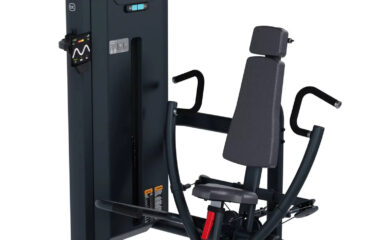
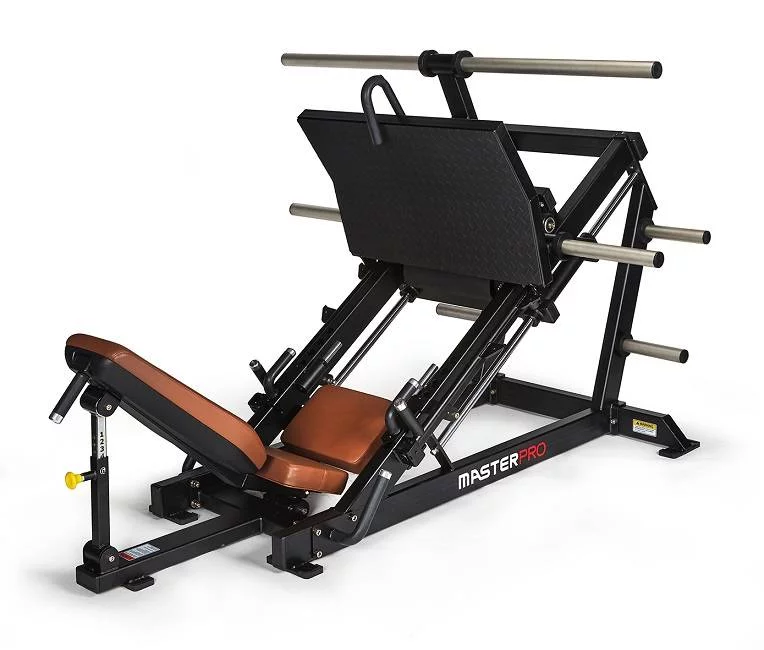
For strength training machines the ranking position tells you little about what matters on site: the number of exercises delivered per square metre, the circulation space needed between stations, the biomechanics of the movement path, and how quickly a cable or a pad can be changed without taking the station out of service for a week. A machine that scores well and forces you to remove two others from the room is not the better purchase.
Footprint constraints are the reason many comparisons highlight compact or folding designs. Folding frames and transport wheels are genuinely useful in multi-purpose halls and hotel rooms that change layout, but they are a trade-off: every hinge is a moving part to inspect. In a room used continuously, a fixed frame usually costs less over its life.
What changes on a site open to users
Once equipment is accessible to members, residents, pupils or staff, three things change. Duty cycle rises from a few hours a week to most of the opening day. Liability moves to the operator, which makes documentation, assembly records and periodic inspection part of the purchase rather than an afterthought. And spare parts availability becomes a commercial issue, because an unavailable machine is lost revenue and an unhappy user.
This is also why the strongest models sit at the higher end of most tables. The price gap is rarely margin; it is frame steel, bearing quality, controller design and a parts chain that still exists in seven years.
Manufacturers you will meet in these tables
Rankings regularly cite Light In Fitness, Bodytone, Ziva and Xebex among others. Brand reputation is a useful shortcut for a first-time buyer, but it should be verified at range level rather than at brand level: most manufacturers sell several tiers, and only some of those tiers are declared for facility use. Ask which specific range the quoted model belongs to, and what its declared class is.
Frequently asked questions
Is the top-ranked machine always the right choice for a facility?
No. Rankings score a product in isolation. The right choice depends on duty cycle, room dimensions, user profile and service coverage, none of which appear in a scoring grid.
How often should a ranking be re-checked?
Before every project. Ranges are replaced regularly, and a list that is not dated should be treated as unverified.
What single specification should be checked first?
The class declared under EN ISO 20957-1. If class S is not stated for the exact model, the rest of the comparison does not apply to a professional installation.
Do compact machines compromise durability?
Not necessarily, but folding mechanisms and light frames add inspection points. In a room in constant use, a fixed frame is usually the safer specification.
From shortlist to specification
Use rankings to narrow the field, then convert the shortlist into a specification: declared class, continuous duty figures, footprint with circulation, spare parts lead time and warranty terms for professional use. Our team reviews layouts and user profiles before recommending a configuration. Request a quote with your room dimensions and opening hours, and we will return a configuration that matches the way the equipment will actually be used.
Sources et références
- NF EN ISO 20957-1 – équipement d’entraînement fixe, partie 1 : exigences générales de sécurité et méthodes d’essai (AFNOR)
- AFNOR Normalisation – dossier thématique sur les appareils d’entraînement fixes et leurs classes d’usage