The NASM OPT Model: Five Training Phases and the Equipment Each One Needs
The OPT model, for Optimum Performance Training, is the programming framework published by the National Academy of Sports Medicine. It organises training into five progressive phases, from stabilisation through to power. For a personal training studio or a club with a coaching offer, it is more than a coaching theory: it dictates which equipment has to be on the floor, in what quantity, and in which zone. This guide runs through the five phases and what each one asks of your facility.
Why a phased model matters to an operator
A progressive model gives every member a defined entry point and a defined next step, whatever their starting condition. That matters commercially as much as technically: a client who can see the next phase renews, and a coach working to a documented framework can hand a client over to a colleague without losing the thread. The five phases also map cleanly onto zones, which is what makes the model useful when you are laying out a floor rather than writing a single session.
Phase 1: stabilisation endurance
Stabilisation prepares the body, and in particular the neuromuscular system, to adapt to the higher intensities that follow. It builds balance, mobility and coordination before load is added.
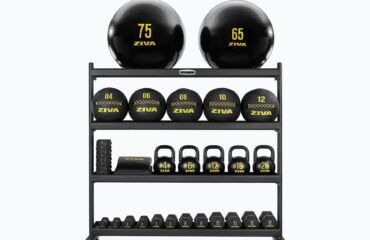
This phase applies to every client profile, not only beginners: weight loss, strength, endurance and post-injury reconditioning all start here. In facility terms it is the least equipment-hungry phase and the most space-hungry one. It needs open floor, a stable surface and small accessories rather than machines.
Phase 2: strength endurance
Strength endurance takes the base built in phase 1 and teaches the client to handle heavier loads without compromising position or safety. The benefits reported by coaches are better posture and greater stability under load, and a lower rate of form breakdown mid-session.
Programming this phase means working with the exercise selection, the load, the repetition scheme, the intensity and the recovery interval together, not one at a time. On the floor it is the phase where functional training rigs earn their footprint, because a rig lets several clients work different stations at the same tempo.
Phase 3: hypertrophy or muscular development
Hypertrophy is the growth of muscle fibres, and the increase in muscle cross-section that comes from regular, sufficiently demanding training. Its benefits go beyond appearance: it corrects muscular imbalances and raises resting energy expenditure.
Set expectations with clients rather than selling a transformation. Visible development takes months of consistent work, not a week of dumbbell sessions. This phase is where a club needs depth of load selection: this is the moment members stop sharing one rack and start needing a full strength training machine line and a coherent free weight area.
Phase 4: maximal strength
Maximal strength is the ability to lift the heaviest possible load for a single repetition. Working on it raises bone density and improves everyday functional strength, and it gives the client a measurable benchmark to work against.
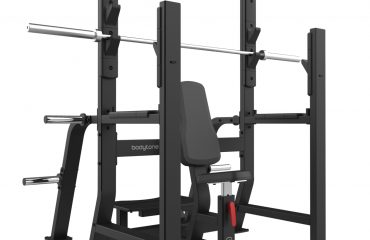
It is programmed with heavy resistance and low repetitions, and it is the phase where supervision and a full warm-up stop being optional. The equipment consequence is direct: certified racks, a proper platform area and Olympic barbells rated for the loads your strongest members actually lift.
Phase 5: power
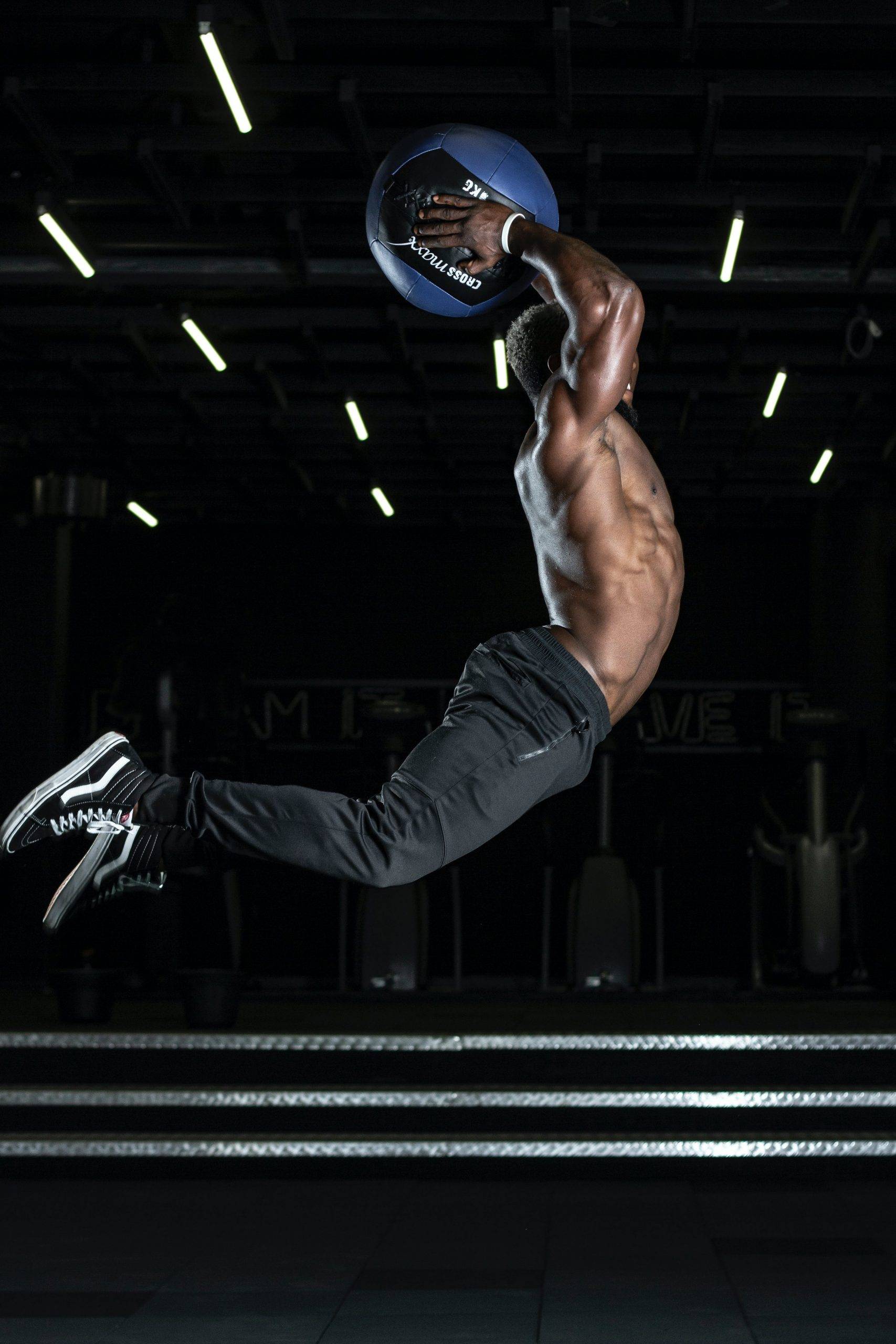
Power is not heavier lifting, it is the speed at which force can be produced. A client who has built stability, endurance, size and maximal strength can now express that strength quickly.
It is programmed with explosive, accelerative and resisted work. It needs impact-tolerant flooring, throwing and landing space, and the clearance around the rig that most floors only discover they lack once someone starts doing it.
Equipping a floor for all five phases
| Phase | What the floor has to provide | Typical range |
|---|---|---|
| 1. Stabilisation | Open, stable surface and small accessories | Fitness accessories |
| 2. Strength endurance | Multi-station work at a shared tempo | Functional training rigs |
| 3. Hypertrophy | Depth of load selection, guided and free | Selectorised and plate-loaded machines |
| 4. Maximal strength | Racks, platform, heavy bars, supervision sightlines | Racks and cages |
| 5. Power | Impact-tolerant floor and clearance | Sports flooring and rigs |
All equipment specified for a commercial floor should be professional grade to EN ISO 20957-1 class S. Class I is the professional class for equipment with inclusive access, not a step above class S.
Frequently asked questions
Does every client have to start at phase 1?
Yes, in the logic of the model. Stabilisation is the phase that makes the following four safe, and skipping it is what produces the form breakdown coaches then spend months correcting.
Can a small studio run all five phases?
Yes, if the equipment is selected for versatility rather than volume. A rig, a rack, a bar set and an accessory wall cover four of the five phases; the constraint is usually clear floor area for phases 1 and 5, not machine count.
How does the model change the layout of a room?
It groups the room by intensity rather than by muscle. Open floor and accessories at one end, rigs and cardio in the middle, racks and heavy loading at the other, with supervision sightlines running the length of the room.
Does the model apply outside personal training?
It transfers well to small group training, to corporate and hotel gyms with a coaching offer, and to reconditioning work, because the progression is defined by the client capacity rather than by the setting.
Building the floor behind the method
A programming model is only as good as the equipment available to run it. Tell us the phases you actually want to coach, the number of clients per session and the free area you have, and we will put together an equipment plan and a quotation for the whole floor. Start here: request a quote.
À lire aussi sur le même thème
- Repoussez vos Limites: L’Art de l’Entraînement en Résistance pour une Forme Physique Optimale
- Comment vraiment obtenir six pack abs : 8 exercices pour la force et la définition
- Bases du soulevé de terre roumain rdl “romanian deadlift”
- Accumulation d’acide lactique dans les muscles : Ce que vous pouvez faire pour y remédier