Machine Lateral Raise: Technique, Programming and Equipment
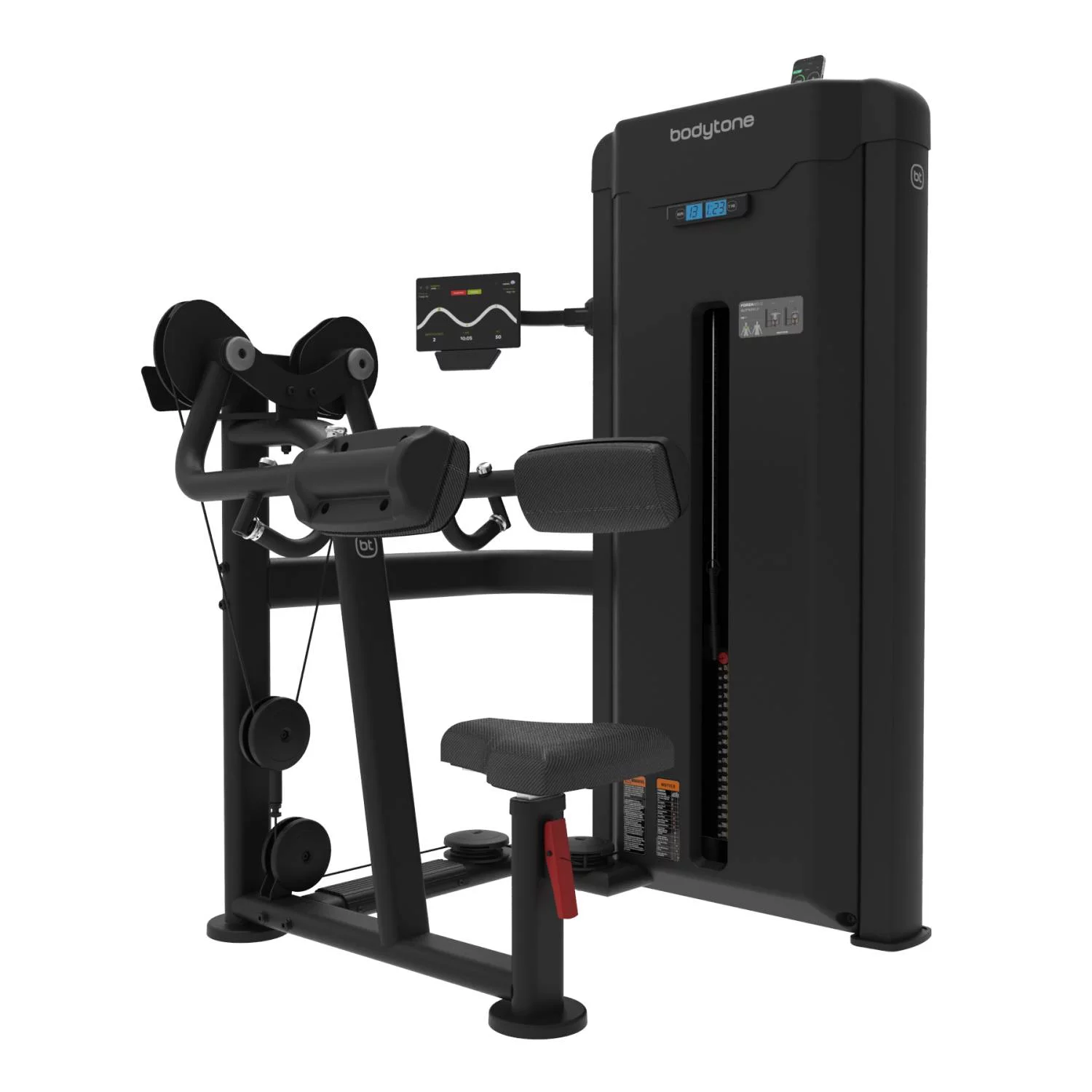
The machine lateral raise isolates the lateral head of the deltoid with a guided path and a constant resistance, which is exactly what free weights cannot do. For a coach it is one of the cleanest teaching tools on the floor; for an operator it is a station that gets used every day and rarely sits idle. This guide covers what the machine does, how to coach it, how to programme it and what to look at before adding one to a strength floor.
What the machine lateral raise is
The lateral raise is a shoulder abduction movement: the arms travel out to the sides against resistance, and the lateral head of the deltoid does the work. Performed with dumbbells the load is at its lightest exactly where the muscle is longest and at its heaviest at the top of the range, so the tension curve is uneven and the movement is easy to swing.
A dedicated machine changes that. The resistance is applied through a guided path with pads set against the upper arms, so the load stays consistent through the whole range and the trajectory is fixed. The result is a smooth, controlled repetition in which the deltoid stays under tension from start to finish, and in which a beginner cannot cheat with the lower back.
Why it earns its place on a strength floor
- Targeted work. The lateral deltoid is isolated rather than assisted by the trapezius and the rest of the shoulder girdle.
- Constant resistance. Unlike dumbbells or elastic bands, the machine keeps tension on the muscle throughout the movement, which is what makes the set count.
- Controlled movement. The guided path lowers the risk of poor execution, which matters on a floor where most members train unsupervised.
- Adjustable intensity. The load is selected in steps, so the same station serves a first week member and an advanced lifter without any change of setup.
That last point is the operator argument. A station that suits every level of member is a station that is occupied, and occupancy is what justifies its footprint. Compare the guided load families on the selectorised machines page.
Coaching the movement
- Set the seat so that the pivot of the machine lines up with the shoulder joint, and sit with the feet about shoulder width apart.
- Take the handles with a firm but comfortable grip, and place the pads against the upper arms rather than the forearms.
- Keep the back straight against the pad and the shoulders relaxed, away from the ears.
- Start the movement by lifting the arms out to the sides, keeping the elbows slightly bent throughout.
- Raise until the arms are parallel to the floor, then lower slowly and under control.
- Repeat for the prescribed number of repetitions, without letting the load drop back between reps.
Correct form is what makes the difference between a productive set and a shoulder complaint. Where a member is unsure, the movement should be shown by a qualified coach rather than copied from the person on the next machine.
Programming it
Fit the station into a plan rather than adding it as an afterthought:
- Define the objective. Deltoid development, shoulder width, or general upper body definition. The objective decides the load and the repetition range.
- Plan the session. Decide when and how often the movement appears in the week, and leave time for a warm up before and stretching after.
- Select the right resistance. Start at the level that allows clean repetitions and increase progressively as strength improves.
- Add complementary work. Pair it with pressing and pulling movements such as the bench press or pull-ups so that the shoulder is developed in balance.
Advanced coaching points
- Control the movement. The member should own the eccentric phase; if the stack is pulling the arms down, the load is too heavy.
- Vary the intensity. Change the resistance regularly so the muscle is not always working against the same stimulus.
- Add isometric holds. Holding the top position for a few seconds adds an isometric component and increases the demand on the lateral deltoid.
- Do not neglect the rest. The machine works one head of one muscle. Shoulders, back and arms all need their own movements in the overall programme.
Two sample sessions
Session 1
- Warm up: 5 minutes of light cardio
- Machine lateral raise: 3 sets of 12 repetitions
- Bench press: 3 sets of 10 repetitions
- Pronated pull-up: 3 sets of 8 repetitions
- Stretching: 5 minutes for the upper body
Session 2
- Warm up: 5 minutes of skipping
- Machine lateral raise: 4 sets of 10 repetitions
- Military press: 3 sets of 8 repetitions
- One arm dumbbell row: 3 sets of 12 repetitions each side
- Stretching: 5 minutes for the upper body
Specifying the station
Three things separate a good lateral raise station from a poor one: the pivot has to line up with the shoulder across a wide range of member heights, the pads have to sit on the upper arm without pinching, and the load increments have to be small enough at the bottom of the stack to be usable by a light member. Everything installed in a supervised commercial facility is specified to EN ISO 20957-1 class S, the professional class. Class I is a professional class designed for inclusive access, not a level above class S, and semi-professional equipment does not belong on a club floor.
A representative station is the Bodytone FH24 lateral raise; for a more compact selectorised alternative, see the Power Line lateral raise.
Frequently asked questions
Is the machine lateral raise suitable for beginners?
Yes. It is one of the easier shoulder movements to introduce, because the path is guided. Start with a light resistance and a lower repetition count, and build from there.
How often should it be trained?
That depends on the objective and the current training level. Two to three sessions a week including this movement is a common starting point.
Can it be used with a shoulder problem?
If a member has a shoulder condition, or feels pain during the movement, they should consult a health professional before continuing. A guided path reduces the risk of poor execution but does not make an unsuitable movement suitable.
Does it reduce fat on the arms?
No. Training a muscle strengthens it but does not remove fat from that specific area. Body composition changes come from overall energy balance and regular cardiovascular work, not from a single isolation movement.
Have your strength floor specified
Tell us the size of the room, the traffic you expect and the movements you want covered, and we will return a station by station layout with an equipment list and a budget. Browse the full range of strength training machines or start with the request a quote form.