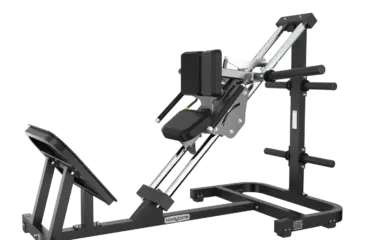
Leg Curl: A Complete Guide to Selectorised Machines

Selectorised leg curl machines are a core item on any professional strength floor that takes hamstring development seriously. They load the muscles at the back of the thigh through a defined, controlled path, which makes them equally suitable for a beginner on an induction and an athlete working close to their limit.
This guide covers what the machines do, how the seated and lying formats differ, how to set them up correctly, and where they belong in a balanced training programme and in a commercial equipment specification.
Why hamstrings deserve dedicated equipment
The hamstrings govern leg mobility and knee stability. They are involved in running, jumping and simply walking, and they are one of the muscle groups most often left underdeveloped relative to the quadriceps. Training them on a leg curl machine strengthens the lower body, improves joint stability and contributes to injury prevention. The machine format matters because it isolates the hamstrings, which is difficult to achieve reliably with free weights alone.
Why a selectorised machine for the leg curl
Selectorised leg curl machines deliver a controlled, safe movement that suits beginners and experienced athletes alike. They isolate the hamstrings, they allow work with adjustable loads, and the guided path reduces injury risk by limiting how far technique can drift under fatigue.
What the format gives you
- Safety. The guided movement supports correct execution and reduces injury risk.
- Muscle isolation. The machine targets the hamstrings specifically, allowing precise development.
- Ease of use. Loads adjust quickly, so progression follows strength and objectives rather than what happens to be on the bar.
- Injury prevention. Stronger hamstrings improve knee stability and reduce the risk of activity-related injury.
For a facility, there is a fifth argument: a selectorised station can be used safely by members who are not being individually coached, which is what makes it viable on a busy floor.
How leg curl machines work
There are two principal formats: the lying leg curl, where the user is face down, and the seated leg curl. In both cases the user flexes the knees to lift a load, contracting the hamstrings. The lying format tends to place the hip in extension and the seated format in flexion, which changes the length at which the muscle is loaded. Facilities that can accommodate both usually specify both.
Correct set-up and execution
- Adjust the machine. On a lying leg curl, set the machine so the knees align with its axis of rotation. On a seated leg curl, adjust the seat and the leg rest for a correct fit.
- Position the user. Lie face down or sit as appropriate, with the pads placed just above the ankles.
- Execute. Flex the knees to bring the heels towards the glutes, contracting the hamstrings. Return slowly to the start position without locking the knees out.
Machines whose pads and seat adjust over a wide range are worth the premium in a commercial setting, because one station then fits the whole membership rather than the median member.
Where the leg curl fits in a programme
Leg curls are essential to complete lower-body training. They complement quadriceps work such as the leg press and the squat, which is what produces balanced thigh development. Strengthening the hamstrings matters for leg power, for sporting performance and for injury prevention, and the imbalance between the front and the back of the thigh is one of the more common findings in athletic screening.
Performance and rehabilitation
Beyond strengthening the hamstrings, leg curl machines are useful in rehabilitation. They allow the muscles to be worked in a controlled way, which matters during recovery from a knee or hamstring injury. Regular training can also improve flexibility and reduce the risk of muscle strain. Any rehabilitation programme should be defined by the clinical staff responsible for the patient.
Specifying leg curl stations for a commercial floor
Indoor equipment used in a facility open to third parties must meet EN ISO 20957-1 class S, the class for continuous use in supervised commercial environments. Class I is a professional class for inclusive access, not a step above class S. Beyond the standard, check the weight stack increments, the range of seat and pad adjustment, the upholstery specification and the availability of wear parts such as pads, cables and bearings over the life of the machine. Our selectorised strength machines and the Gold Line selectorised range cover the formats normally specified alongside a vertical leg press in a leg zone.
Frequently asked questions
What are the benefits of leg curls for the hamstrings?
Leg curls strengthen the hamstrings, improve knee stability and contribute to injury prevention.
How often should leg curls be programmed?
The usual recommendation is to include them in leg training two to three times a week, depending on the overall programme and the objectives being pursued.
Are leg curls suitable for people with knee pain?
With an appropriate load and good technique, leg curls can strengthen the hamstrings without aggravating knee pain. Anyone with existing pain should consult a health professional before starting a new exercise, and a facility should make that guidance explicit rather than assume it.
Seated or lying leg curl?
Both load the hamstrings, at different hip positions. A floor that can take only one station usually starts with the seated format, which is easier to supervise and quicker for members to set up between sets.
Planning your leg zone
A leg curl station is specified alongside the rest of the zone, not in isolation: circulation, load increments, station count and the mix with quadriceps equipment decide whether the zone actually works during a peak hour. Send the room dimensions and the expected simultaneous use and request a quote so the whole zone can be drawn and priced together.