The Professional Lateral Raise Machine: Everything Gym Operators Need to Know
The lateral raise is the movement that builds visible shoulder width, and it is also one of the movements members most often get wrong with dumbbells. A dedicated lateral raise machine fixes both problems at once: it isolates the lateral deltoid under controlled resistance and it removes the swinging, shrugging and momentum that turn a light dumbbell exercise into a trapezius exercise. For a gym operator, that makes it one of the highest-return isolation stations on the floor.
What a lateral raise machine is
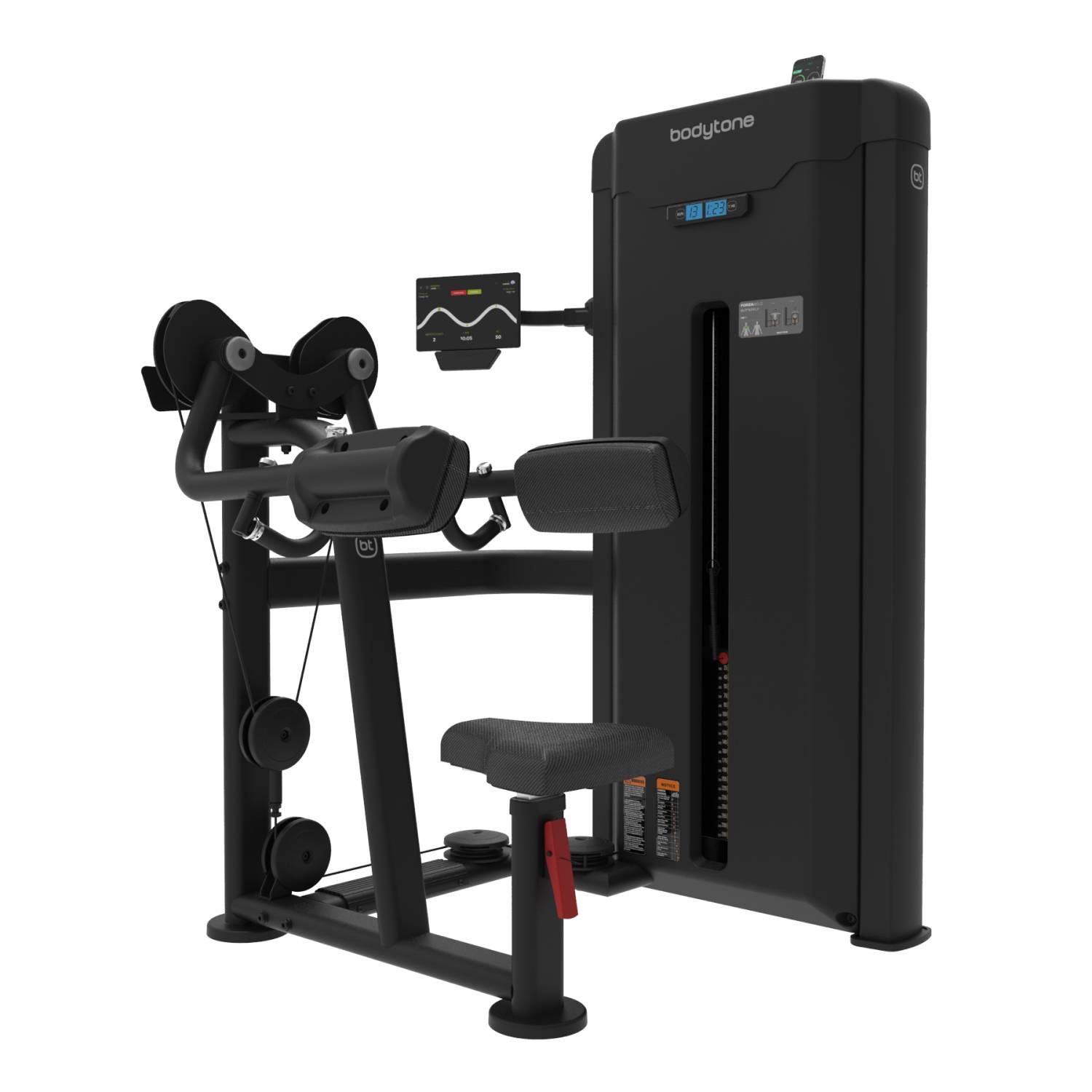
A professional lateral raise machine is a single-purpose station built around the middle head of the deltoid. Two designs dominate commercial floors. The seated lever design places the user against a back pad with the upper arms driving against padded arms, pivoting around the shoulder joint. The cable design uses a pulley and handle so the user abducts the arm against a constant line of pull. Both use a selectorised weight stack or loaded plates, both have adjustable seat or pad positions, and both are built on a steel frame designed for continuous use.
The difference matters when you specify. Lever machines are faster to use, need no set-up knowledge and suit busy circuits and unstaffed hours. Cable versions offer more variation and appeal to coached environments and studios.
How it works
The user sits or stands, depending on the design, positions the upper arms against the pads or takes the handles with the arms alongside the body, then raises the arms out to the sides until they reach roughly shoulder height. The elbows stay slightly bent. The descent is controlled rather than dropped. Because the frame fixes the plane of movement, the deltoid is loaded through the whole range instead of only at the top, and the load can be selected precisely rather than jumping in dumbbell increments.
Why it earns its floor space
Five arguments come up in almost every specification meeting.
Muscular isolation. The machine targets the lateral deltoid directly and lets members develop the shoulder evenly rather than compensating with the traps.
Safety. A rigid frame and controlled resistance keep the movement inside a defined path, which lowers the injury rate in an area where members frequently train too heavy.
Easy progression. Selectorised loading means small, precise increments. A member who plateaus with dumbbells at a fixed weight jump can keep progressing here.
Comfort and ergonomics. Padded arms and adjustable seat height keep the posture upright and stop the compensations that cause neck and shoulder tension.
Throughput. No set-up, no plate handling, no spotter. A member is in and out of the station quickly, which matters at peak hours.
Correct use, step by step
Worth putting on the station card, because a badly used lateral raise station trains the wrong muscle.
- Set the load. Start light. This is a small muscle group and the machine punishes ego loading with shrugging.
- Set the position. Seat or pad height so the pivot of the machine lines up with the shoulder joint. Sit tall, shoulders back and down.
- Take the position. Upper arms against the pads, or handles gripped with the arms alongside the body.
- Raise. Lift the arms out to the sides until they reach around shoulder height, elbows slightly bent, then control the way down.
- Breathe. Inhale on the way down, exhale on the way up.
- Volume. Follow the programmed sets and repetitions, with rest between sets.
Specifying one for a commercial floor
Isolation stations live or die on footprint and traffic. Before ordering, check three things: the space between adjacent stations, since the movement is wide by definition and a lateral raise machine placed too close to a neighbouring station will be avoided; the stack range, because a mixed-ability membership needs small increments at the bottom of the stack more than it needs a heavy top end; and the upholstery and cable specification, since this station takes constant, low-load, high-repetition use and wears in the pads and pulleys long before the frame.
For indoor equipment in public and commercial facilities, specify to EN ISO 20957-1 class S and ask for the declaration of conformity as part of the tender documents.
Frequently asked questions
Which muscles does it work?
Primarily the deltoids of the shoulder. The trapezius and the upper back muscles work with them to stabilise the movement.
How often should it be programmed?
That depends on the member goals and conditioning. In general the exercise is programmed two to three times a week, leaving at least one rest day between sessions.
What should it be paired with?
Other shoulder work such as overhead press, front raises and rear delt work, plus the rest of the upper body, back and arms, for balanced development.
Is it suitable for beginners?
Yes, and it is often the better first option. Start with light resistance and master the technique before adding load. A first induction with an instructor is worthwhile.
Does it really build wider shoulders?
It develops the deltoids, which does give the appearance of wider shoulders. Skeletal frame and genetics also determine shoulder width, so manage expectations accordingly.
Choosing the right station
Our range of selectorised strength machines includes several lateral raise designs, from the compact Power Line lateral raise for smaller sites through to the Lateral Raise Forza Bodytone FB24 for high-traffic clubs.
Send us your floor plan, the size of your membership and the stations already installed, and we will tell you where a lateral raise machine belongs in the layout and what stack range suits your members. Request a quote to start.